
Travelogue November 17, 2023, to February 21, 202493-day Cruise, Southampton to Southampton, Clockwise Around the Africa Continent, and Through the Indian Ocean, via Fred Olsen's M.S. BolettePART ONE: From Southampton, U.K. to the SeychellesFriday, November 17, 2023: Vancouver, B.C., Canada to London, United Kingdom via Calgary, Alberta, CanadaFor an introduction, this was a trip I had been planning to do ever since 2020 to celebrate a significant year in my lifespan. Originally, however, I had planned to go with a different cruiseline. Then, of course, COVID came along and that cruise was postponed for two years. When in 2022 the health crisis still hadn't improved completely, that cruise was cancelled altogether and I got my money back. I then searched online for a new cruise around Africa and found this one on Fred Olsen, a company I had never heard of before. To test it, I took a short two week cruise at Christmas 2022/New Year's 2023 on Fred Olsen's M.S. Borealis, which you can read about by clicking on the link. I still wasn't 100% certain this one would go ahead in light of the Israel/Hamas conflict that started a few weeks ago so I was on tenterhooks expecting it to be cancelled too. Nonetheless, after checking constantly, I was told it was going ahead. Today, consequently, I boarded my first flight to Calgary, where, from my window seat, I had an unbelievably clear view under a cloudless blue sky all the way from Vancouver across the Rocky Mountains. It was a spectacular show of nature at its best, although not caught on film, so I'll just have to remember it in my mind. I had a 2.5-hour change of planes in Calgary, which was uneventful, and then boarded my flight to London.
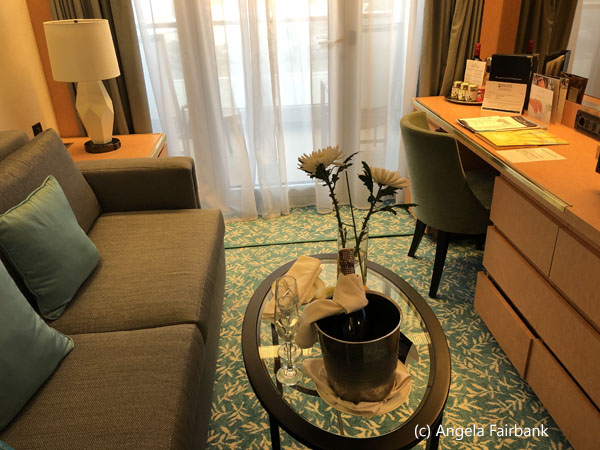
Saturday, November 18, 2023: London, U.K.Arriving in London Heathrow on an overcast day, I got through the border control fairly quickly and picked up my luggage, exiting to see my cousin, G., a London tour guide, at arrivals to pick me up. He drove me to his terraced house in Chiswick and, at my suggestion, we decided to drive over to our second cousin A.'s pub near Windsor--the Bell, a 15th century establishment--for lunch. Her husband was the cook. G. had some tender venison while I had a lovely cheesy pumpkin risotto. We also met her son, our second cousin once removed, age 4 but almost 5, who had just started school, and their 10-year-old dog. After a two-hour-plus chinwag, we headed back to Chiswick to talk family trees and watch a documentary on the Princes in the Tower, who may not have been executed by Henry the VIIth after all, as we ate dinner of bread and cheese and a delicious home-made pea soup. 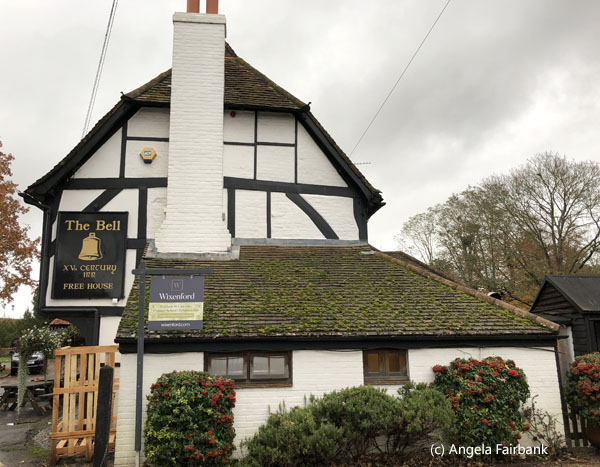 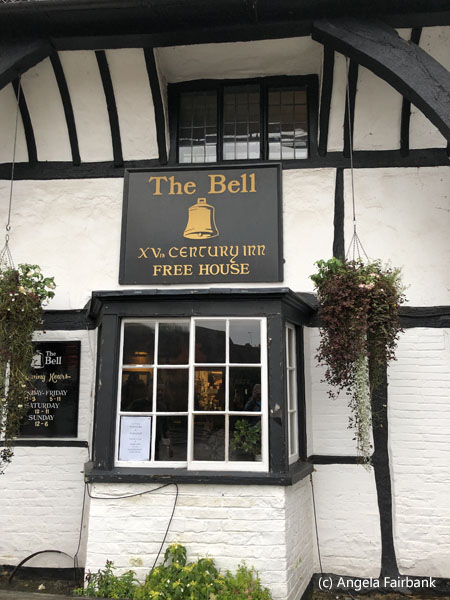 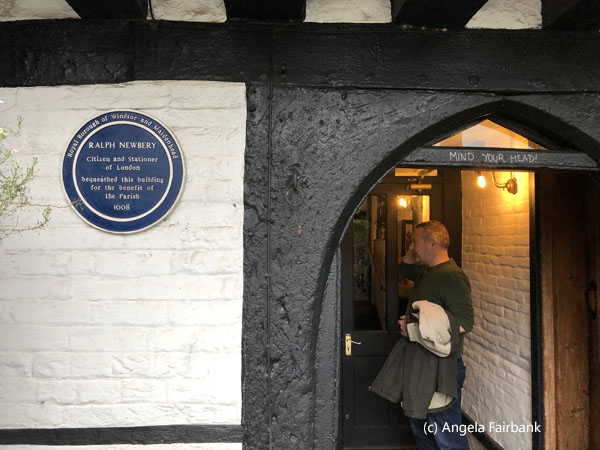 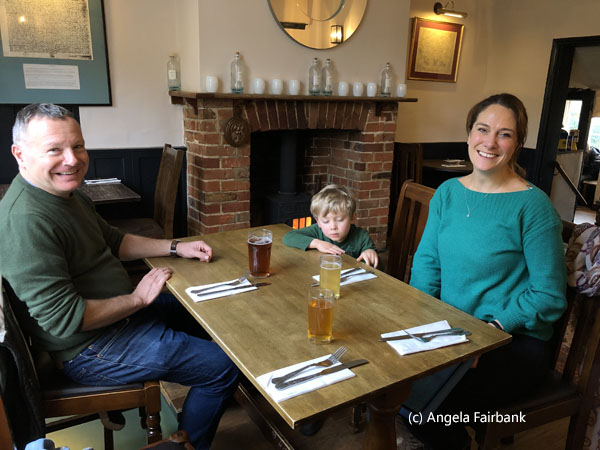 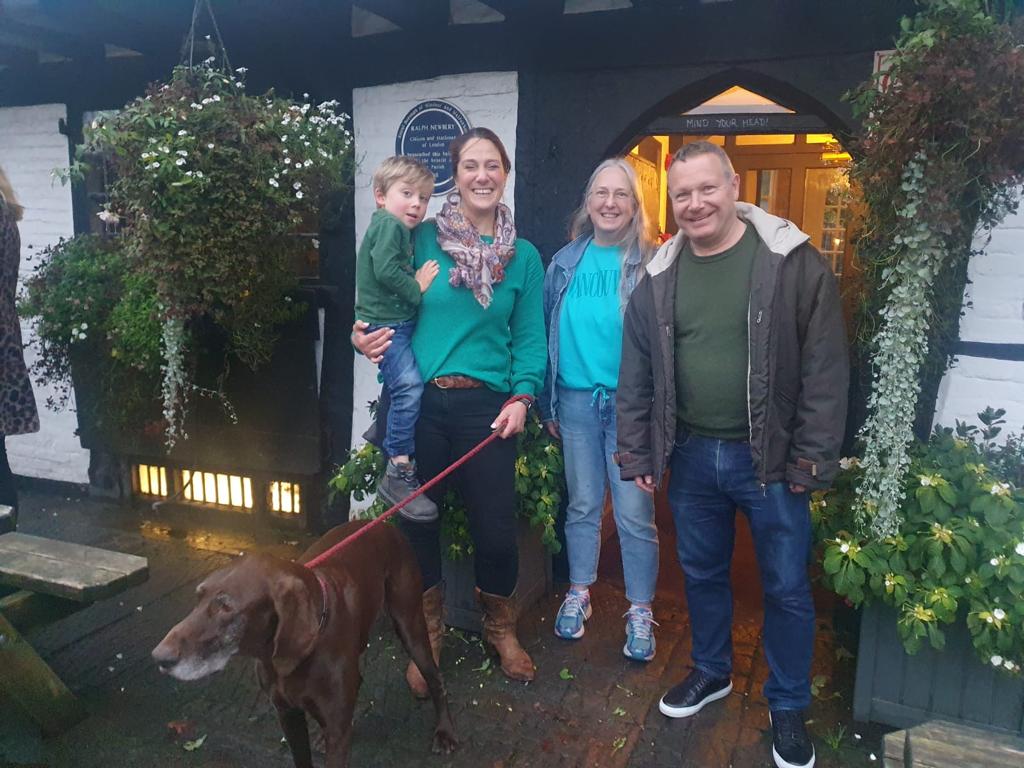 Sunday, November 19, 2023: London to Southampton, U.K.After breakfast of toast, home-made-and-home-grown grape jam and a boiled egg, I looked over a few bits of family memorabilia and then was picked up by the cruise ship's transfer affiliate and driven south in an SUV, 75 miles to the cruise terminal at the Southampton docks, which, as it was Sunday morning, went fairly quickly and smoothly. The view wasn't much since we were driving down a motorway for most of the route, but the yellow-gold leafed trees to either side of the motorway were colourful enough and pleasant to look at. On my arrival at the cruise terminal, my two large suitcases were efficiently whisked away, and by the time I got through their visas-and-yellow-fever check, and cruise check-in (about one hour) and arrived in my spacious balcony suite on the M.S. Bolette, my suitcases were there already, waiting for me, in addition to flowers, a fruit basket, and a complimentary bottle of bubbly, which I shall save for Christmas, I think! After grabbing a salad at the buffet, I unpacked, met my cabin attendant, Peach, from Thailand, and worked on my computer for a bit after buying the rather expensive 93-day internet package, though this was reduced considerably by a complimentary 500-British-pounds of spending money offered by the cruise line!
 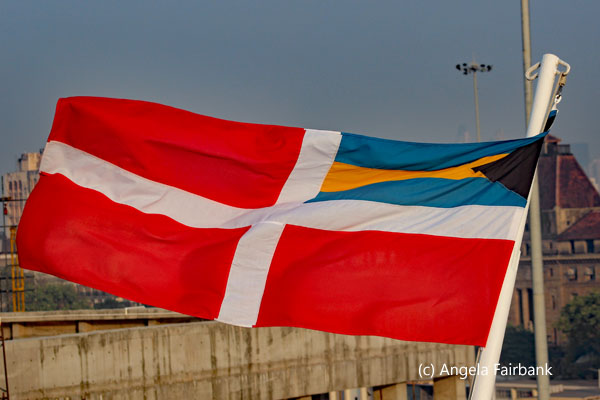  Monday, November 20, 2023: At Sea, English Channel down to the Bay of BiscayAfter a rocky night, during which I woke often, I was quite surprised to learn from the Captain, during his noon announcement, that we were still in the English Channel after an entire night of sailing! I somehow hadn't imagined it was that big, vaguely remembering ferry crossings in the past of 3 hours or so at the most(?) After a late breakfast due to having slept in, I returned to my cabin to start writing this travelogue.
Thursday, November 23, 2023: Tangier, MoroccoAs-Salaam alykum! Reaching the African continent finally, we docked after three calm days at sea, at the European gateway to Africa, located only 10 miles from Gibraltar, aka “the Rock,” lying on the Strait of Gibraltar, and the famous home of spies, millionaires, and film stars, not to mention painters and writers. Our guide, Said, told us that 60% of the population of Tangier speaks Spanish. I did speak some French today but no Spanish. I took the tour called Tangier Walking Tour because after three days of working at my desk, I wanted some exercise. However, since a bus took us up to the top of the hill, the tour wasn't as strenuous as I thought it might be. It was more of a gentle stroll through the old town, aka the Medina, visiting the narrow, winding, flowered streets of the Kasbah, populated by many cats, and the Grand Socco, or souq, complete with the Thursday vegetable market and behatted female vendors from the Moroccan highlands. (Those with pompoms signify that the ladies underneath the hats are married.) We also visited a museum with an ancient Roman mosaic floor and saw a couple of impressive roofs made of cedar. A number of elderly vendors followed us, wanting to sell us fridge magnets, musical instruments, and carvings. I found a lot to photograph as you will see below, but a few images of weavers, tailors, and more did not make it into this particular collection. We ended up at the Continental Hotel for a biscuit and a glass of mint tea, a symbol of Moroccan hospitality, made from fresh mint leaves, green gunpowder tea, and a soupçon of sugar. It was a gorgeous day, blue sky, and a bit of a breeze, and certainly not unpleasantly warm for winter in Morocco. Shukrun, Tangier, and Bslaama. 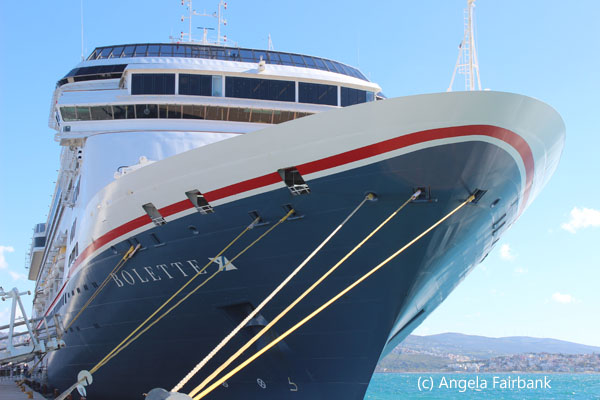 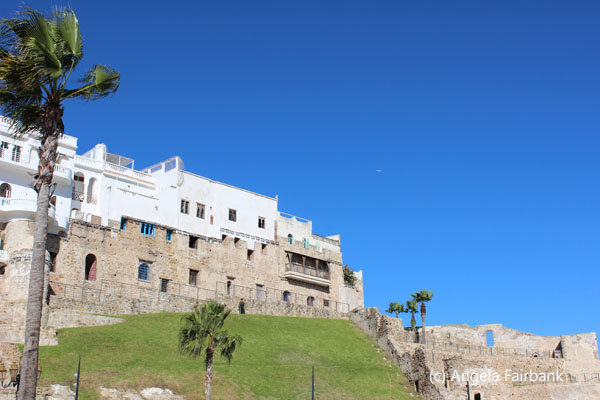 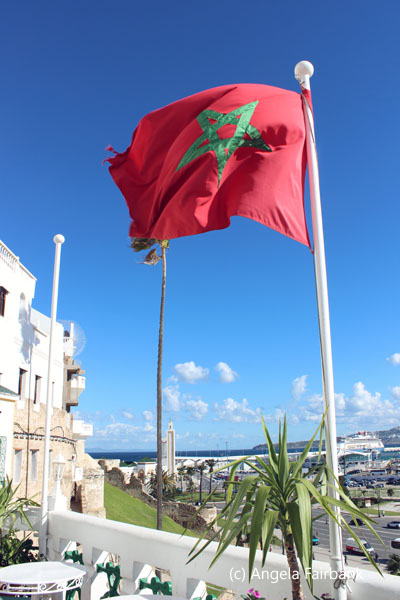 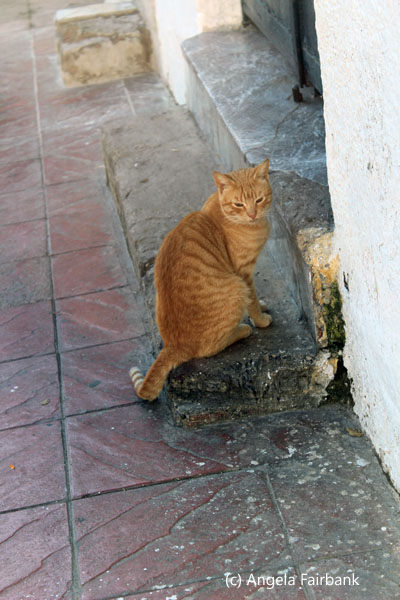 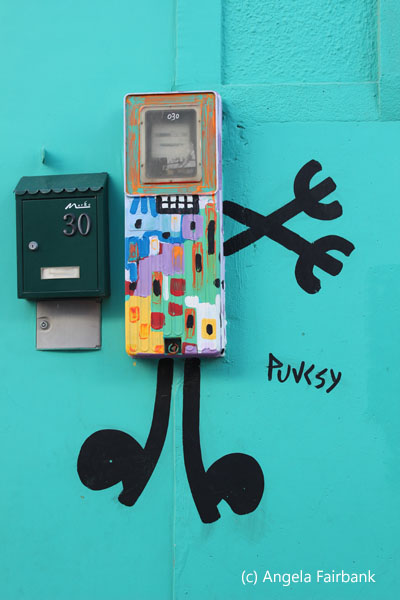 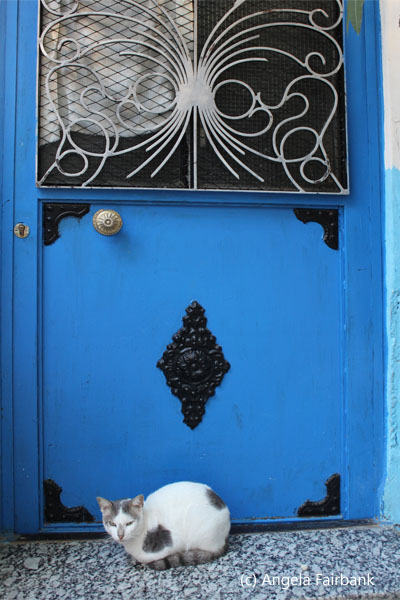 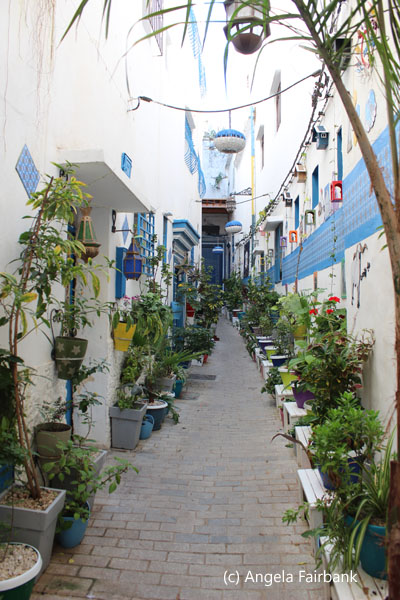 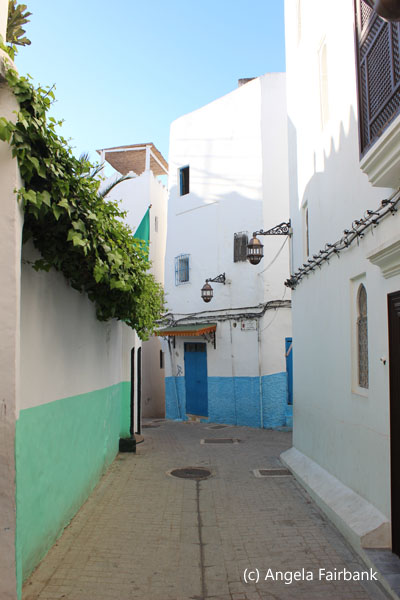 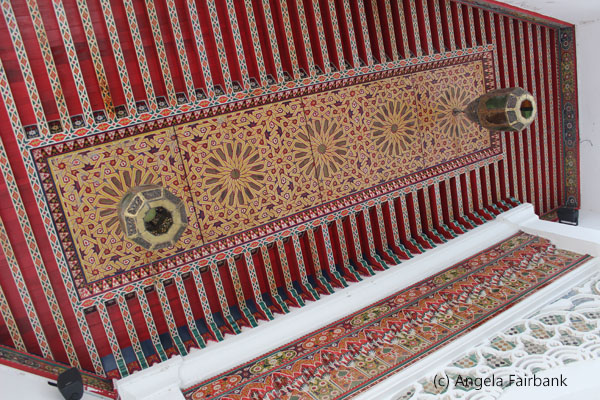 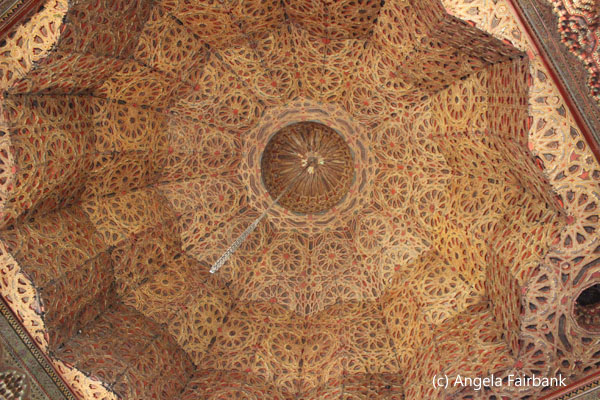 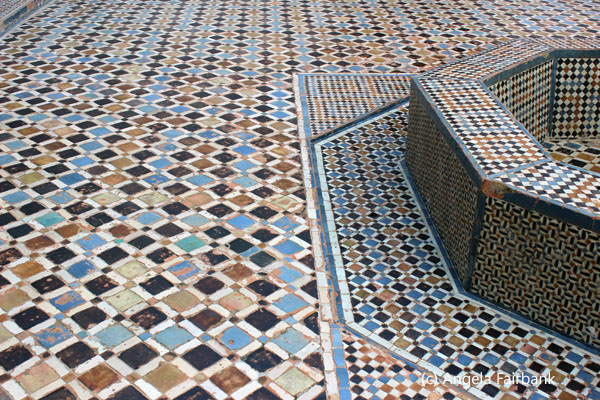 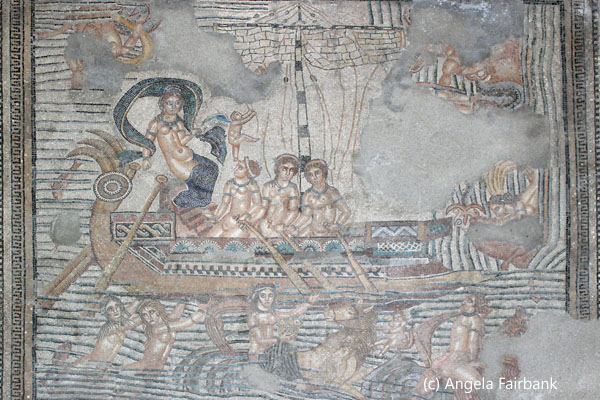 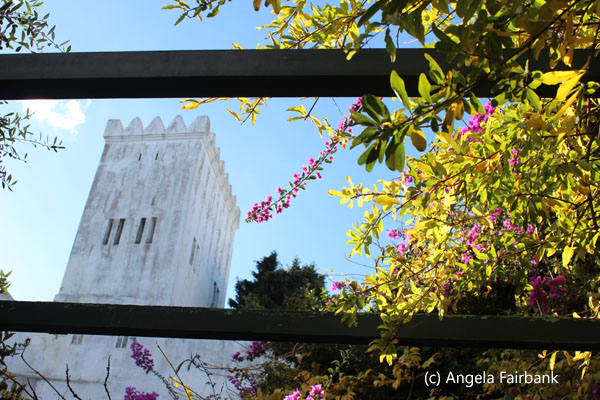 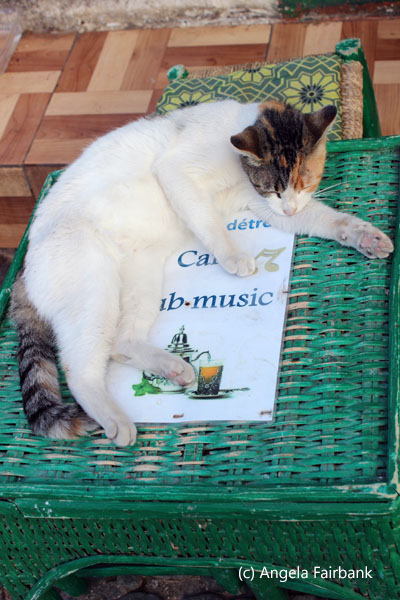 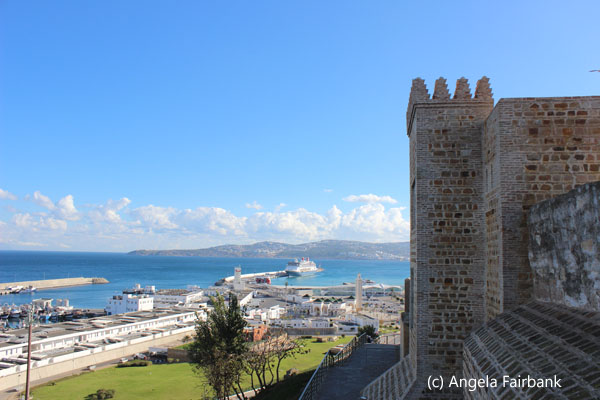 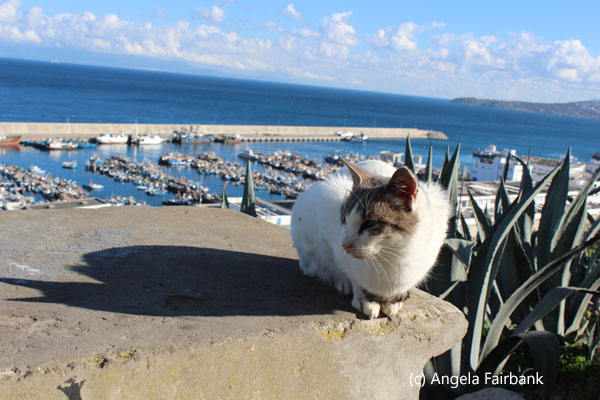 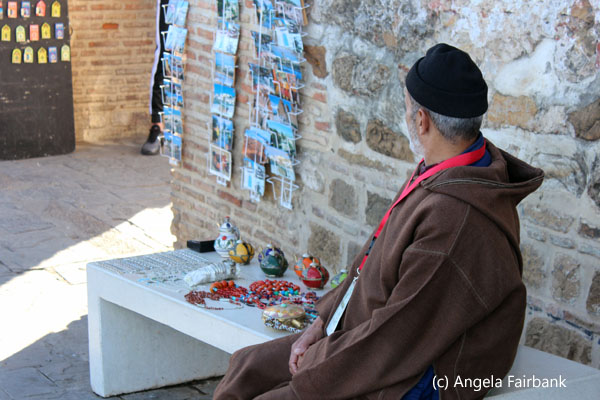 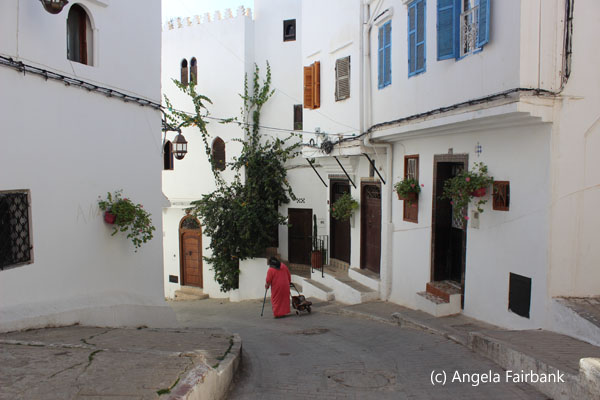 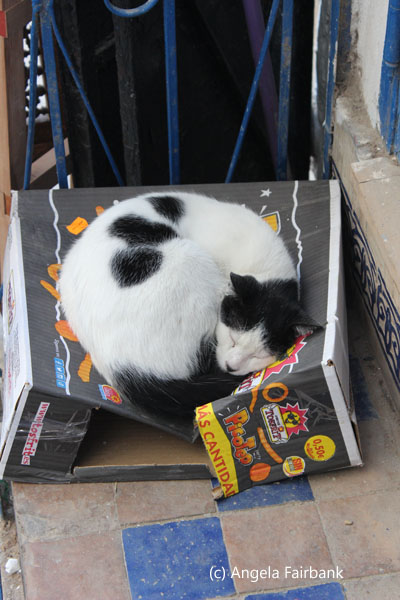 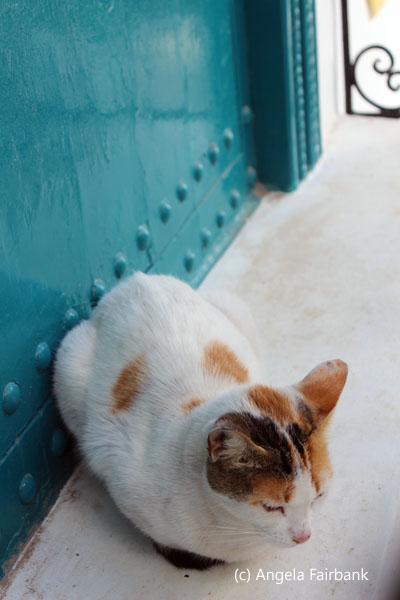 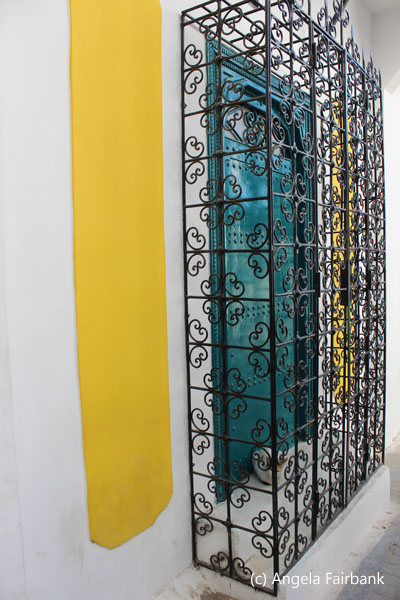 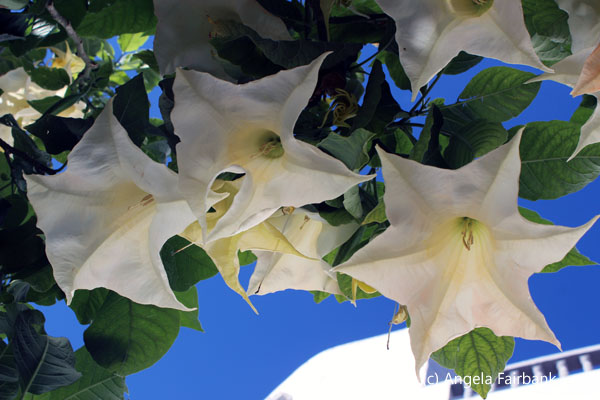 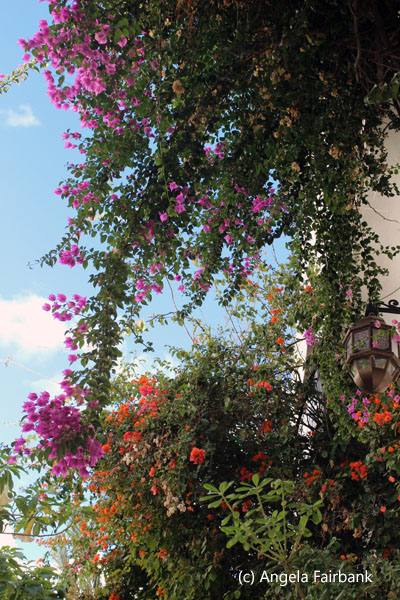 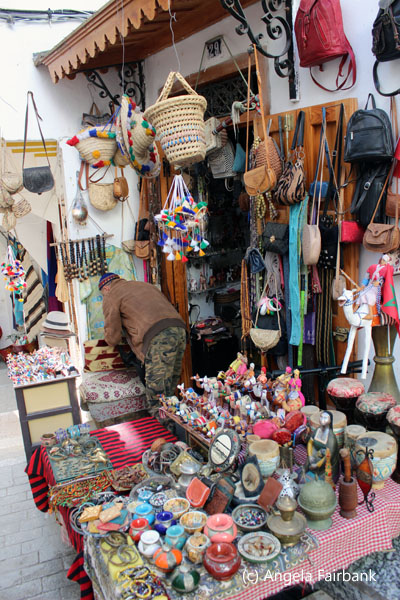 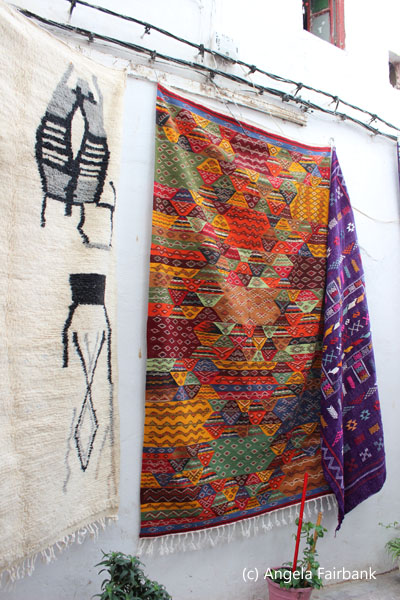 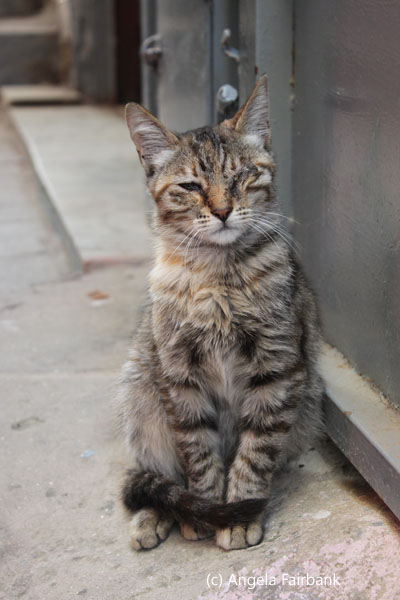 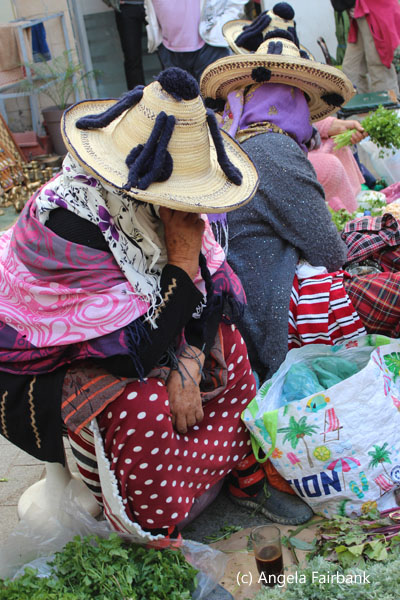 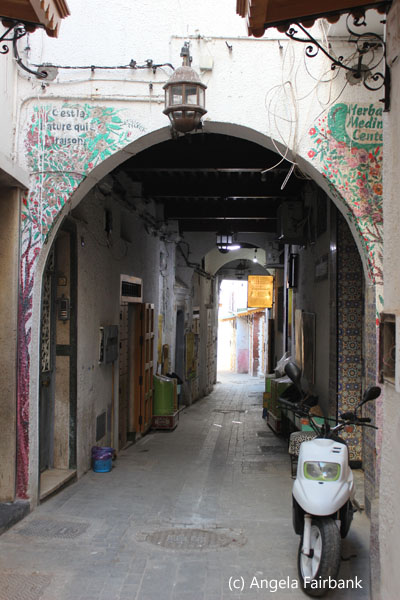 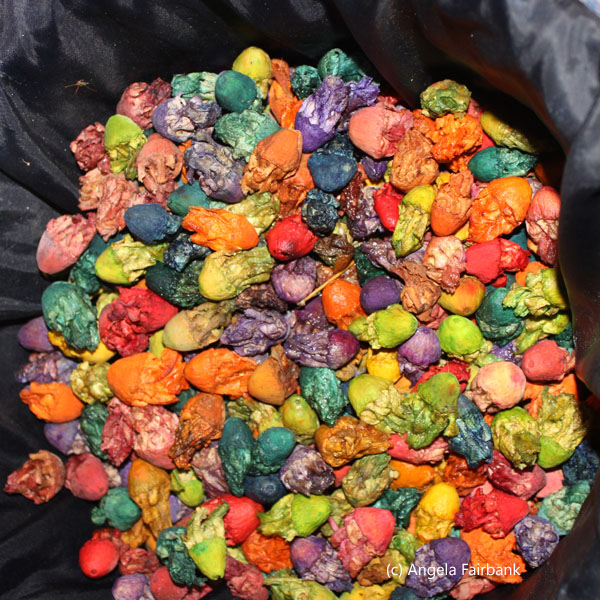 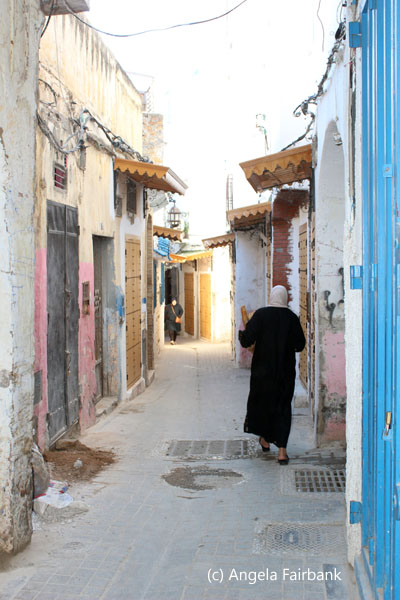 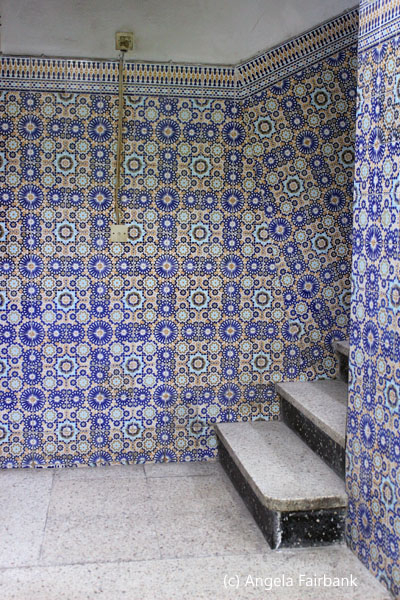 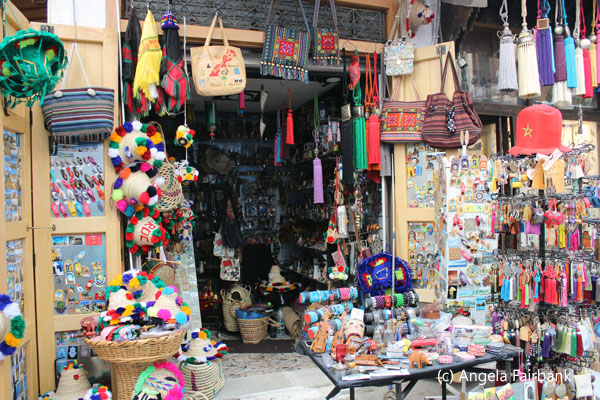 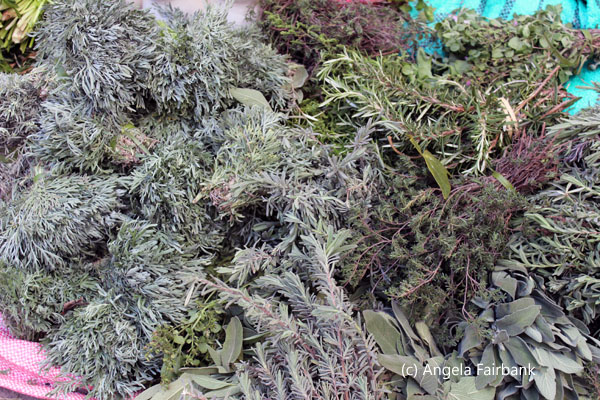 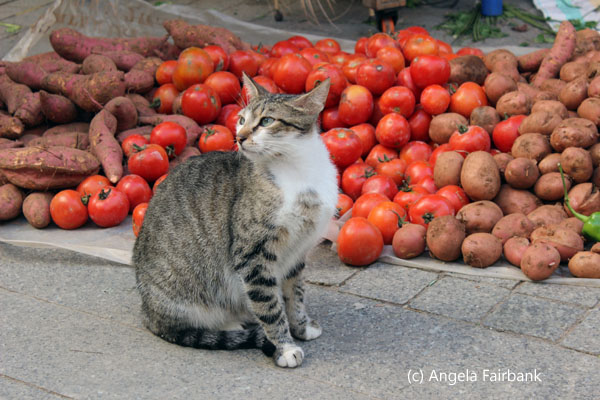 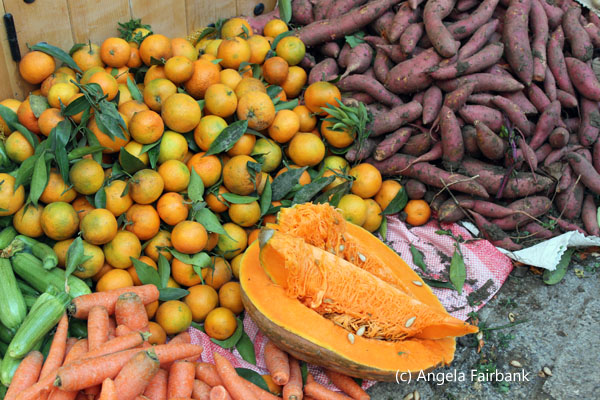 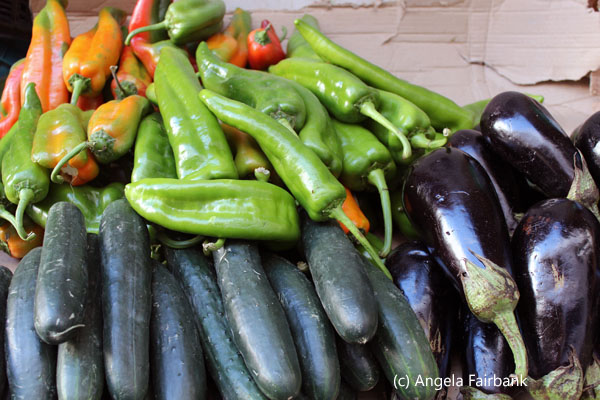 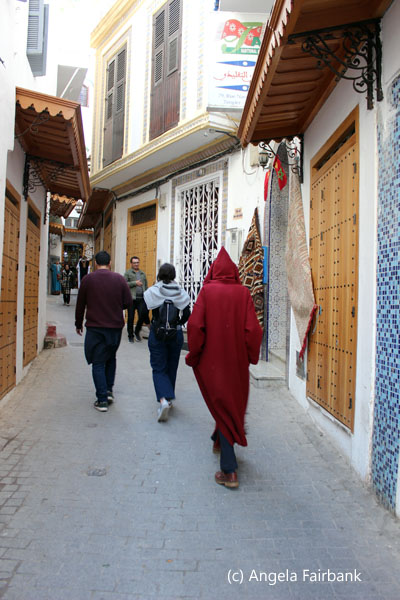 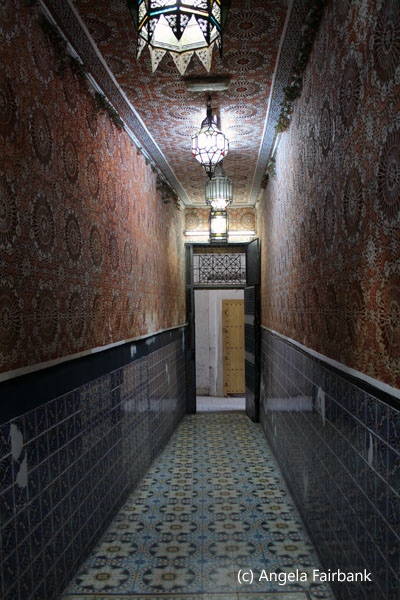 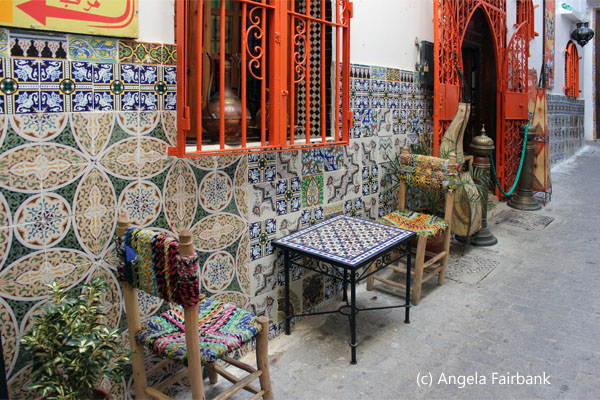 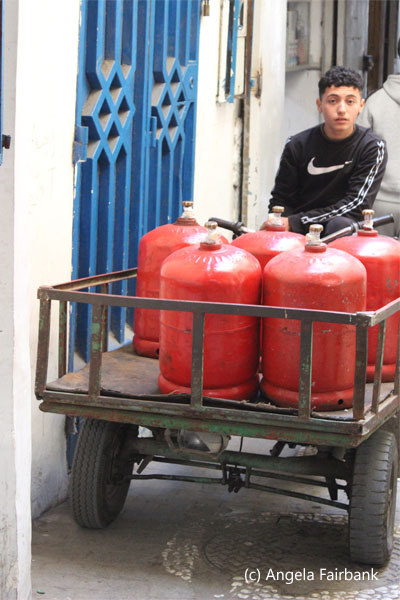 Sunday, November 26, 2023: Valletta, MaltaBonju as they say in Maltese, which seems to be a mixture of French, Arabic and Italian--not surprising with its history of invasion and sieges by Phoenicians, Carthaginians, Greeks, Romans, Arabs, Normans, Aragonese, French, and the British, due to its location as a trading post and safe haven. The British influence has maintained a hold with its health care and education, and of course, it is the famous home of the Knights of St. John (the Baptist), an order created in the Middle Ages. Malta was offered to the Knights in 1530 by the Holy Roman Emperor, Charles V, when they lost Rhodes to the Ottomans.
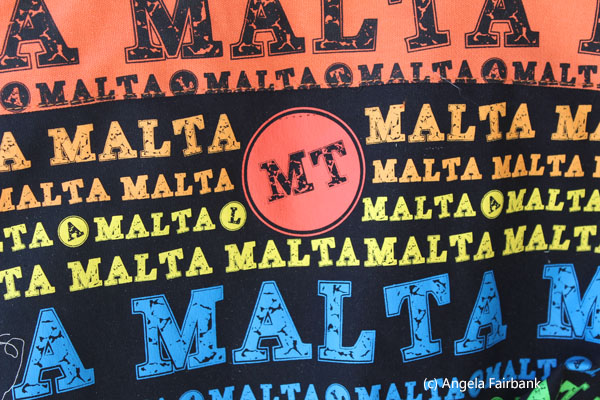 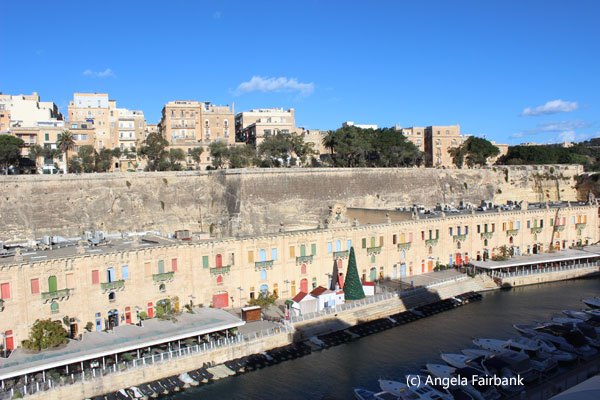 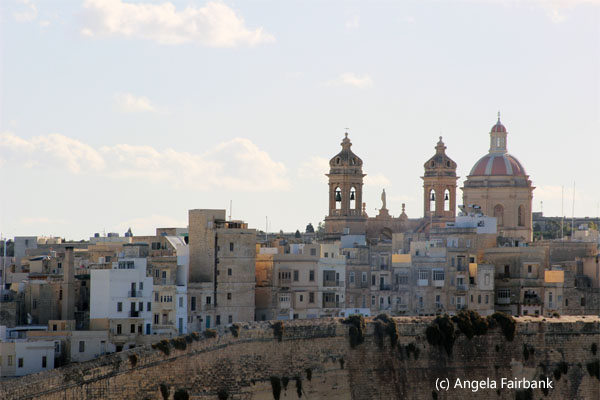 The Maltese Archipelago is one of the smallest countries in the world, yet also one of the densest, with over half a million residents. It lies 80 km (50 miles) south of Sicily (Italy), 284 km (176 miles) east of Tunisia, and 333 km (207 miles) north of Libya. The official languages are Maltese and English, and 66% of the population speaks Italian.
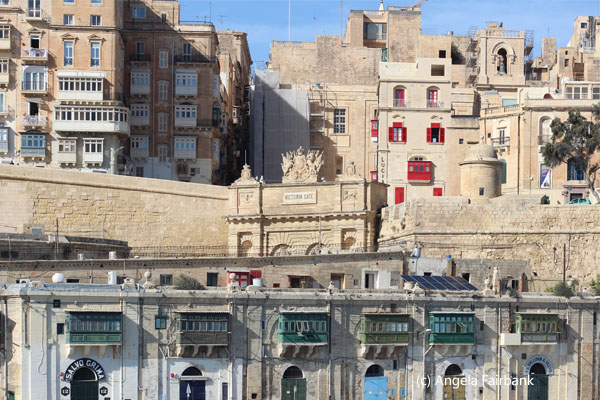 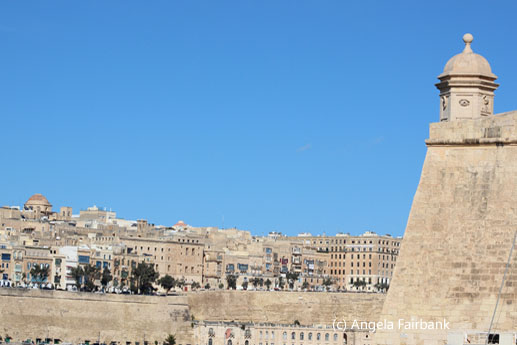 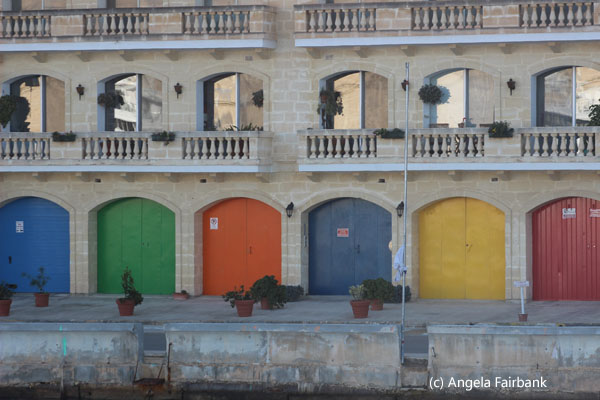 With an area of roughly 316 km2 (122 sq. miles), Malta is the tenth-smallest country by area, and the fifth most densely populated sovereign country. Its capital is Valletta, the smallest national capital in the European Union by area and population. Malta has been inhabited since approximately 5900 BC. The British parliament passed the Malta Independence Act in 1964, and the country became a republic in 1974. It has been a member state of the Commonwealth of Nations and the United Nations since its independence, and joined the European Union in 2004, becoming part of the eurozone monetary union in 2008.
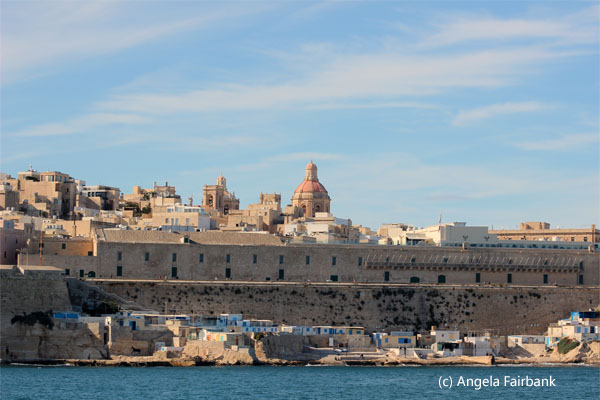 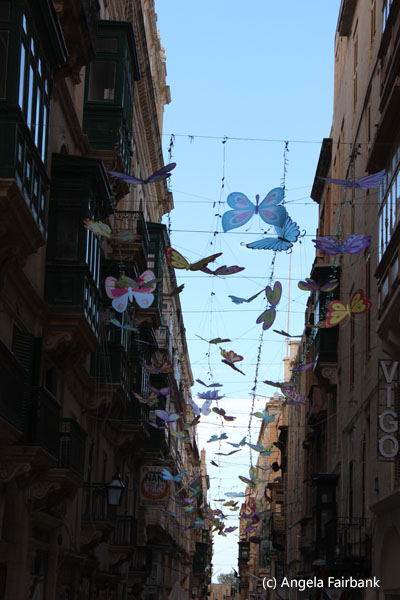 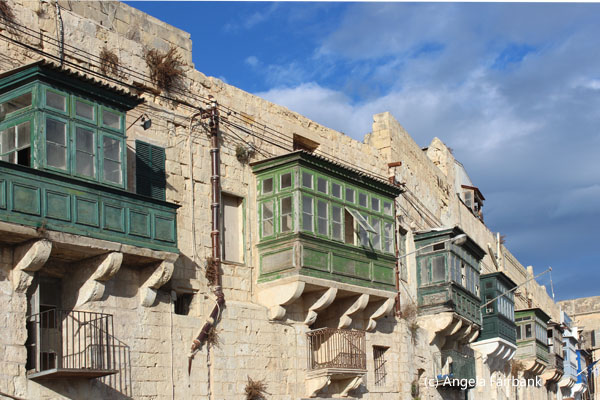 According to my image files, I was last here in 2011 and I remember visiting Mdina (an ancient walled city) as well as impressive churches and gardens and taking a side trip by private taxi to Marsaxlokk Bay to photograph the unusual fishing boats with eyes painted on their bows to deflect evil.
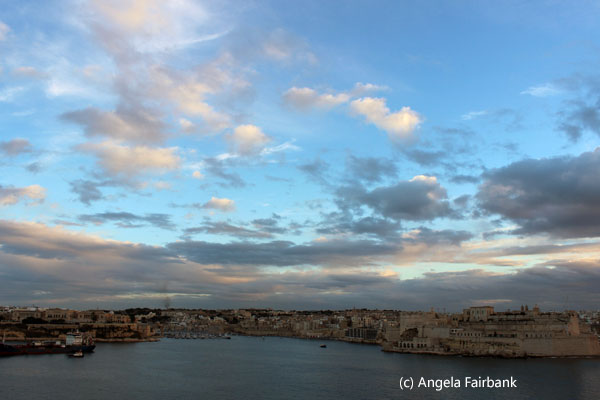
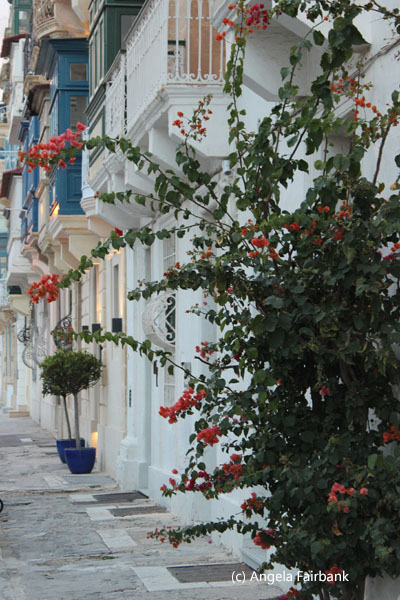
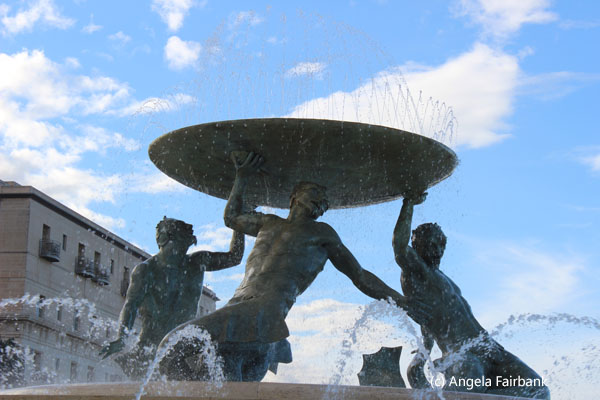 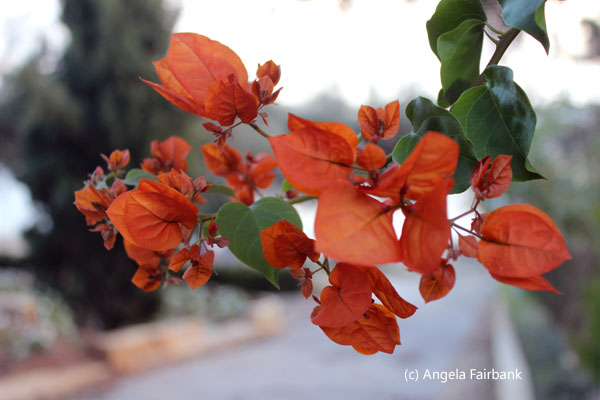 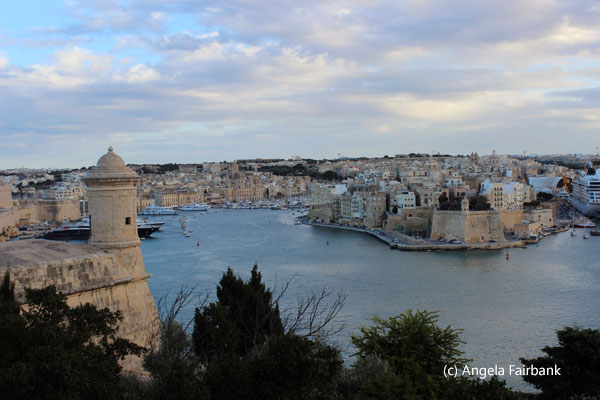 The tour I chose today was a harbour cruise. It was a 4-hour tour with 90 minutes in the boat, and I had plenty of time afterwards to explore the town of Valletta on foot before sunset arrived around 5:00 pm. We were first driven by a large coach to the town of Sliema (one of 54 towns on the island of Malta, or 62 according to our tour guide, whose name I did not catch) along roads bordering fields of cacti, agave, bougainvillea, and other flora. Our tour guide also mentioned that Malta contains 717 churches, but Wikipedia and other online sources refer to only 359 or so.
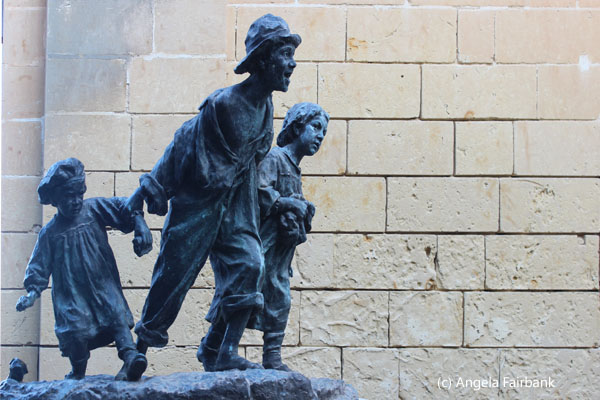 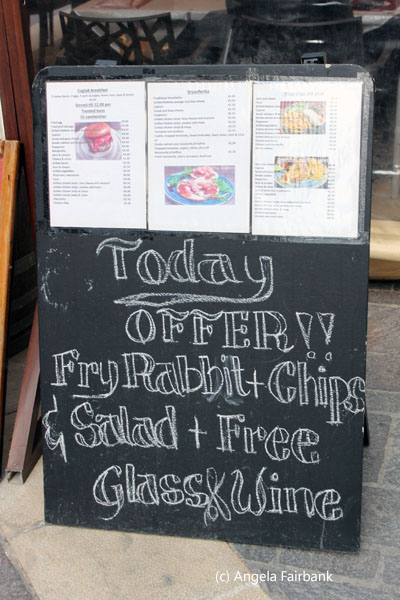 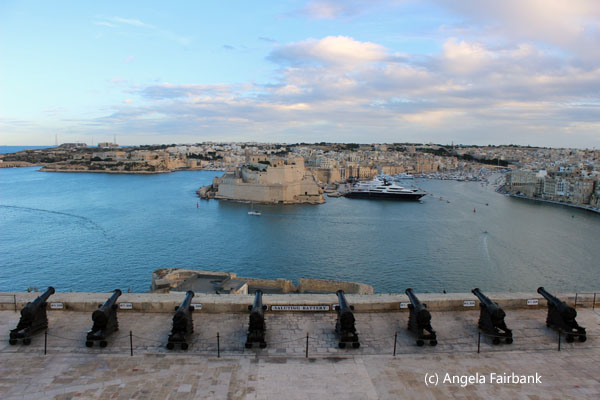 After traveling as far north as Bahar ic-Caghari Bay, we then drove through Pembroke where many English schools are located (Malta is one place students flock to in droves to learn English, apparently). We were dropped off in Marsamxett harbour and boarded our boat which circumnavigated Manoel Island with its fort, which used to be a quarantine hospital isolating patients with malaria, cholera, and plague. We then came out of that harbour into the sea itself and crossed under a small iron bridge to turn into Valletta's Grand Harbour and its various creeks, where our cruise ship was docked, and where there were ship repair yards, as well as various forts and watch towers.
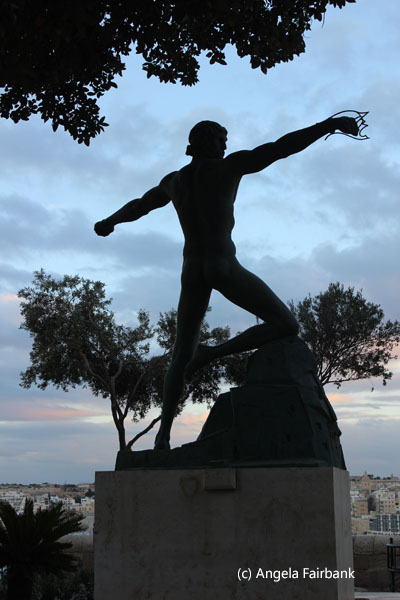
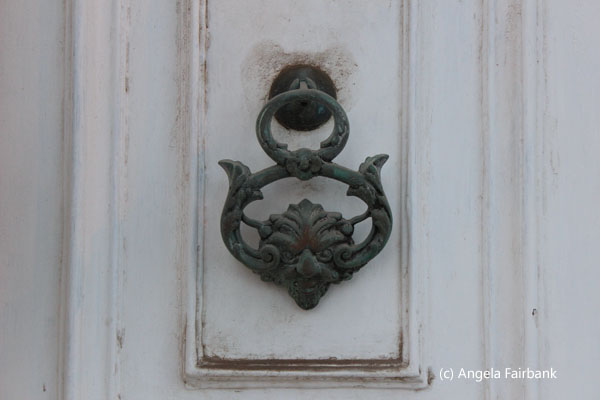
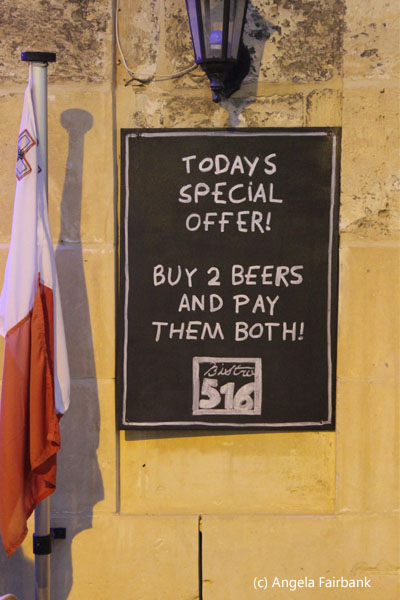
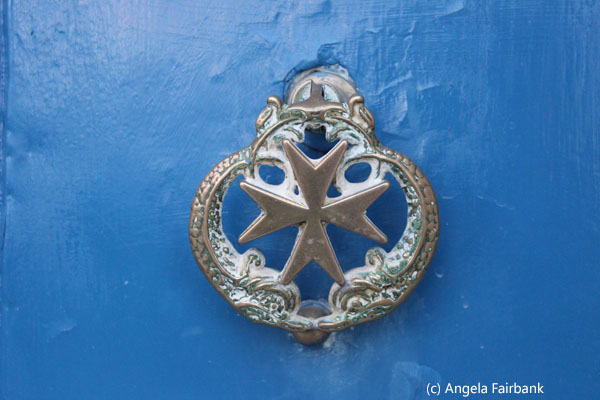
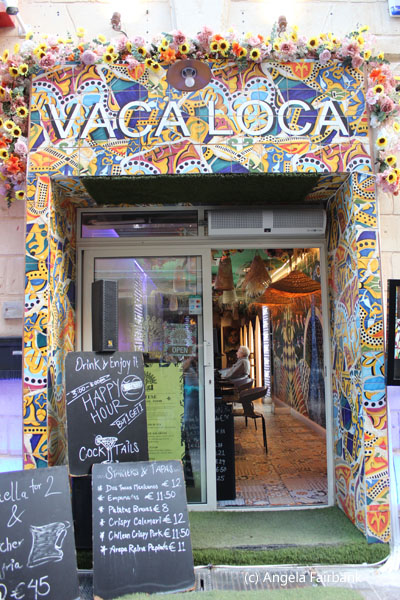 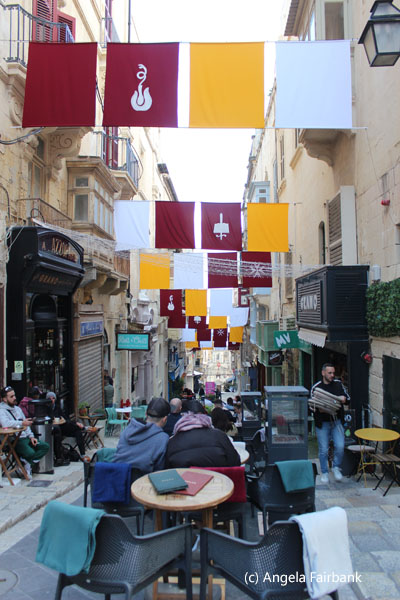 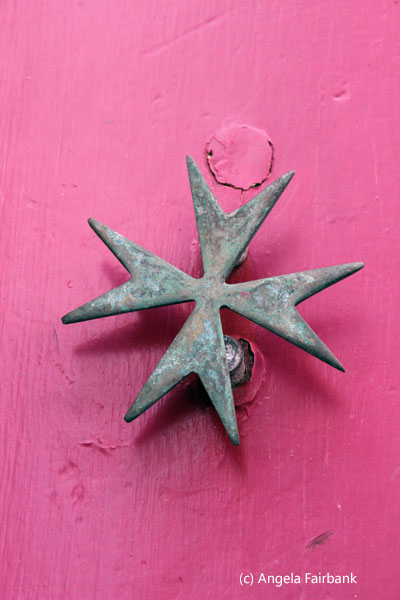 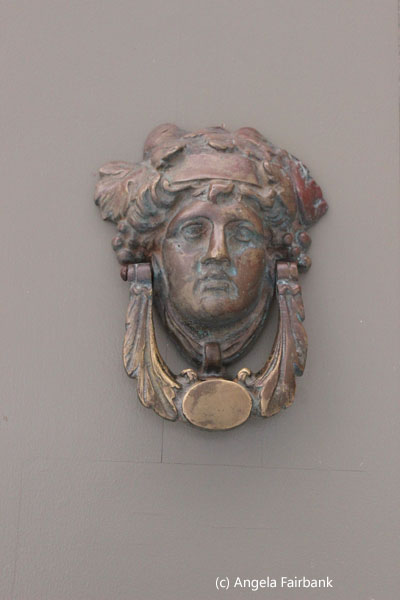 The boat then returned to Marsamxett Harbour via the same route, and we were bussed back to our ship. After lunch on board, I disembarked again, and climbed up to Valletta to visit Triton Fountain, Mt. Ganada Gardens, and Upper and Lower Barrakka Gardens, and strolled along various busy streets with cafés--which were open for Happy Hour--souvenir shops, and finally reached St. John's Cathedral, which looked nicely restored from the outside but was not open for visits. I also photographed door knockers and door handles and heard many languages being spoken around me. Grazzi, Malta, and Addiju until the next time, perhaps.
      Wednesday, November 29, 2023: Alexandria, EgyptAlexandria, which was founded by Alexander the Great around 331 B.C., is known for its ancient wonder of the world, Pharos, the lighthouse, its library, and for being the birthplace of Cleopatra (she was the seventh ruler with this name, apparently, but the best known for her marriage at age 19 to her half-brother Ptolemy, age 10, and then for her affairs with both Julius Caesar, with whom she had one son, Caesarion, and Marc Anthony, with whom she had three children. With a population of seven million people, Alexandria is the second largest city in Egypt after Cairo, which has twenty-two million.
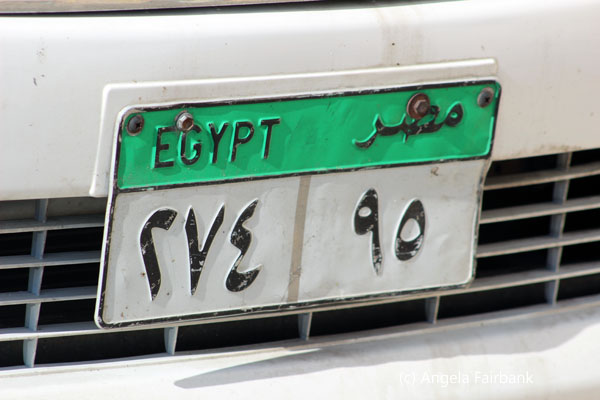 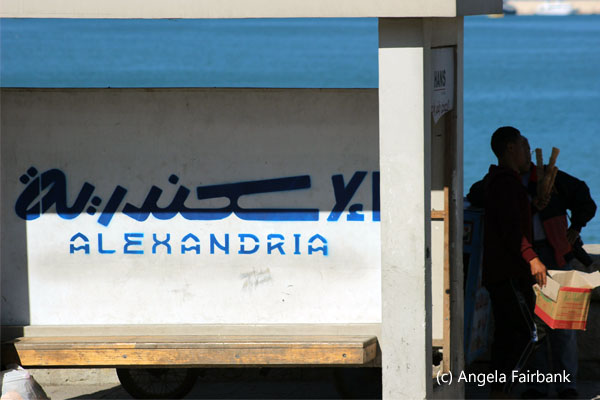 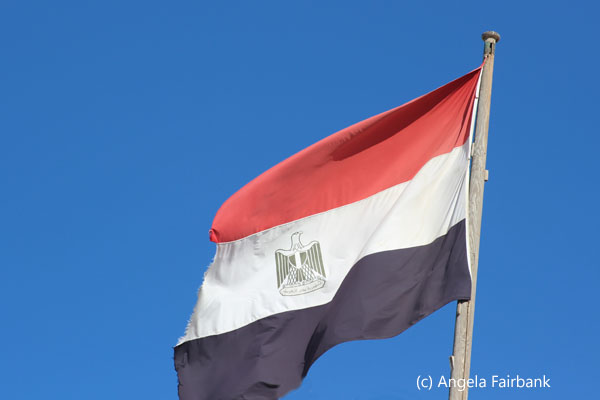 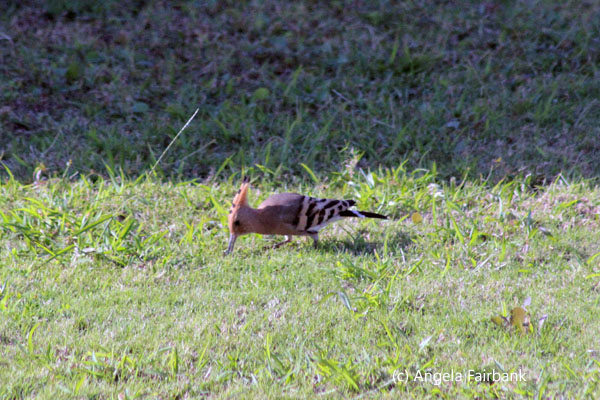 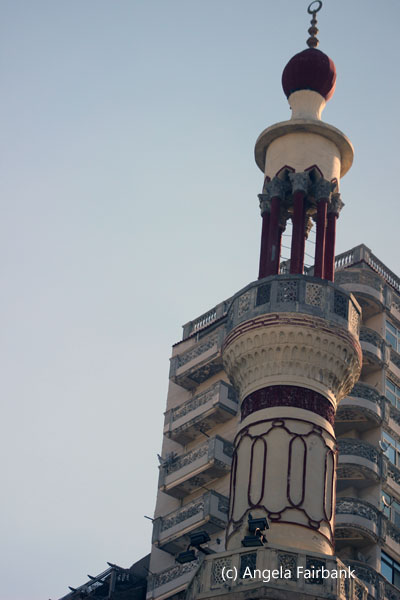 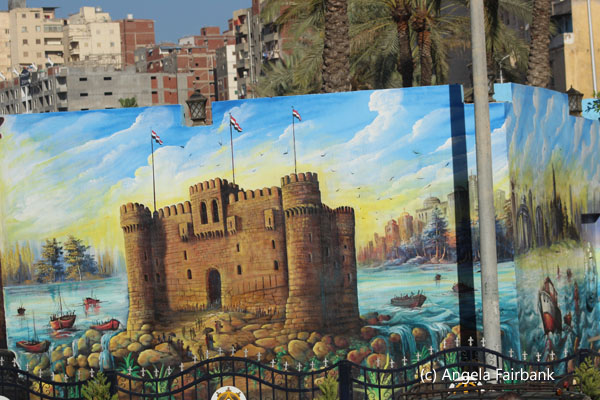 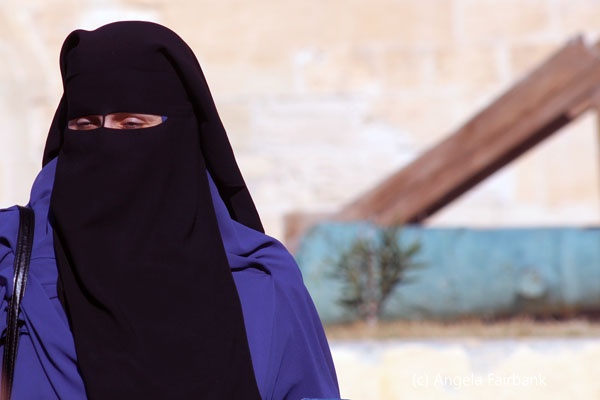 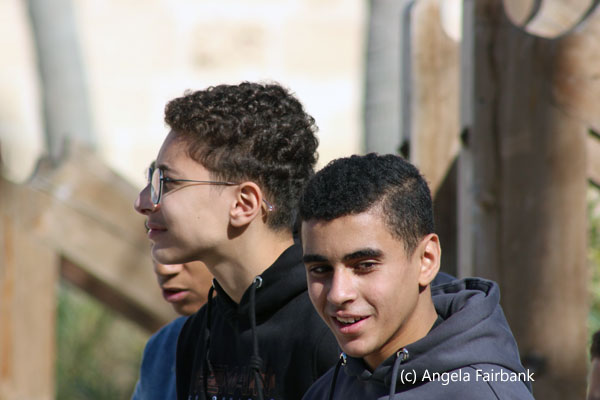 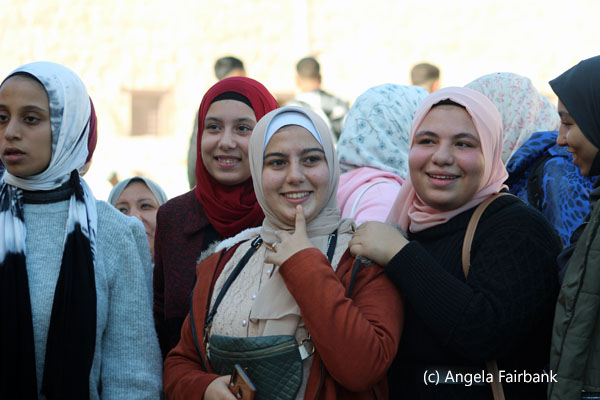 Today's tour was called Alexander's City, and we were basically taken by bus to three important monuments, at each of which we were given a spiel by our female guide, Esraa, and then 45 to 60 minutes to look around on our own. The first was the Fort of Qait Bay, a 15th century stronghold overlooking the harbour and built on the foundations of the Pharos Lighthouse. It seemed as though we were just as much of a tourist attraction for the locals for they had their phones out and were photographing us just as much as we were photographing them! The young people were also trying out their English on us. 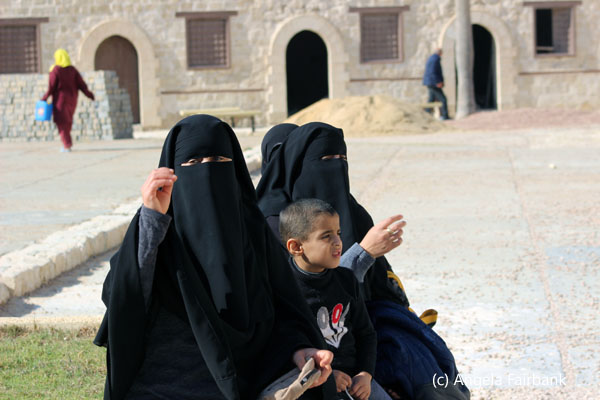 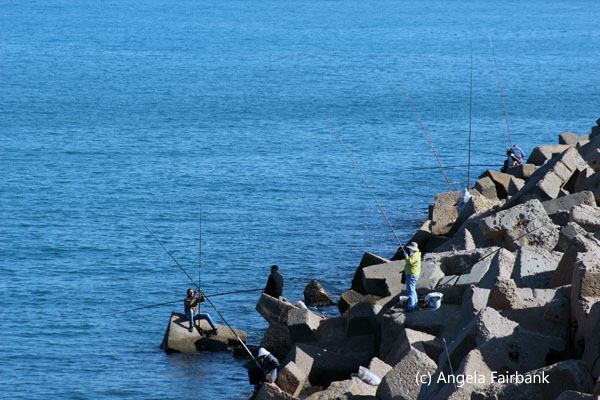 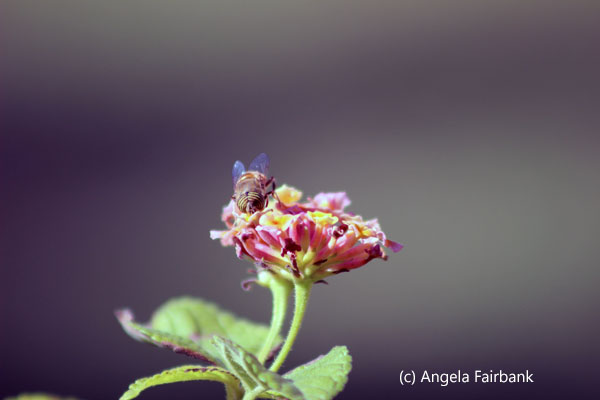 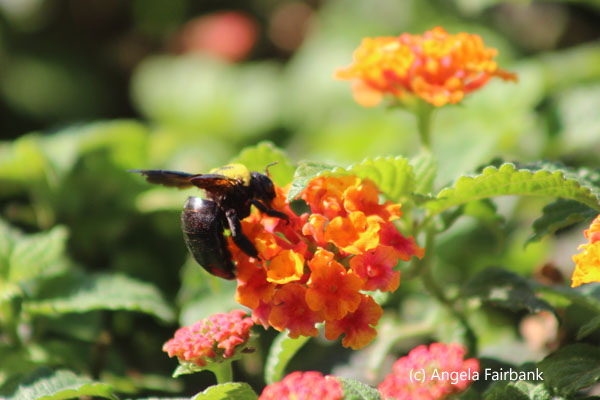  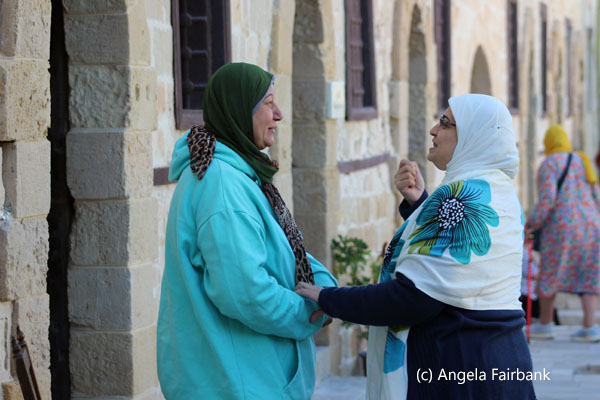 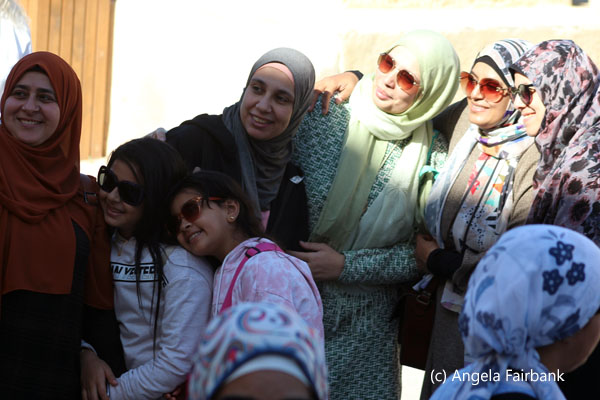 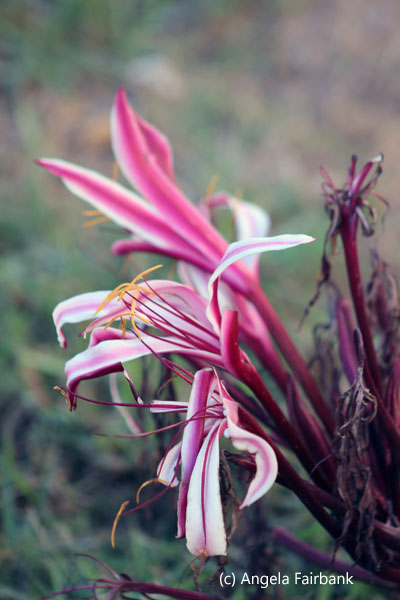 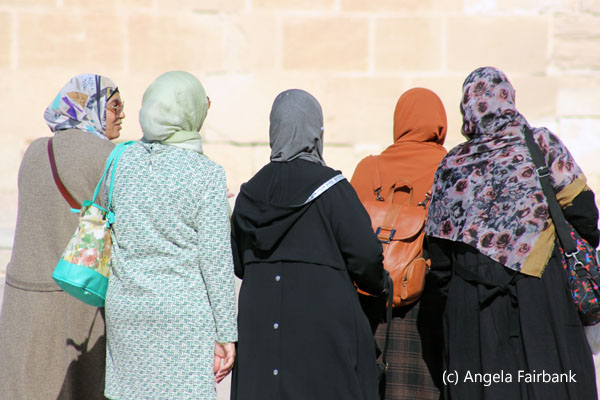 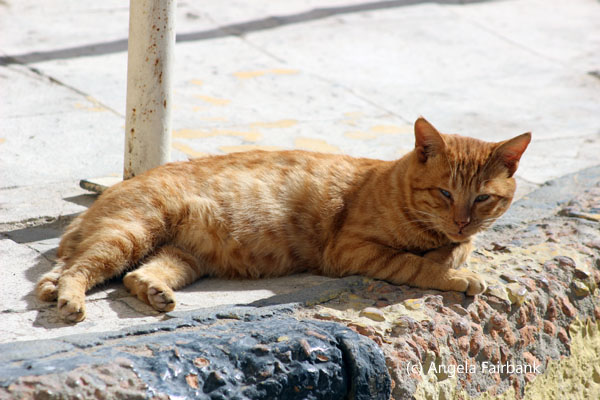 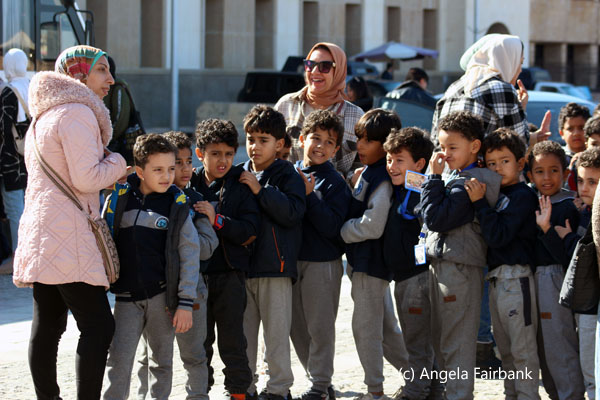 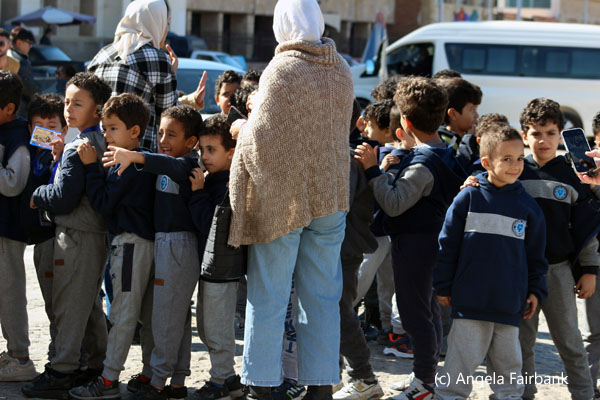 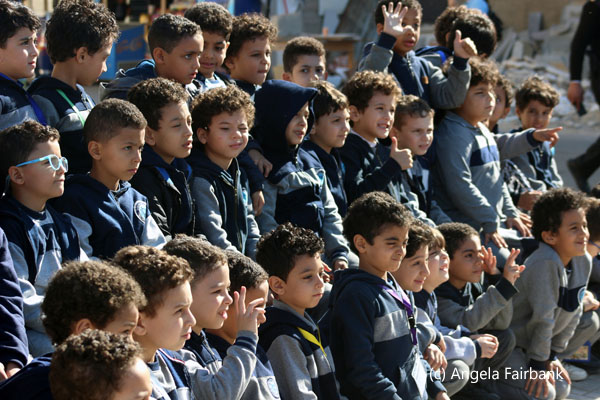 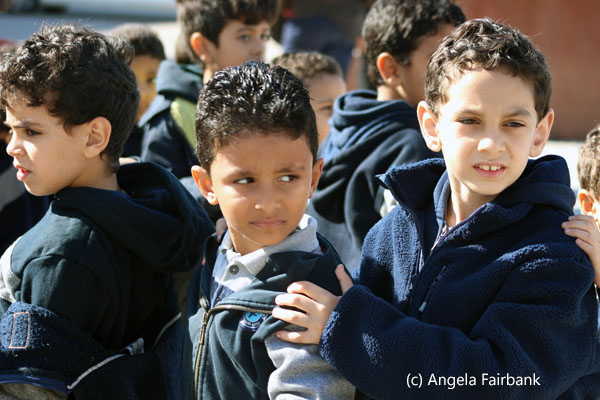 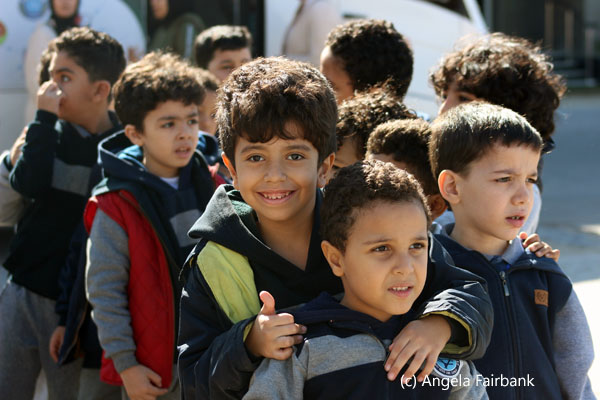 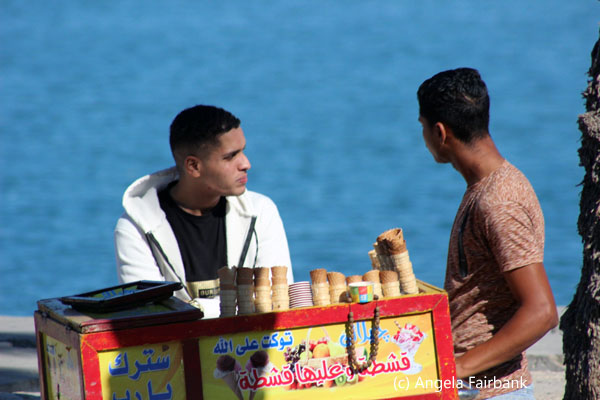 The second monument, which we reached via a drive along the seaside avenue, was a Roman Amphitheatre and baths, fairly recently discovered during the construction of a new apartment block. There were also a few mosaic floors and marble seats, in addition to flowers, bees, butterflies, and dragonflies, oh, and some cats. 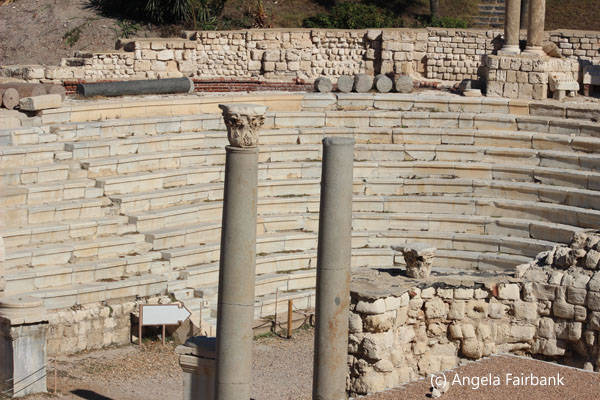 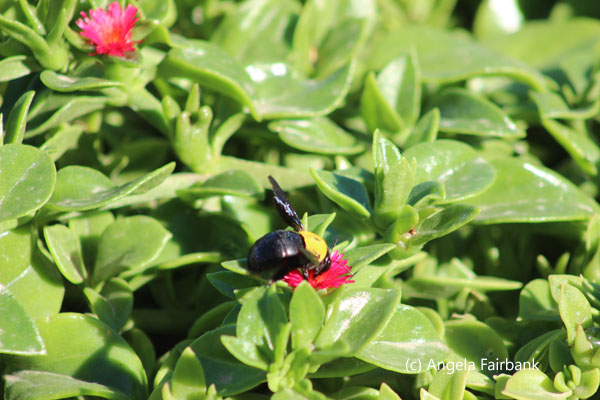 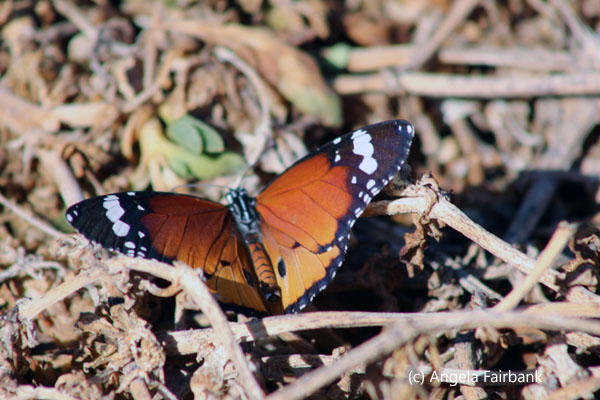 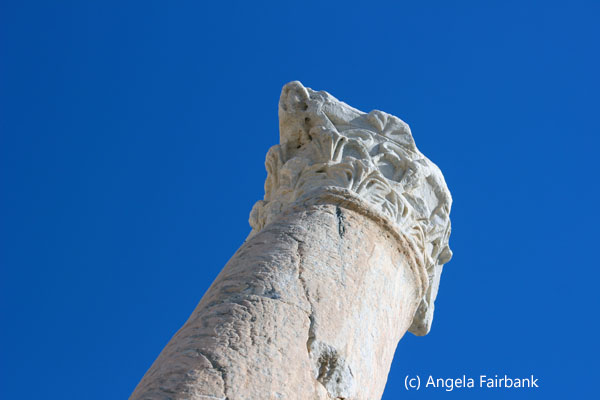 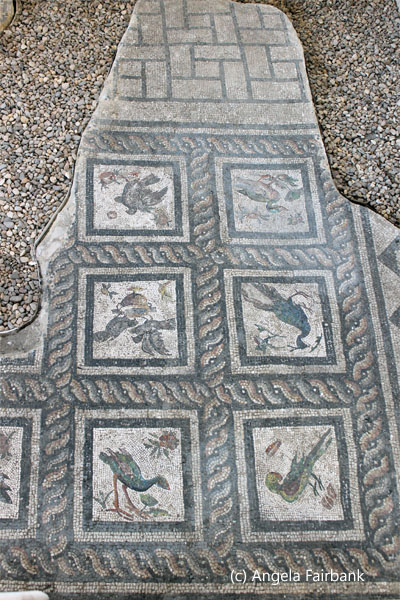 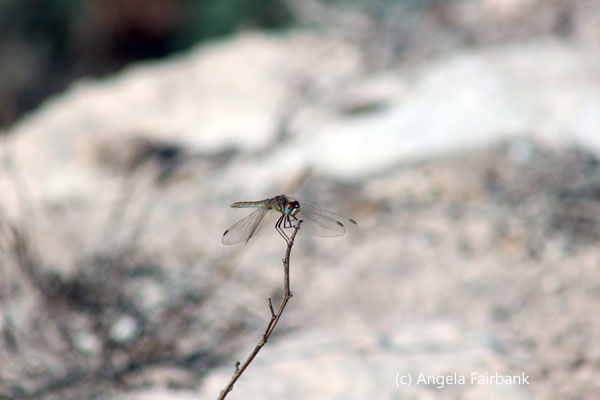 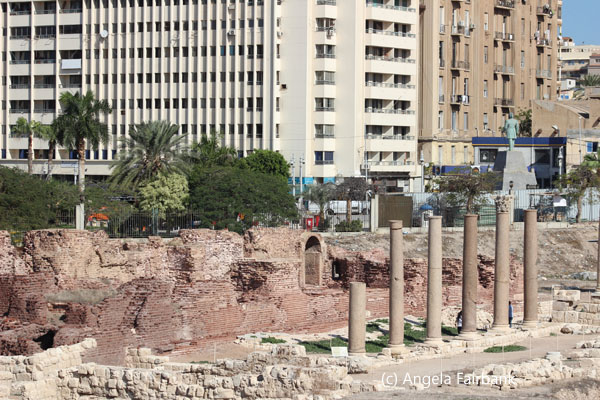 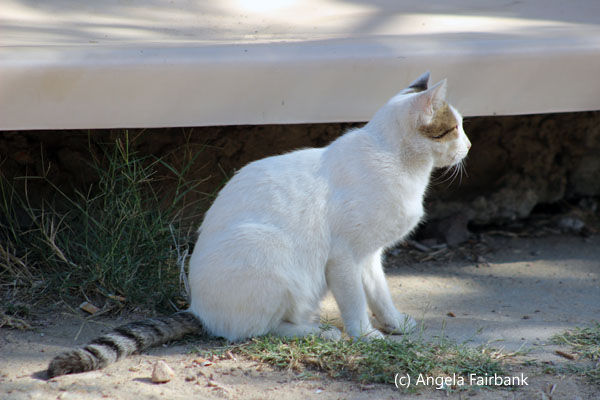 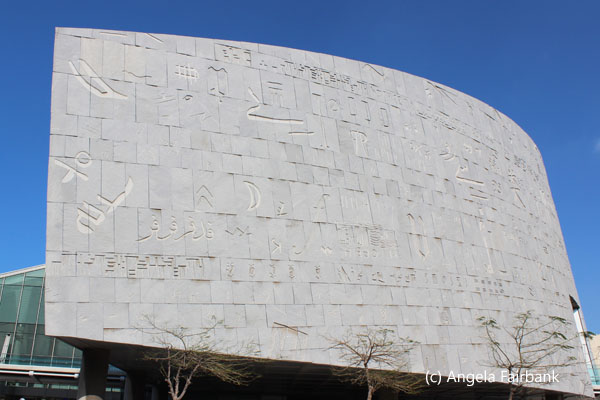 Our final visit was to the Bibliotheca Alexandrina, which not only contains 600,000 books in various languages, but also art galleries, an archeological museum, and various other galleries dedicated to exhibitions of cultural importance. I wandered into the French section of the library and also checked out the bookstore as well as some of the exhibitions. 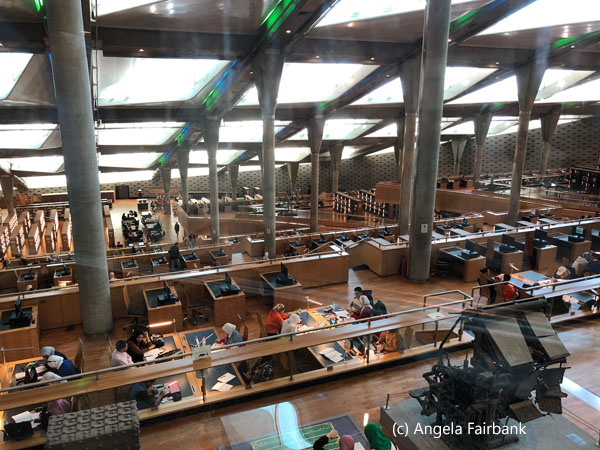 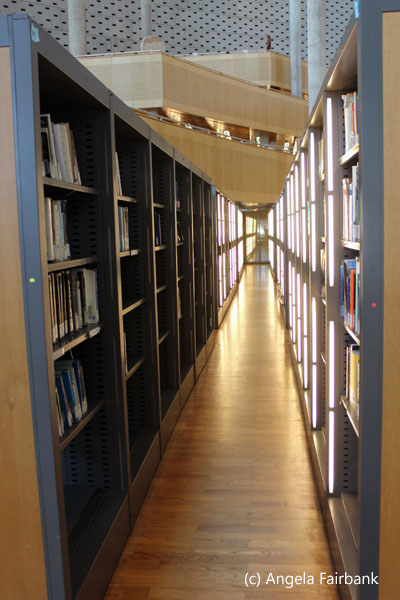 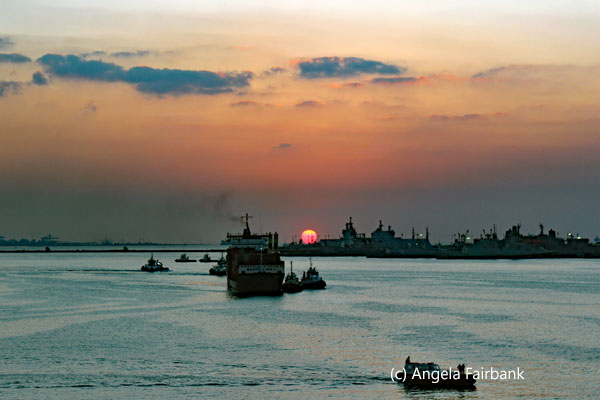 Thursday, November 30, 2023: Port Said, EgyptPort Said is located at the Northern entrance of the Suez Canal, which is one of the highlights of this cruise for me. I had glimpsed it briefly in 2011 but had always wanted to see more. We were given an excellent lecture about the history of the Canal a few days ago but more about that tomorrow. Today, we bussed along the highway to Cairo, the largest city in the Arab world at a population of 22 million and visited the last remaining Wonder of the Ancient World, the pyramids at Giza. I won't mention the pharaonic history going back to 2950 B.C. you'll be glad to know--although our tour guide, Samar, did give us a pretty fair summary in the bus--because you can read it yourself elsewhere. It would seem that the last time I was here was in 2011, and the time before that, 1992, so this is my third visit to the Pyramids and Giza.
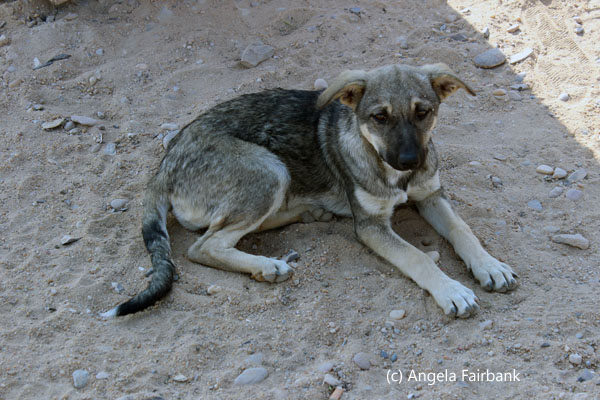
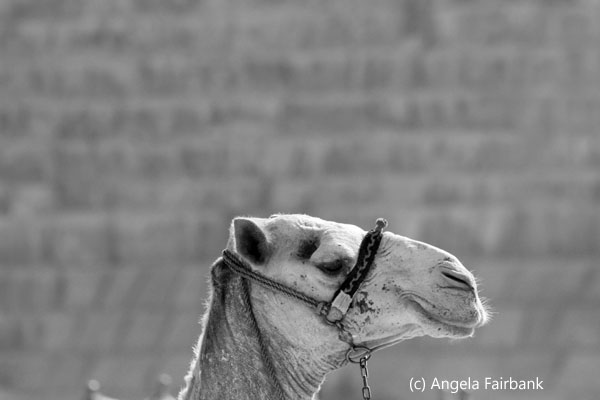 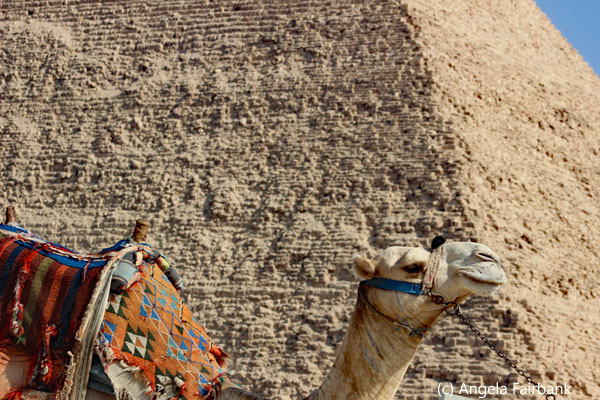 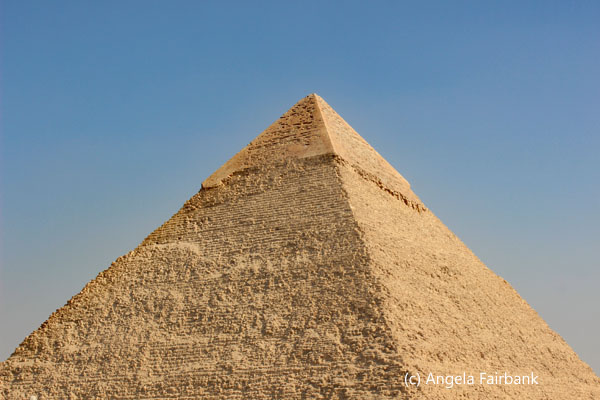 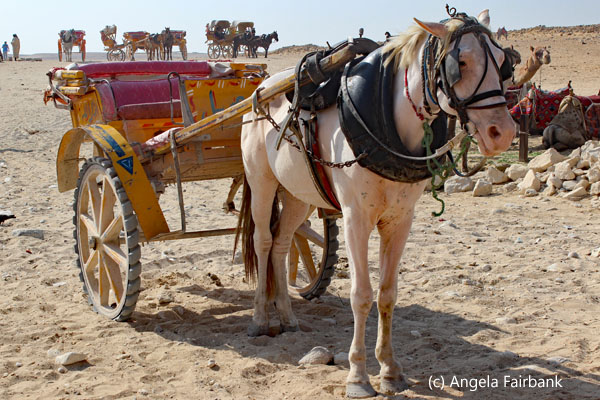 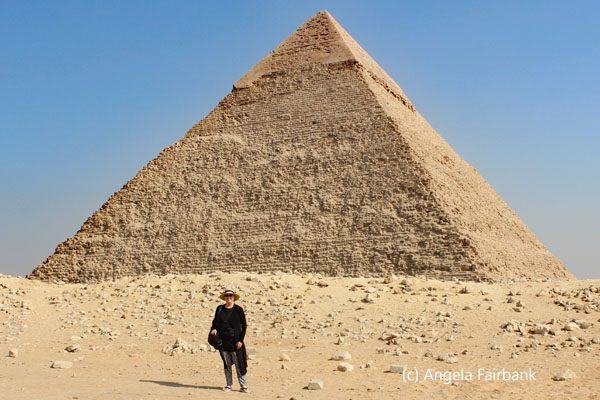 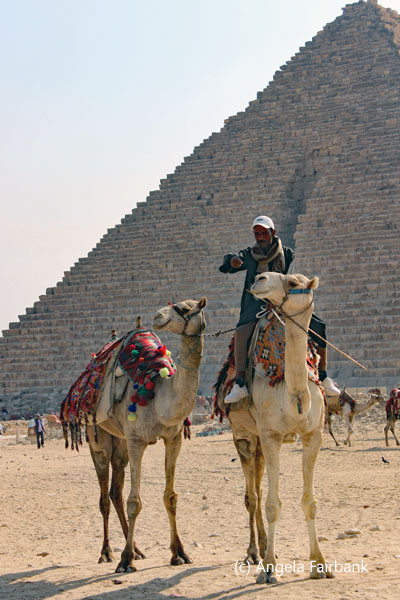 We set off in a convoy of six coaches, with police/military escort for part of the way, nearly three and a half hours (!) to Cairo from Port Said where we were docked, and there were no stops for toilets en route so it's a good thing there was a WC in the bus. When we arrived at the pyramids of Giza after all those hours, we were offered snacks, since lunch wouldn't be until much later, but were then told we had 20 minutes, and our entry included the fee to look into the chamber in the smallest of the three pyramids. Well, by the time we had walked over there from where our busses were parked, there were only 5 minutes of the 20 left and there was a line up, so I forewent the opportunity. I think I'd had a look in 1992, but not in 2011. I doubt things had changed and I was told it was only an empty room anyway. Then, back on the bus, we were transported a few feet to a spot above the entire complex, so we had a view of all three pyramids. Again we were given a short time to take photos, provided we could find a space among the camels, their drivers, horses, and dogs--rather than cats this time--and avoid all their droppings (the animals not the humans--there were toilets on site but you had to have Egyptian pounds to pay for them).
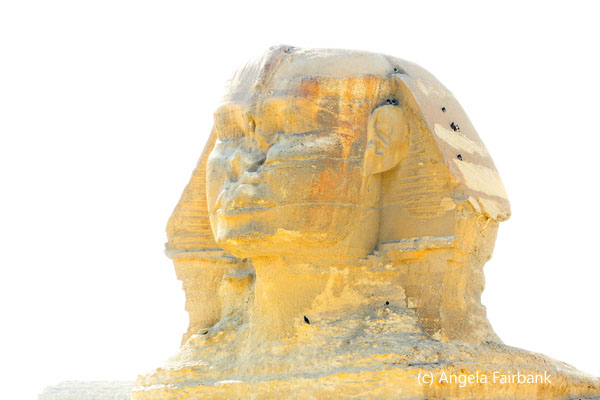
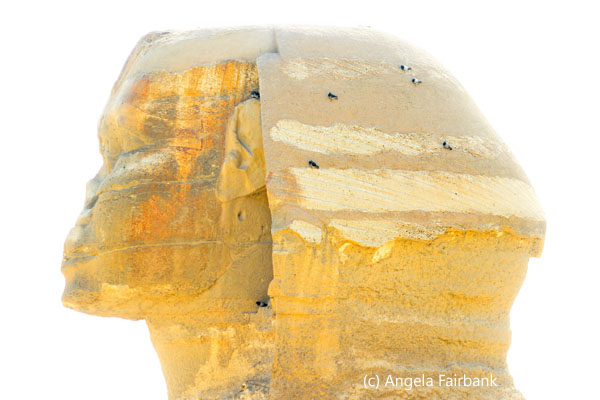
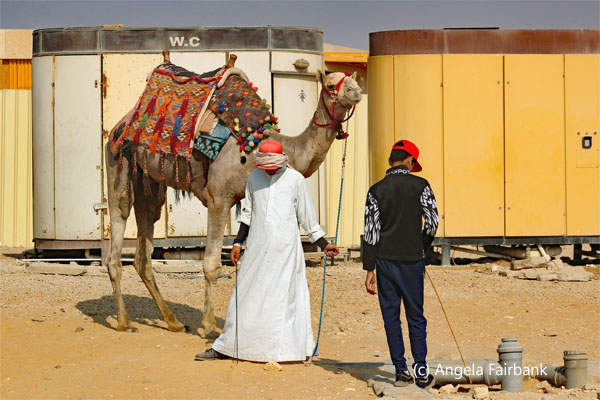 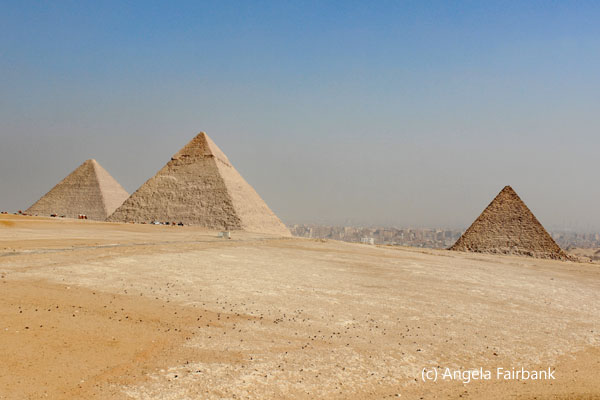 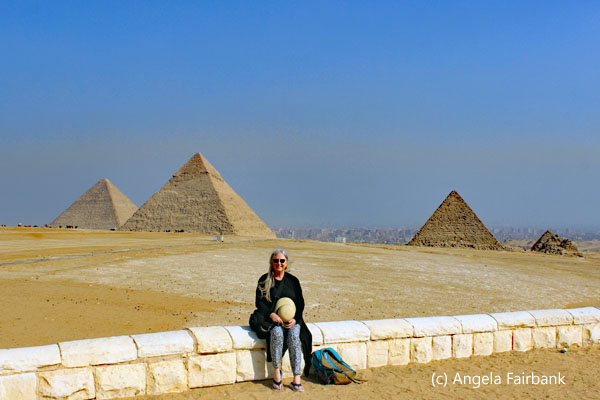 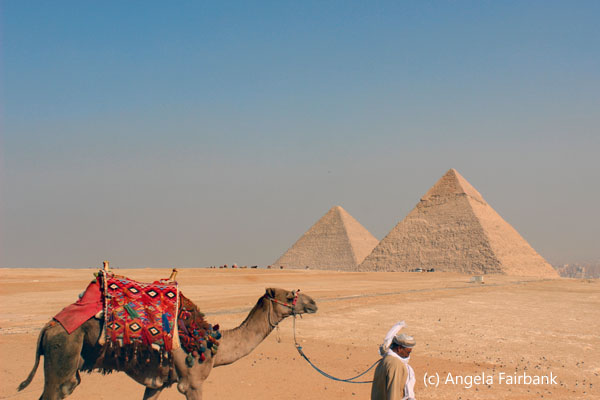  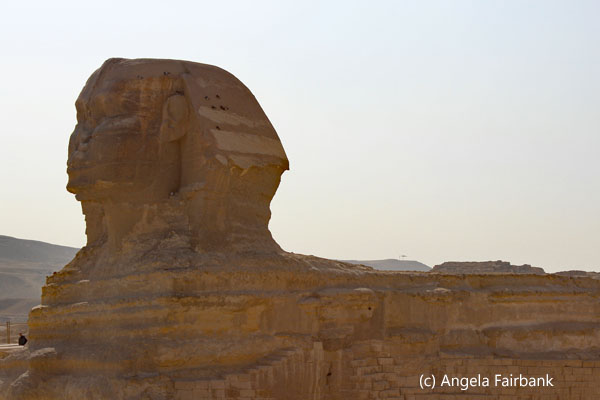 Our final, very brief, stop on the way down the hill, was on the road beside the Sphinx, giving us a chance to photograph a little bit, but entry into the area of the Sphinx itself was not allowed, though it had been, to my memory, in 2011. We were told that the new museum was now located somewhere near the Sphinx so perhaps this was the reason for the short stop on the side of the road.
  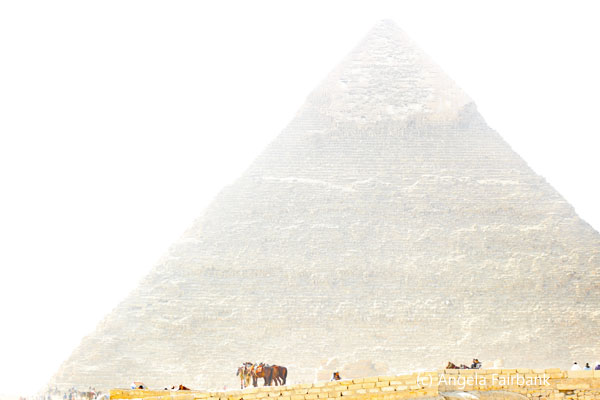 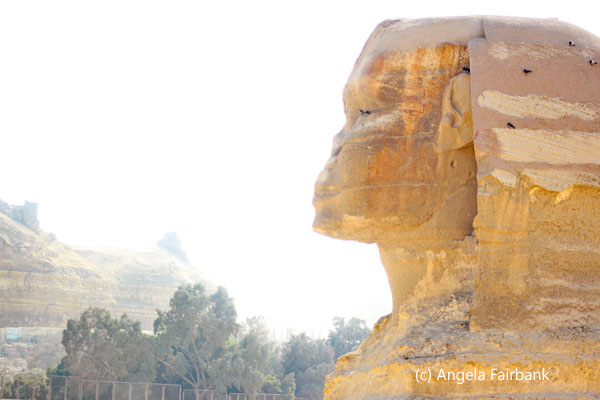 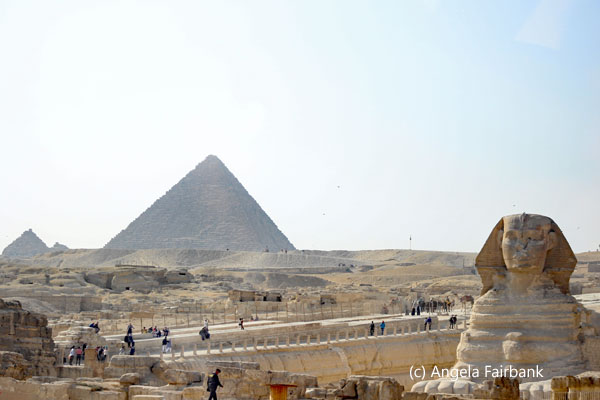 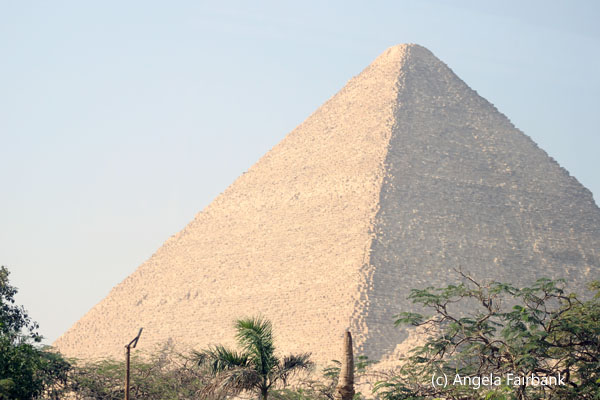 Next, we were driven into Cairo and to the Nile River, the longest river in the world at 3,563 nautical miles, for a 90-minute lunch on a floating restaurant (much like we had done in 2011), but although the food was nice, the wine was vinegary and the entertainment horrendous. There were two performers only, both of whom went on for far too long. Well, I am sure you will have guessed that there were a lot of unhappy passengers, all of whom agreed that we should have had far more time at the pyramids and the sphinx, which were what we had all endured the long bus ride to see, and far less time for lunch, which was certainly nothing special and not worth the trouble. A packed lunch we could have eaten in the bus would have done for us. One hundred and sixty-two members of the ship's crew were on another coach and they were provided with a packed lunch, or so I learned later from my Thai cabin stewardess.
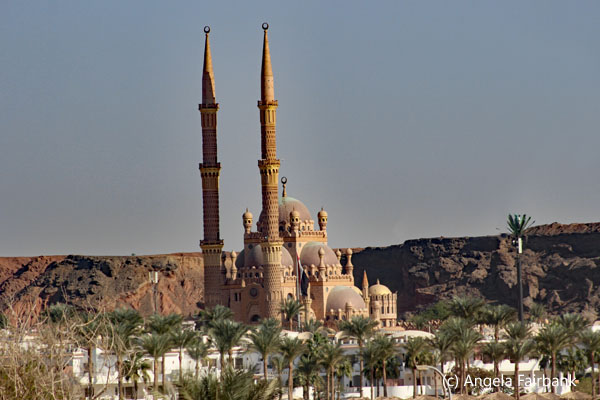
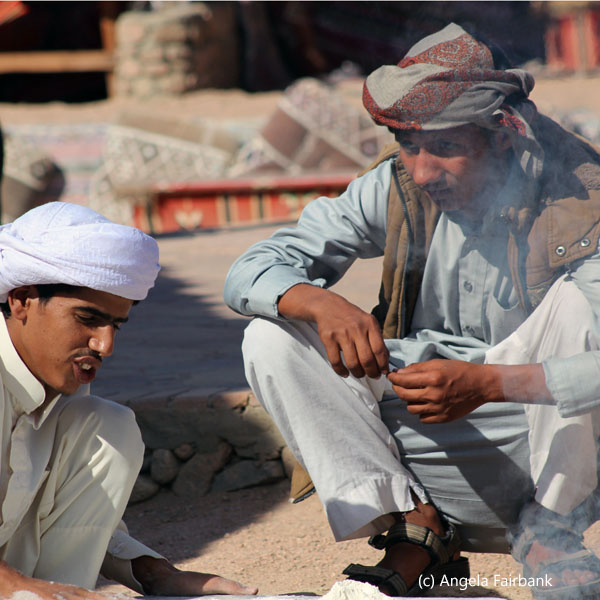
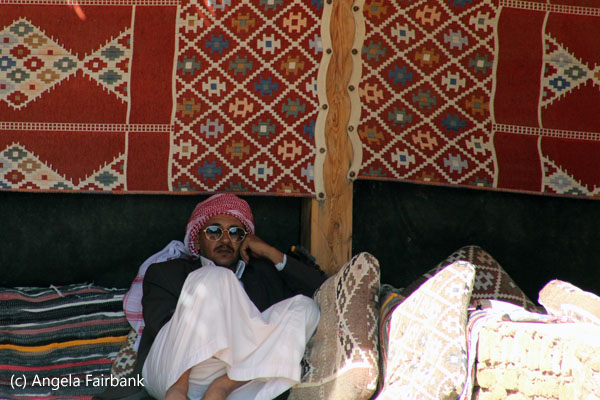
Friday, December 1, 2023: Suez CanalToday we traversed “the ditch,” which connects the Mediterranean Sea to the Red Sea, approximately 120 miles (193 km) long and with a variety of widths, constructed by French diplomat and engineer, Ferdinand de Lessups, and which opened on November 17, 1869. A very good day indeed, full of photographic opportunities. Like yesterday, I had set my alarm for 5:45 a.m. because I wasn't sure at what time things were to kick off. However, I had read that sunrise was at 6:00 a.m. and sure enough after my shower was over and I was dressed, I checked, and we were indeed on our way. There was little noise as the speed was slow so as not to create a wash and thus erode the banks. I went up to the breakfast restaurant but was surprised they weren't opening until 7:30 instead of the usual time of 6:00. Nonetheless, I managed to grab a coffee and some yoghurt and headed to the outside decks to photograph from the stern, from the forecastle, from deck 6 forward and finally from the panorama deck, deck 3, which is open to walkers the whole way round. At about 7:30 a.m., I went for a proper breakfast and then photographed some more and eventually headed back to my cabin and watched the rest of the canal ride from my balcony. As my cabin is located on the starboard side, I saw much activity on the Egypt (Africa) side, with its towns, railway, oases, and farmed land, as opposed to the port side or Sinai (Middle East) side of the canal, which was fairly bleak and sandy. The lecturer who was the expert on the ditch spoke on the loudspeakers as we went under the bridge (El-Qantara el-Sharqiya), informing us that we were the second vessel in a convoy of 19 ships, and then again when we arrived at Great Bitter Lake about half-way along. His final short speech was when we were almost at the end of the canal where Evergreen's tanker, Ever Given, ran aground in 2021 for six days racking up a tremendous bill in the billions of dollars. A memorial in the shape of an anchor has been erected to commemorate the event. The canal ends at Suez City, and at that point (about 4:00 p.m.) we entered the Red Sea, though I must admit that, to my eyes at least, it looks just as blue as all the other seas we've been sailing in! 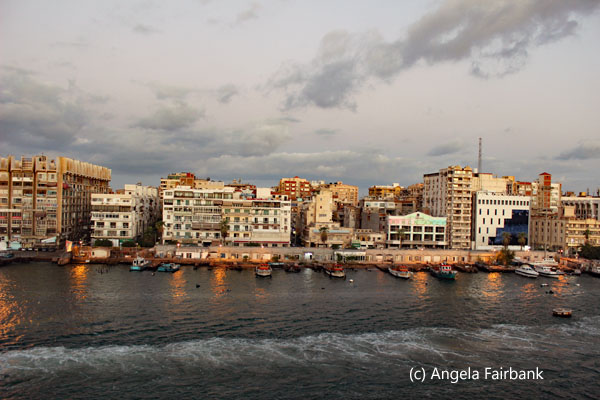 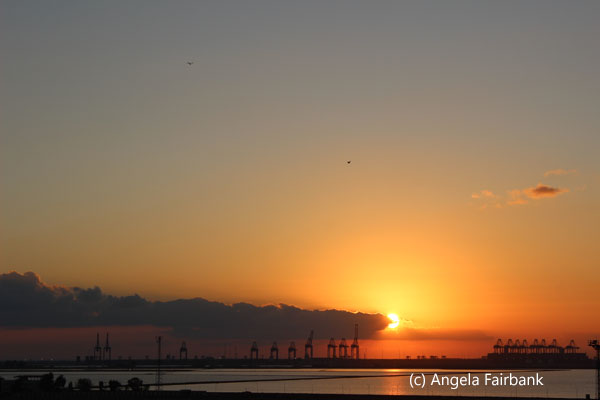 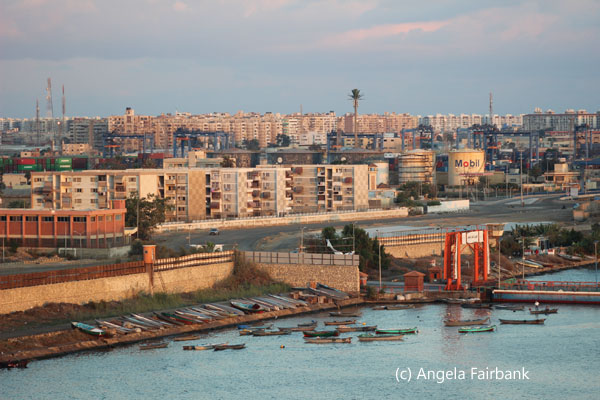 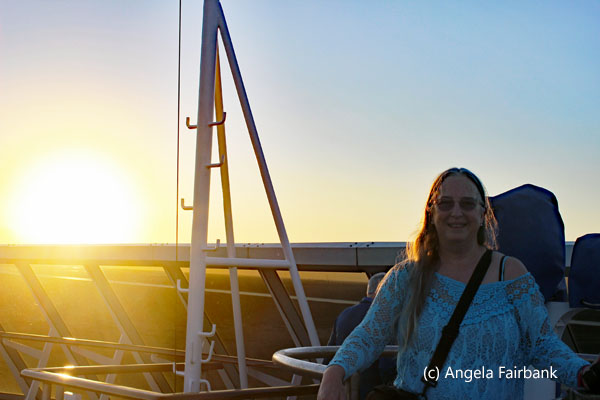 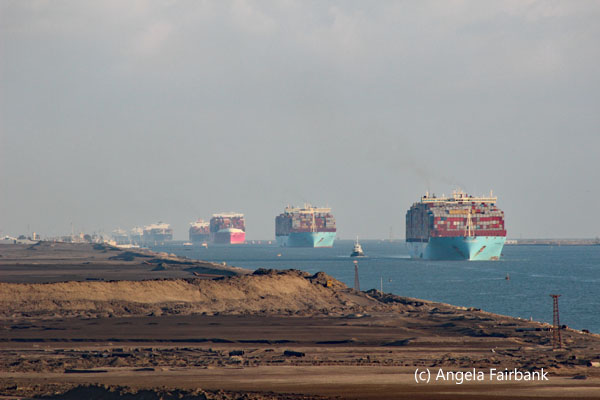 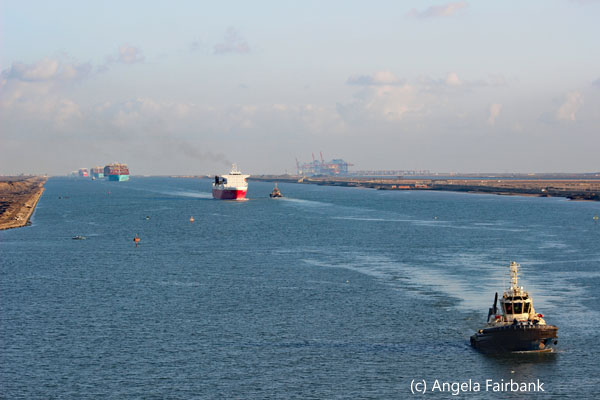 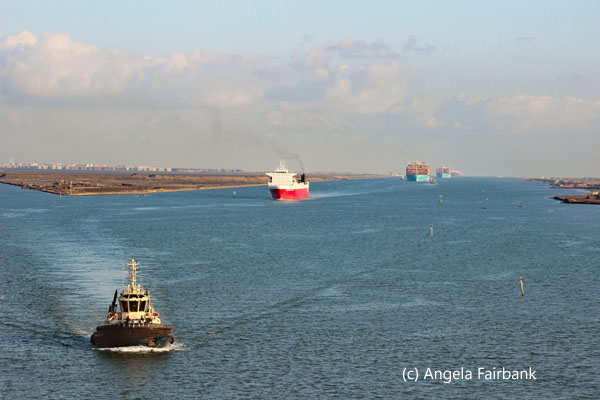 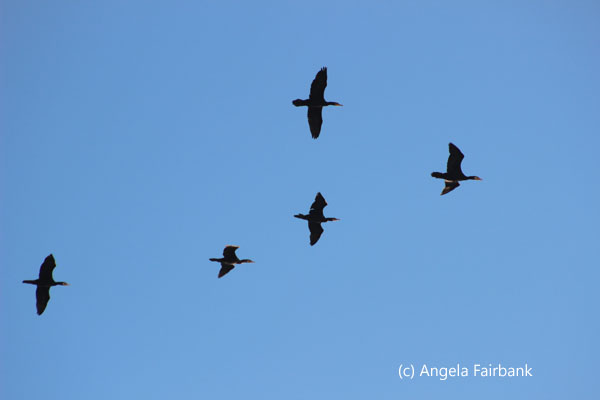 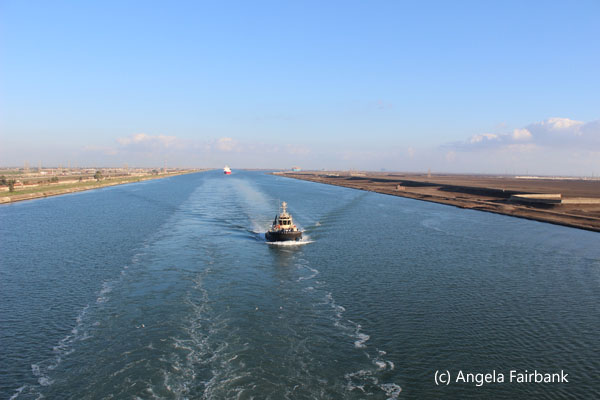 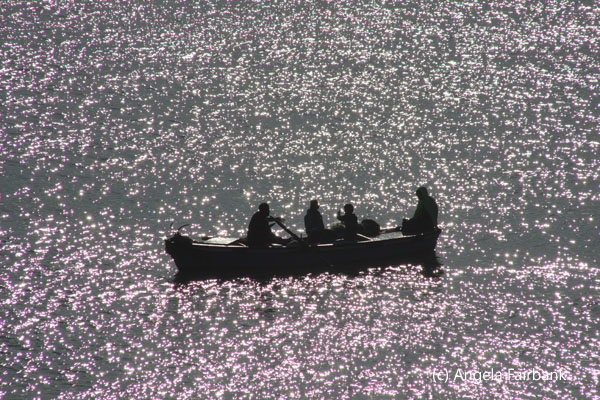 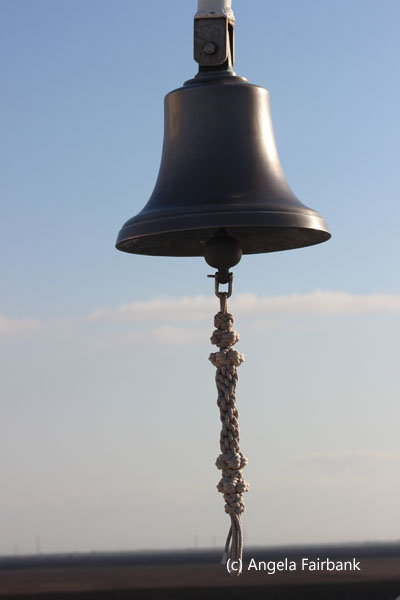 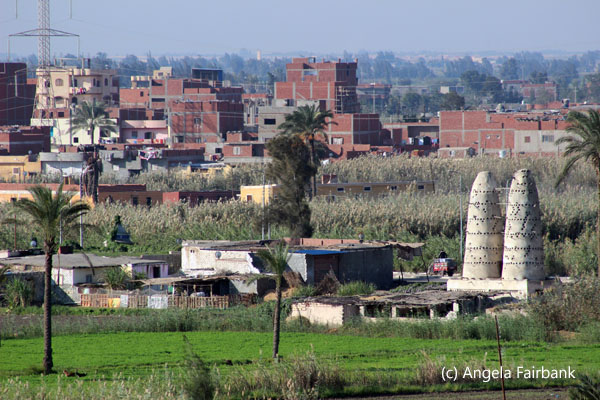 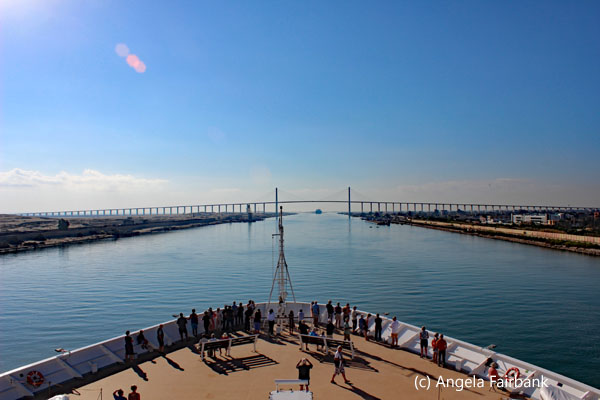 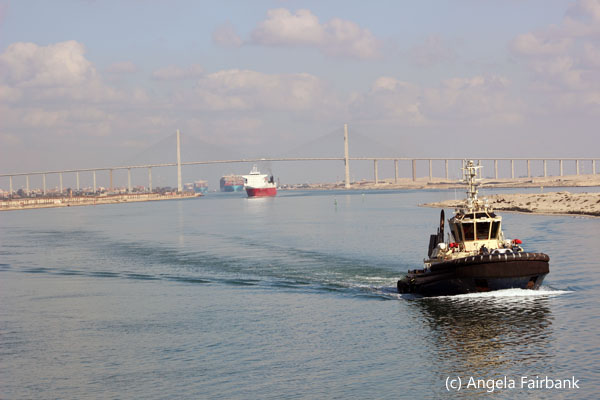 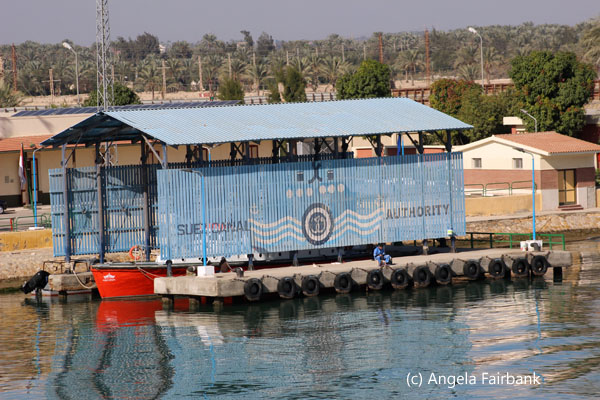 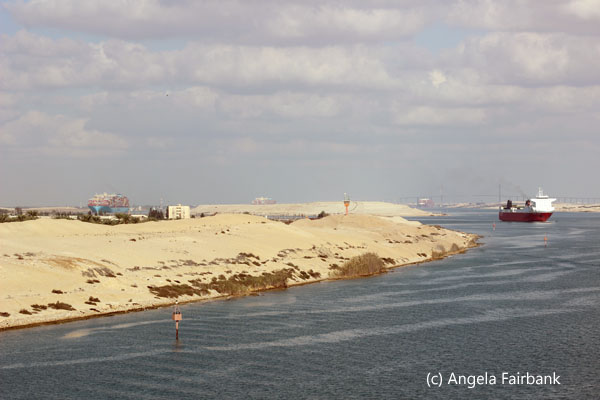 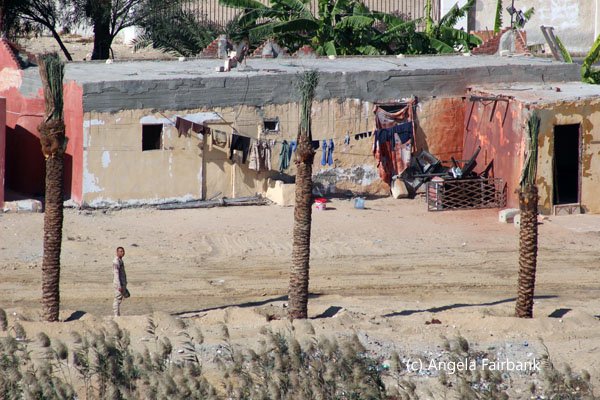 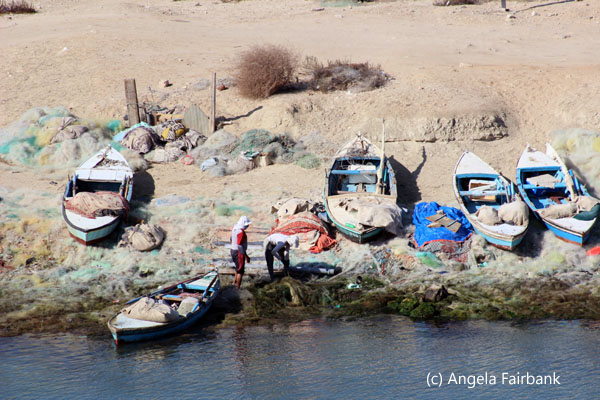 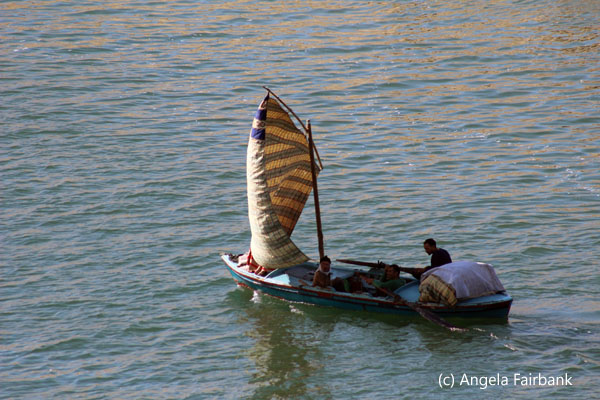 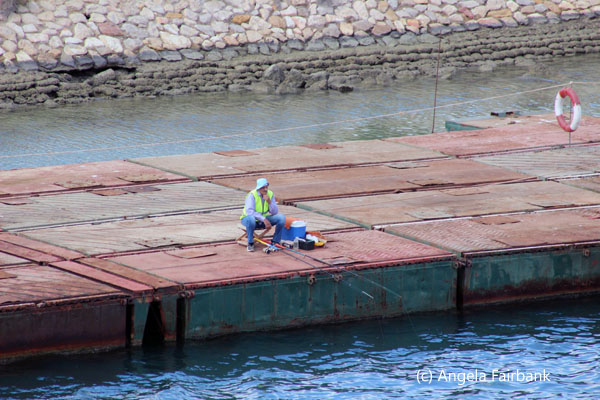 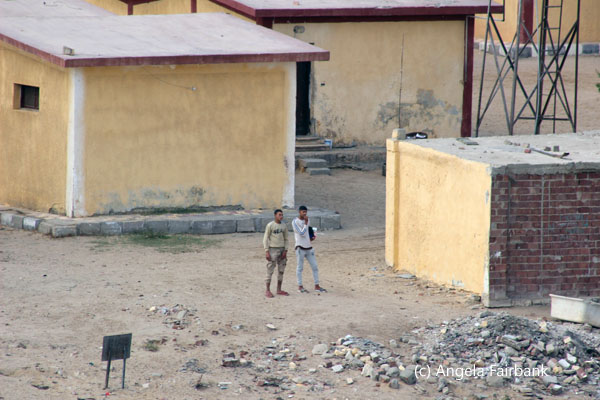 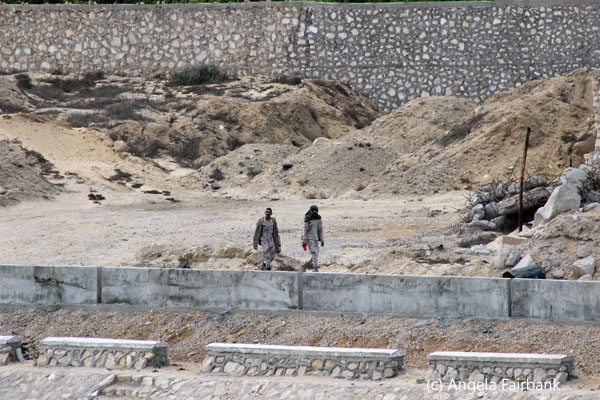 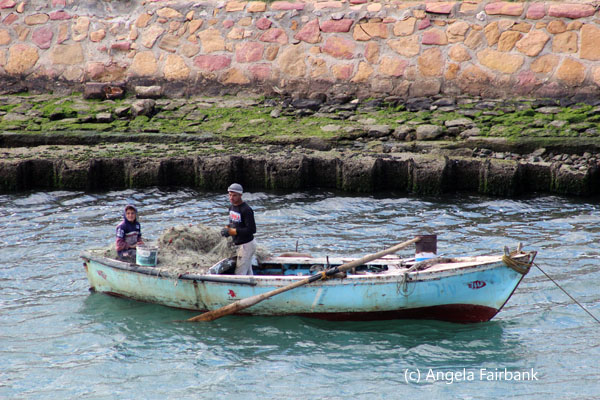 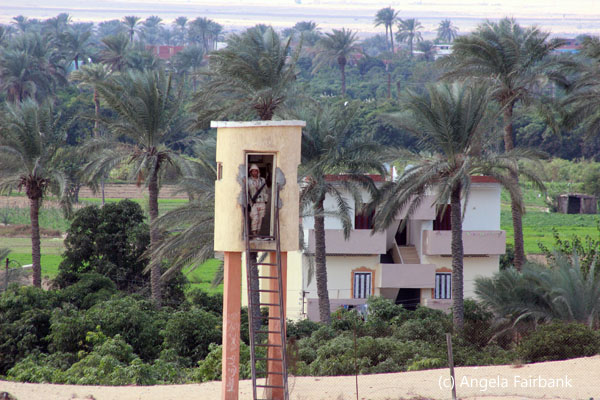 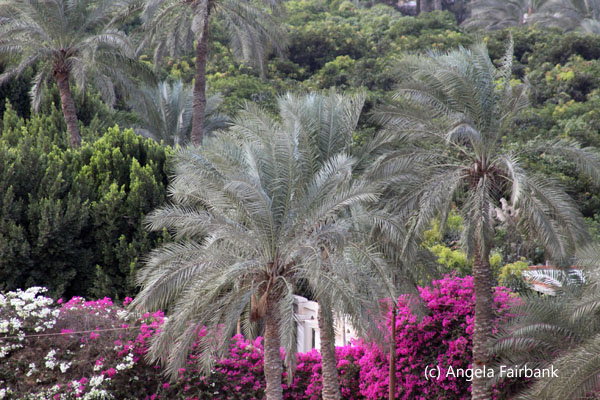 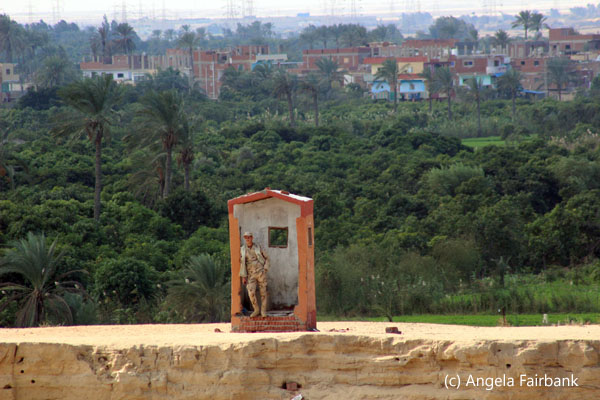 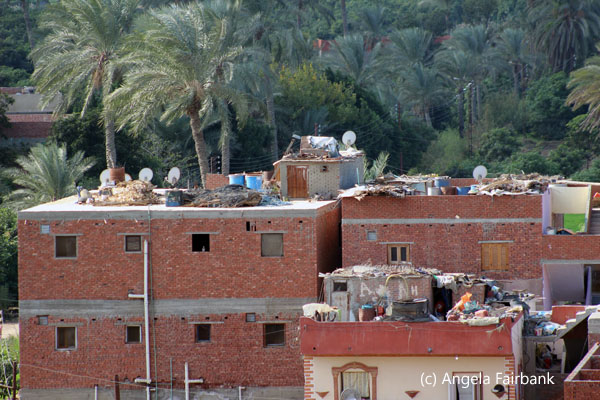 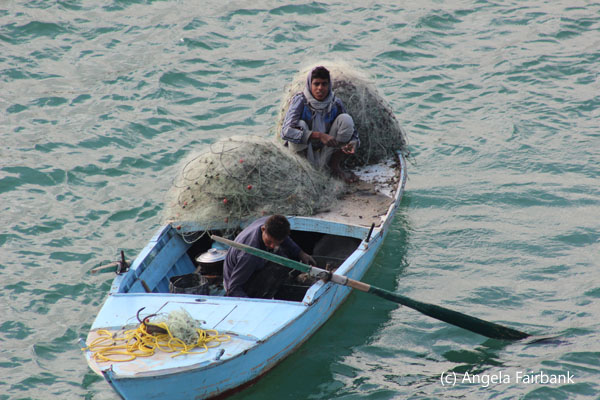 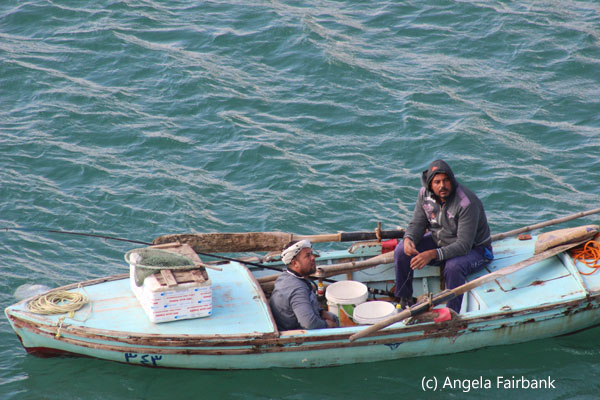 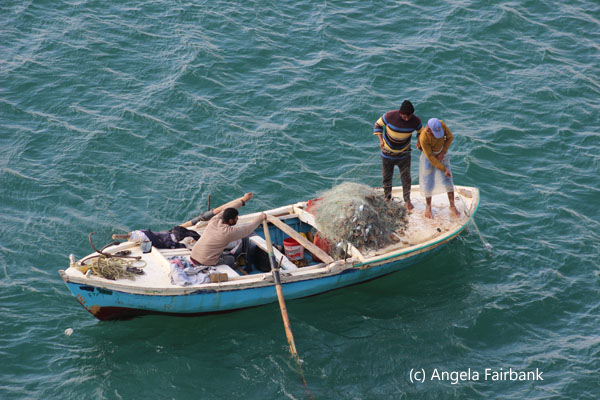 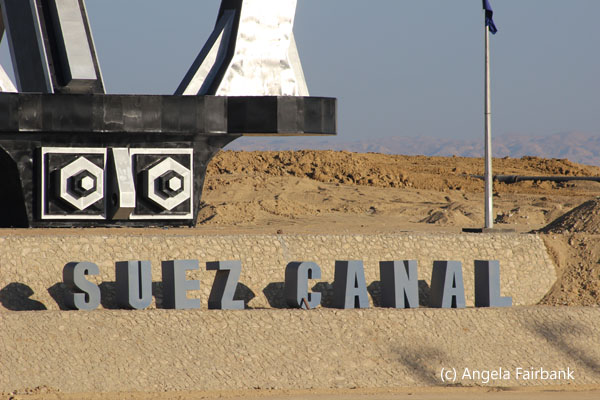 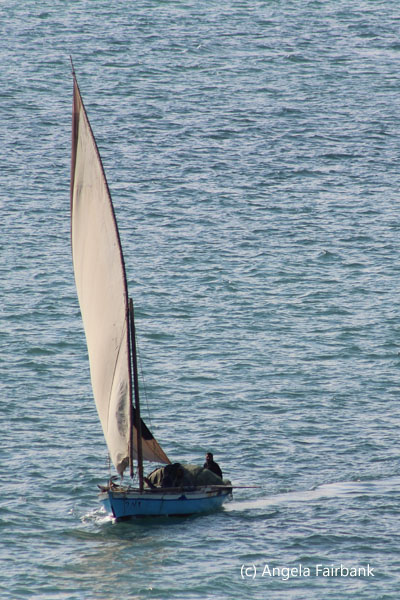 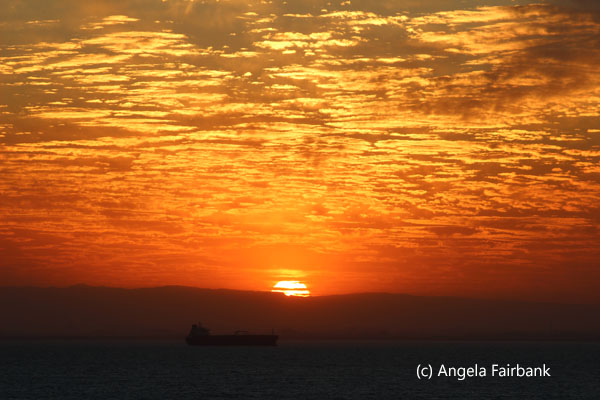 Saturday, December 2, 2023: Sharm El-Sheikh, EgyptSharma El-Sheikh is a resort town on the Red Sea. Constructed in the Sinai desert, it looks like a case of “build it and they will come” with their 8-lane highway. It is known for its snorkelling and for its proximity to St. Catherine's Monastery, although surprisingly enough there were no tours offered to the latter site. I fancied some culture and chose a tour called 4x4 Safari and Bedouin Experience. Well, it wasn't all bad, as you will see from the photos, but there did seem to be a lot of sitting around and waiting for something to happen.
 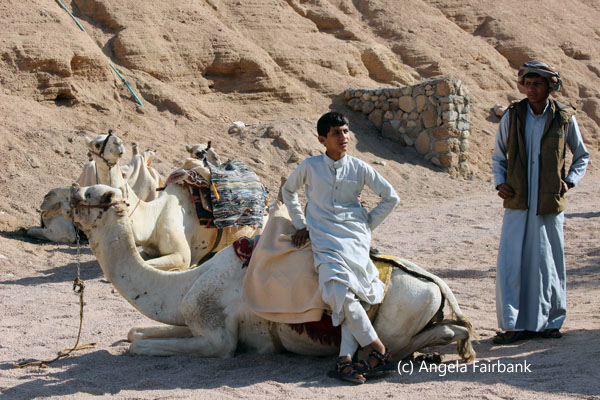 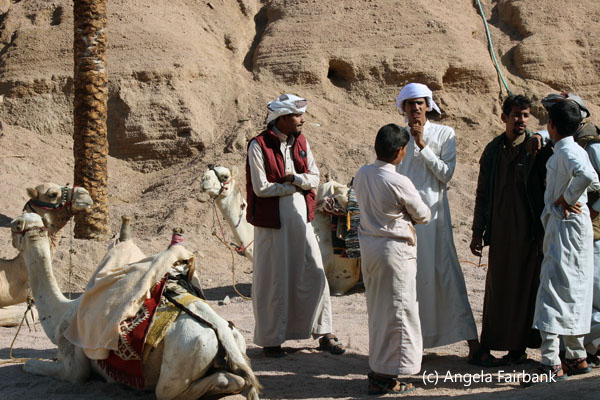 Yes, there were twirling dervishes (3 young men) accompanied by a drum and a mizmar--a reed instrument that is blown into--and then what they called folkloric dances by the same three young men and two girls, one of whom didn't seem to know what she was doing. We were offered tea, which they made by boiling water over a campfire. Then there was a demonstration of bread making, using water, flour, and salt, shaping them into large balls and then gradually flattening them out with a small rolling pin and stretching them into the size of a very thin pizza dough. This very thin pizza shape was then placed over top of an upside-down metal bowl and baked over the fire. The flat breads thus baked were then folded into three and later torn up to make smaller pieces. Foregoing the bread (which had been covered in flies during the shaping process) and all the other Egyptian food they served up to us at this point, I stuck to two boiled eggs which were in their shells, so I thought they'd be the safest. The other 27 people on my trip seemed to enjoy the food, however. (Perhaps I should mention that I have a cold today so am being careful what I eat. Because of said cold, I found my sense of smell was unusually heightened. First, I noticed that the male passenger who sat next to me in the 4x4 had overenthusiastically doused himself in deet (mozzie spray) despite the fact that mosquitoes only come out in the evening, so when we were offered the chance to change vehicles, I and another lady leaped at the idea and instead of six of us squeezed into a 4x4 plus the driver, we were four plus the driver, the other two ladies being crew members (future cruise sales and security), who were accompanying our group. Then I noticed this over-sensitivity to smell again when we arrived at the camp, as my nose was bothered by the odor coming from incense sticks--meaning once again I had to choose carefully where I sat. The smoke from the fire was the third thing my nostrils noticed. I accepted the offer of sweet milky Nescafé coffee at the end of the meal, while the rest (mainly British but also Australians, Norwegians, and Dutch) drank more tea. 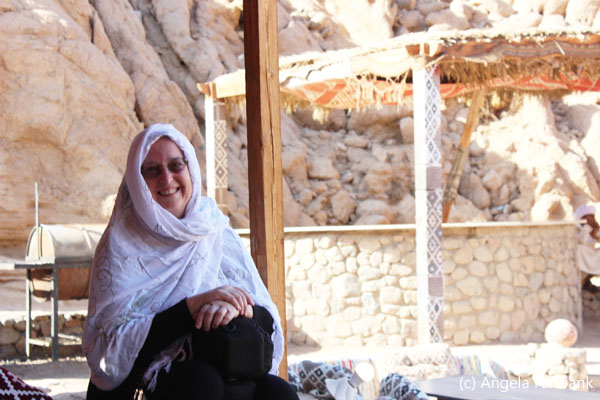 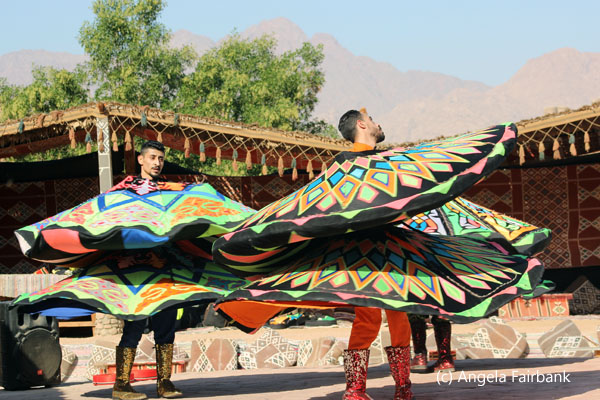 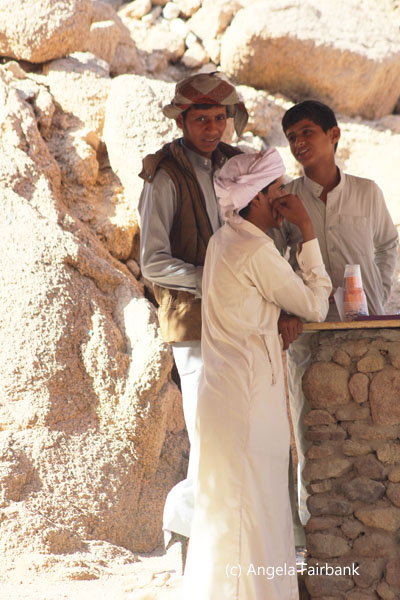 Finally, the main tour guide gave us a brief history of the Sinai and the Bedouins, but we were spread out around the premises, so he had to walk back and forth as he spoke. This meant that some people heard one part of the explanation, while others heard the other. Not an ideal set up.
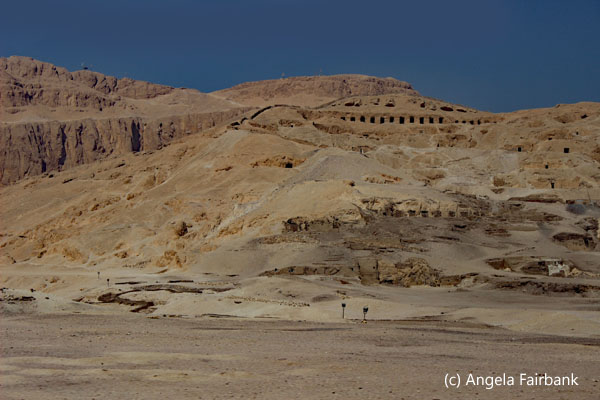
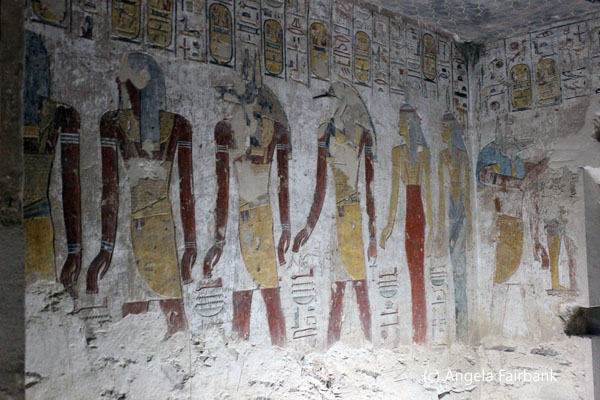
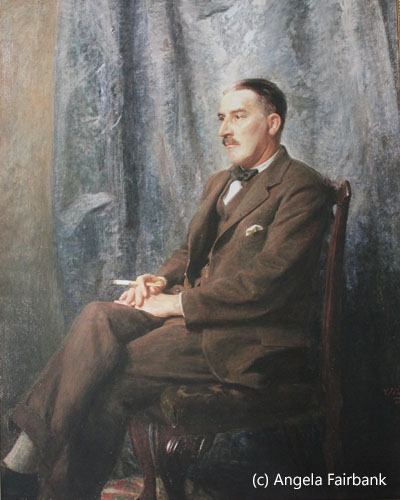
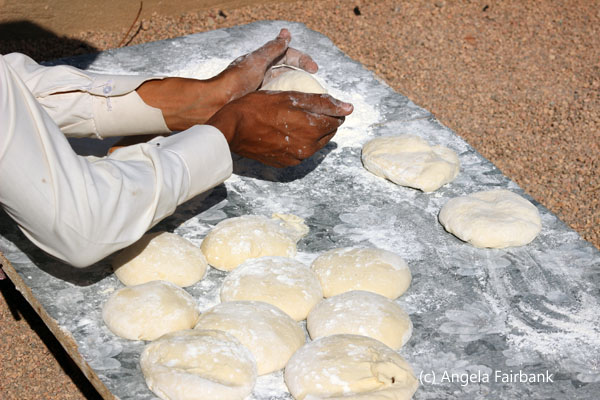   We were then driven back to our ship, though a stop was made in the desert--I suppose so that people could take photos of the desert. I stayed inside the landrover at that point as it was 29 degrees Celsius outside and the 4x4 had air conditioning. Also, if I wanted, I could take photos through the open windows. 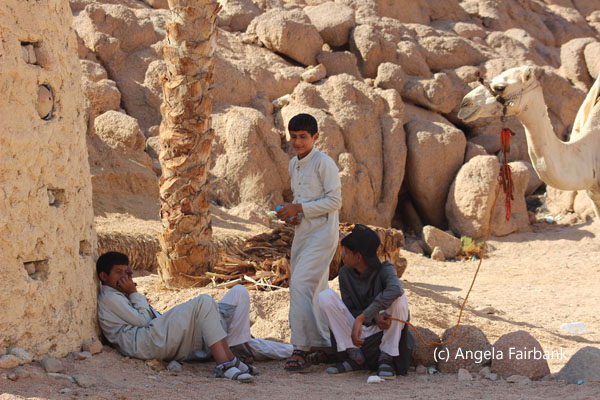 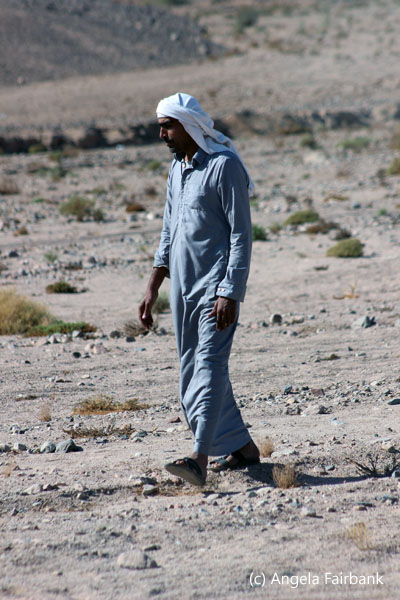 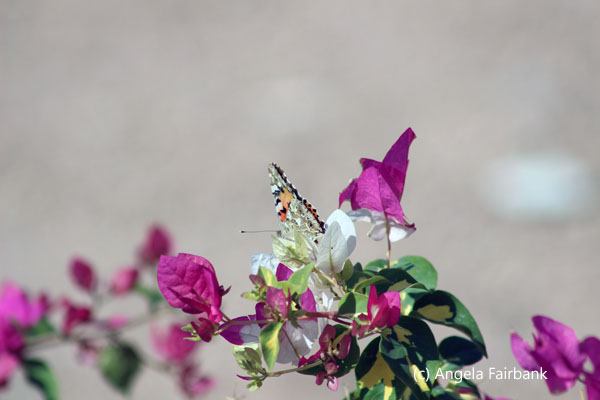 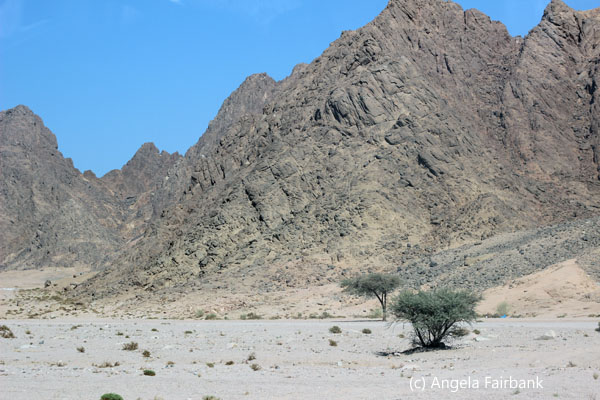 Sunday, December 3, 2023: Safaga, EgyptToday's port is located on the Egyptian side of the Red Sea. We were here so that we could visit Luxor and the Valley of the Kings on the west bank of the Nile River. I chose the tour called In the Footsteps of Howard Carter, the British archeologist (1874 - 1939) best known for finding the tomb of the 19-year-old Pharaoh, Tutankhamun, in 1922. He entered the sealed, intact, burial chamber of the latter on February 16, 1923, just over 100 years ago. We were also to visit the combined tombs of Ramses V and VI, the paintings inside of which our tour guide-cum-Egyptologist described as being the best preserved. Our third visit was to the tomb of Merenptah, which Carter discovered in 1902 and is the second largest in the Valley of the Kings.
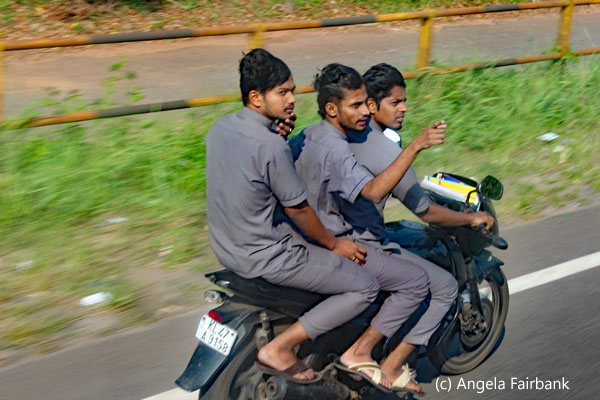
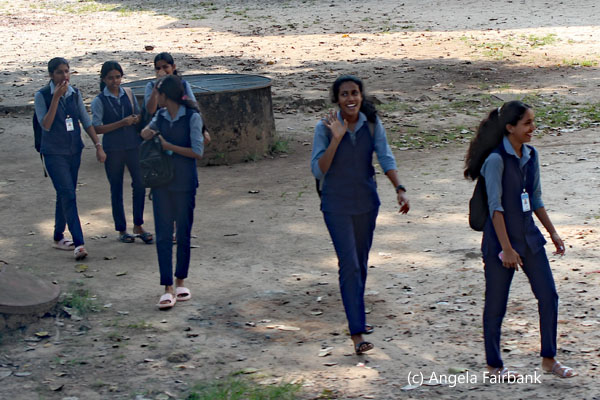
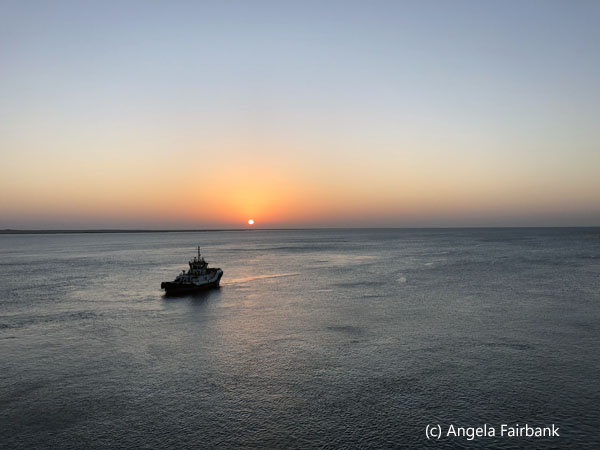 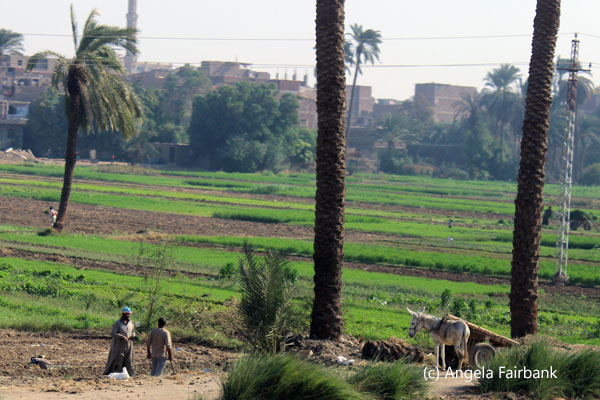 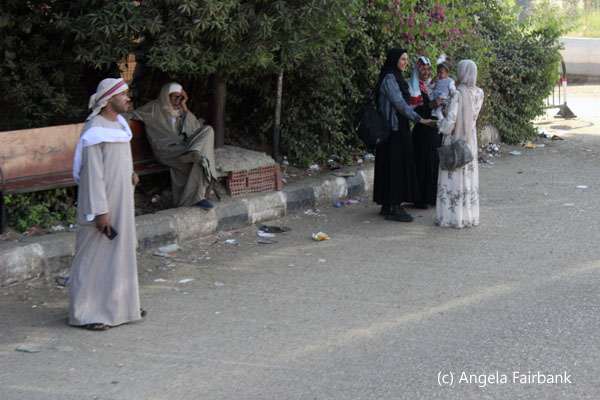 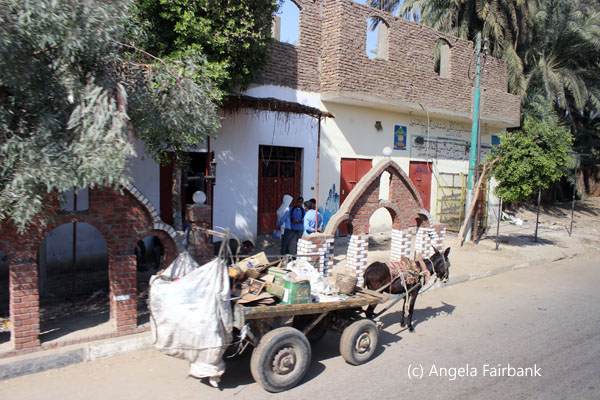   Once again, we started out early at 7:30 a.m. and didn't get back to the ship until about 8:00 p.m., due to the fact that the distance was so great. Luckily though, this time there were fewer people in our group, and I had two seats all to myself. Our guide, who, again, never announced his name, but whose English accent reminded me of Sacha Baron Cohen in his character of Ali G., gave us all printed sheets depicting various hieroglyphics and describing the various ancient Egyptian gods and goddesses. I was more interested in watching life outside the bus window, people going about their daily lives, farming in the fertile Nile valley with their donkey carts, motorcycles sometimes carrying up to three people, and larger ones carrying masses more. Some women were fully covered up to their eyes, some men wore caftans and turbans, and then there were school children as they left school carrying backpacks. No dovecotes this time, but the roads were lined with five colours of bougainvillea--red, pink, purple, orange and white.
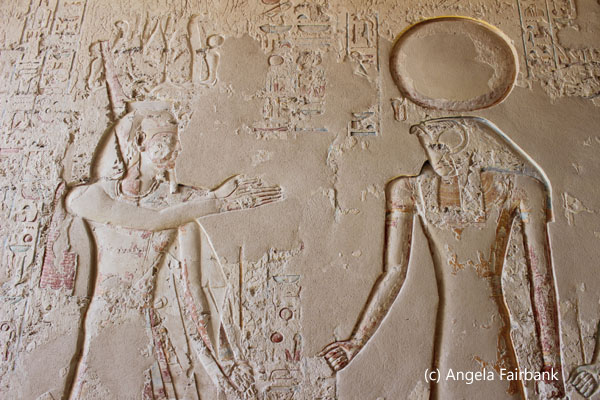 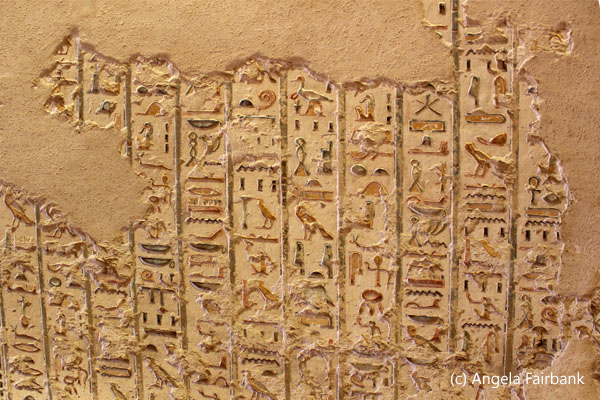 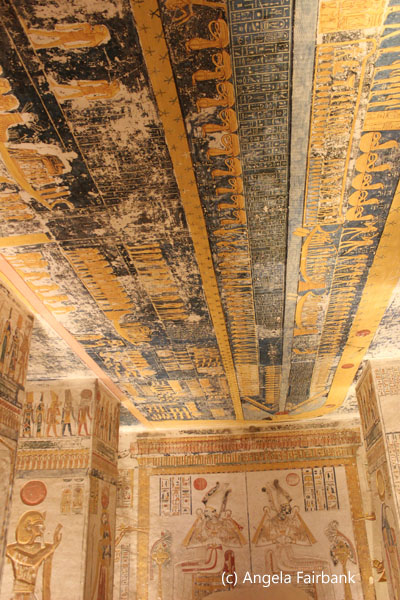 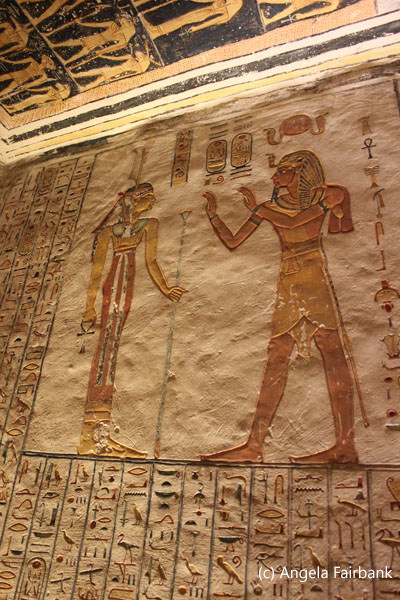 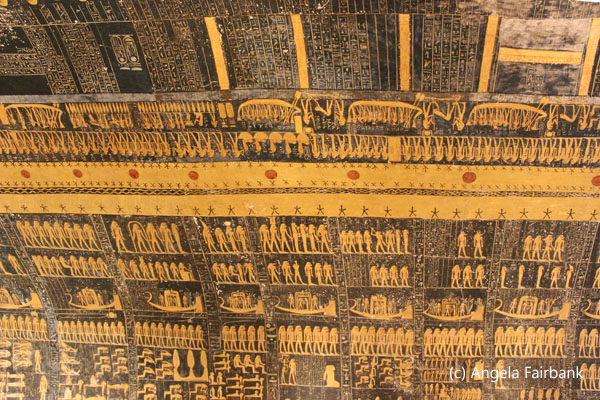 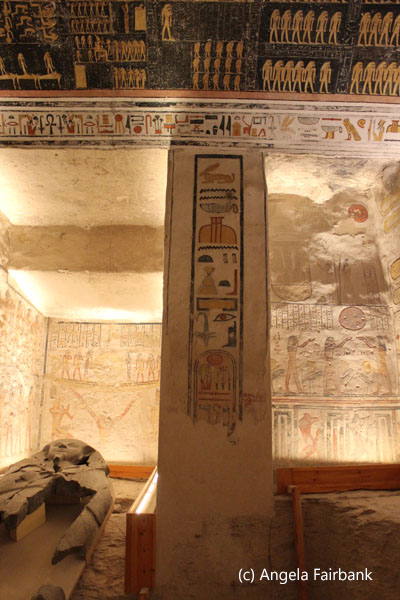 The bus was air conditioned, so when we finally stepped outside in the Valley of the Kings at about 11:40 a.m., we could feel the sweltering wet heat of 32 degrees Celsius. Apparently, this is the high season for tourists in Egypt. They don't come in the summer months because it's about 10 degrees hotter then! Nevertheless, I was surprised at how many tourists there were. I remember coming here in 1992 but I don't remember which tombs I saw at the time. What I do recollect is that we were not allowed to take any photos whatsoever, which, for me, kind of defeats the purpose because if I have no photos, my memory is impaired. I'm fairly certain, however, that Tutankhamun was not one of the ones I visited. There are apparently 62 tombs that have been discovered (King Tut is buried in tomb number 62) but it is believed there are still many more to be discovered (or to be left in peace).
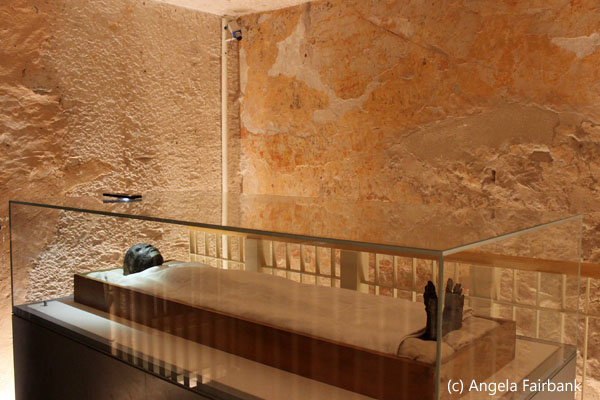
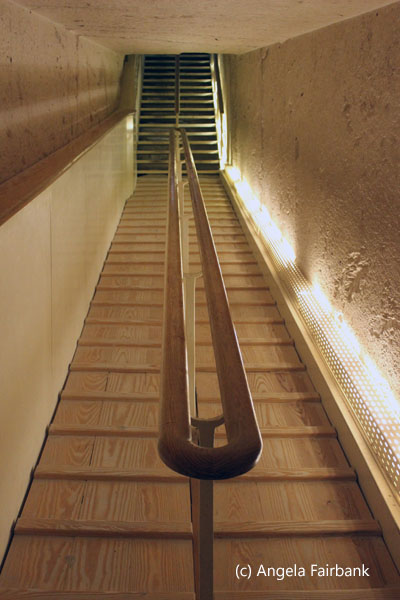
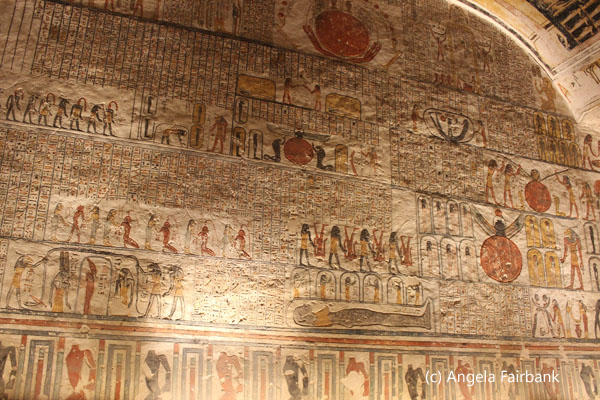 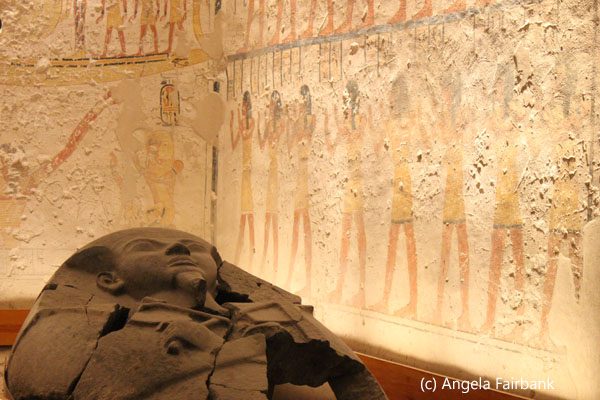 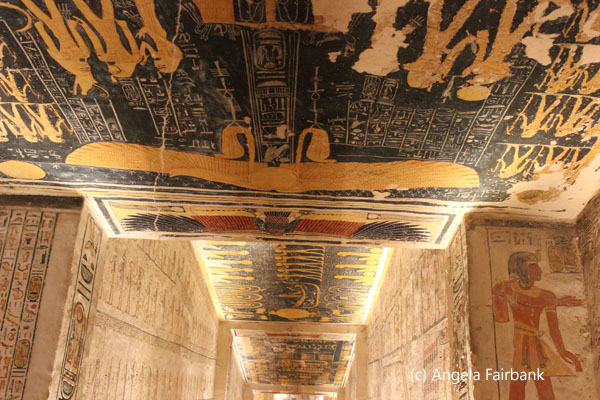 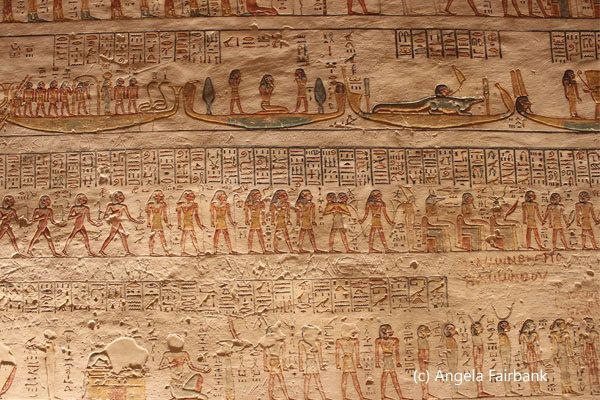 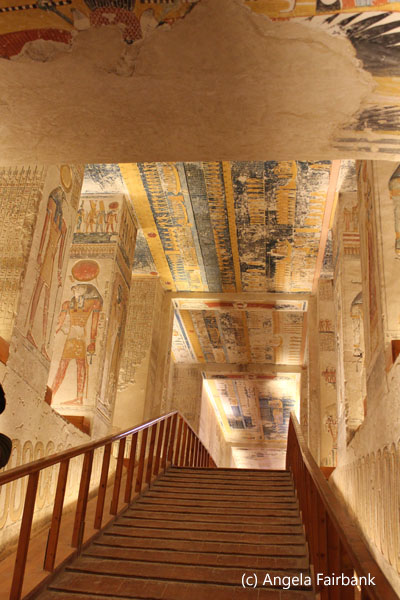 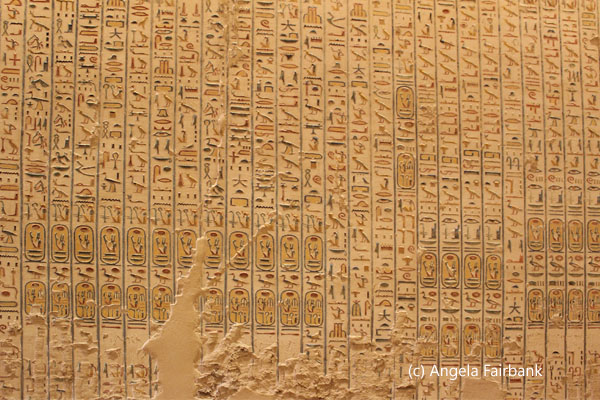 I also remember in 1992 visiting the Egyptian Museum (or whatever its equivalent was at the time) in Cairo containing the mummy of Ramses III, as well as seeing the original death mask of King Tut, but again I believe no photos were allowed. I overheard it said that this museum is being located to Giza but that it's not yet officially open. I wonder then what the ship's tours promising a visit to said museum managed to offer instead. But the treat this time, despite the long stairs and treacherous slopes inside the tombs, not diminishing of course the wonderful artwork on the walls and ceilings with most of them in their original colours as we passed down these corridors to where the sarcophagi were located, was the mummy of Tutankhamun himself, preserved in a glass case with temperature control. Only his face and feet were showing, but then as I understand it, they remove the organs, the heart, and the brain (by sucking the latter out through a nostril) before they mummify the rest of the body. His original outer coffin was also displayed for photographic purposes, but we were not permitted to go down into its crypt, only photograph it from above against marvelous paintings on the walls around.
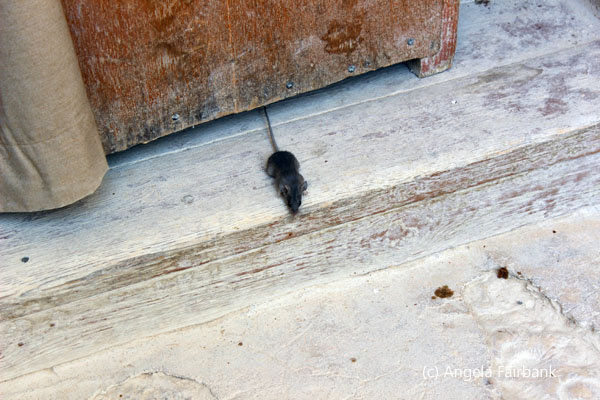
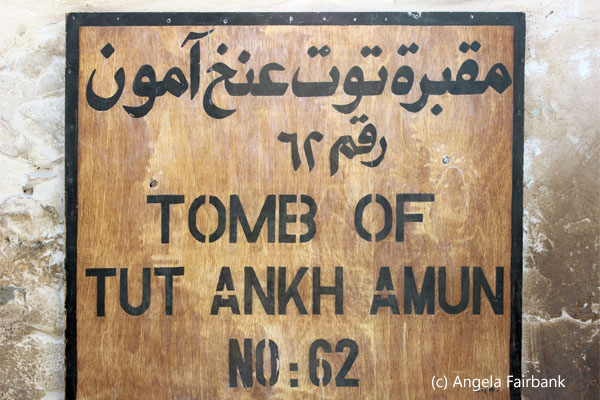 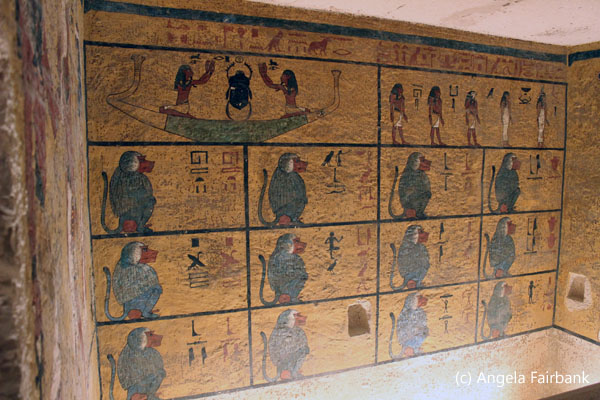 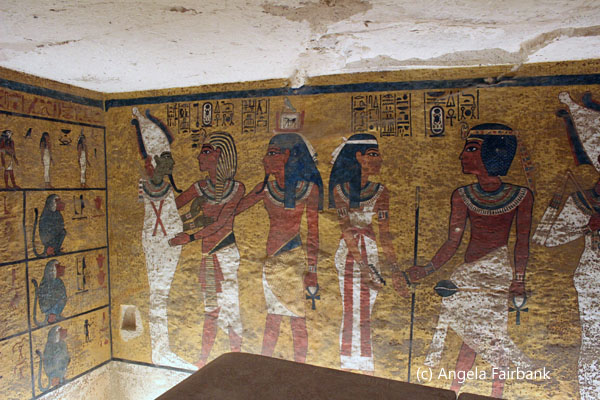 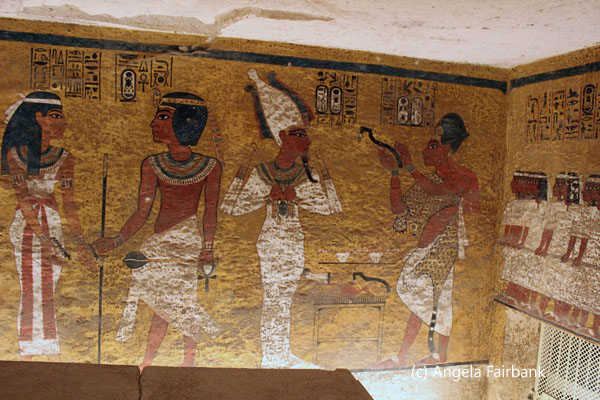 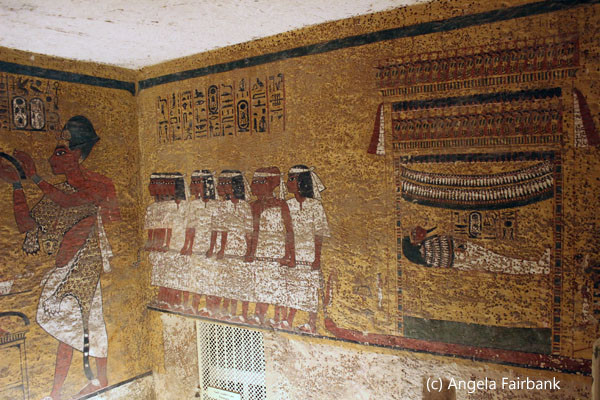  As for the first visit, to the tomb and sarcophagus of Rameses VI, it was shattered (probably due to grave robbers in ancient times and reconstructed in 2003 from fragments found in the tomb and elsewhere in the Valley of the Kings. The face on the lid is a replica of the original, which has been in the British Museum since 1823. The mummified body of Ramses VI was found in the nearby tomb of Amenhotep II in 1898 and now rests in the Egyptian Museum in Cairo. There were men that punched our tickets at the entrance to each tomb and at the first one, a little mouse appeared from beneath the ticket taker's seat. I believe he was feeding it crumbs from his own mid-morning snack, or perhaps it was his lunch.
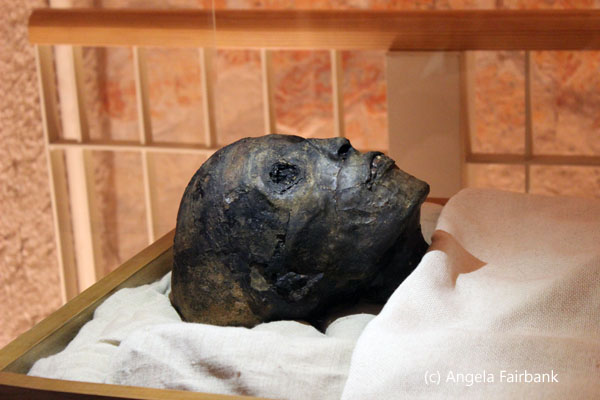 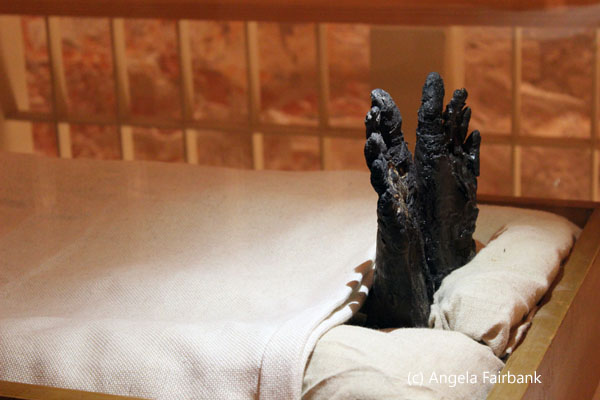 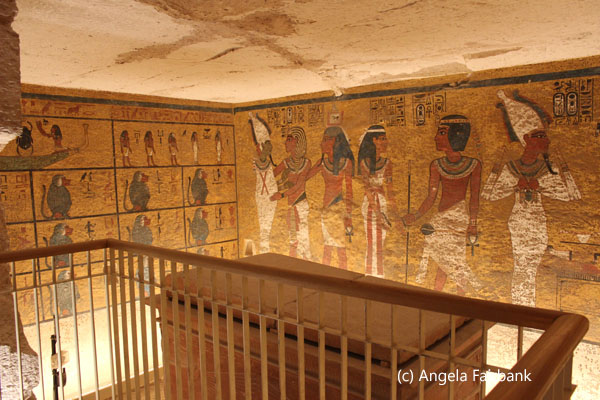 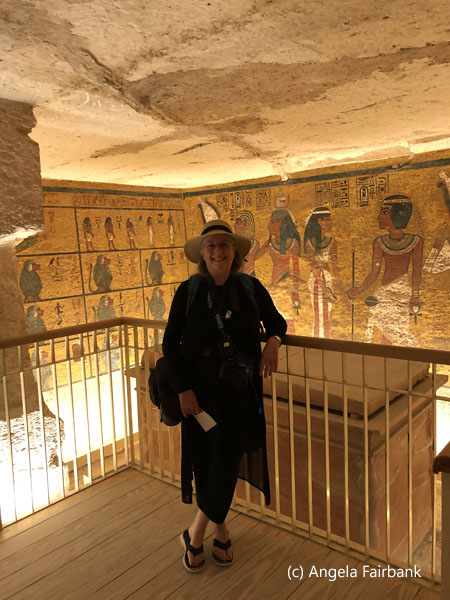   In King Tut's tomb there were some interesting explanations: “Upon Tutankhamun's death at about age 19 (reign c. 1333-1323 or 1324 BCE), an existing tomb was hastily adapted for his burial. Only the Burial Chamber was painted, depicting scenes of his journey into the afterlife. Now over 3,300 years old, the paintings have remarkably little loss, and the original colours are still vibrant ... Today, only the mummy of the king, the outermost of his three nested coffins, and the stone sarcophagus and its lid remain in the tomb. The other objects found in the tomb upon its discovery in 1922 were removed to Cairo ... The outermost coffin was of gilded wood, the second was inlaid with coloured glass and semiprecious stones, and the innermost was of solid gold...the King's badly preserved remains, adorned with amulets and jewelry, rested in the gold coffin with an inlaid gold mask over the head ... It took Howard Carter and his patron, Lord Carnarvon, five years to find the tomb of Tutankhamun and then ten more years to record and remove its contents, some of which had been tossed about by grave robbers. So far, this is the only nearly intact royal burial to be found in the Valley of the Kings.”
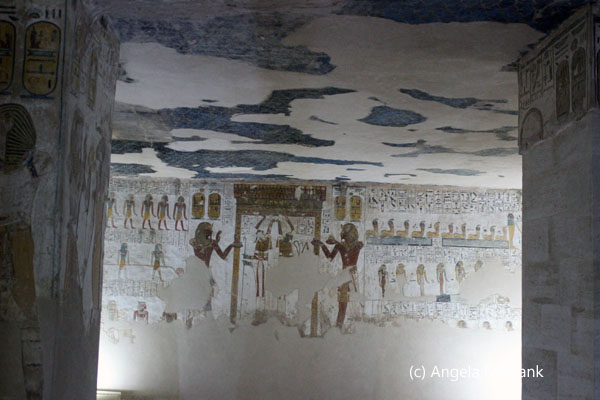 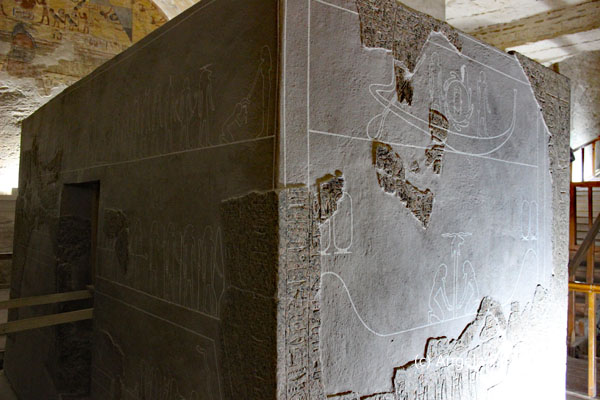 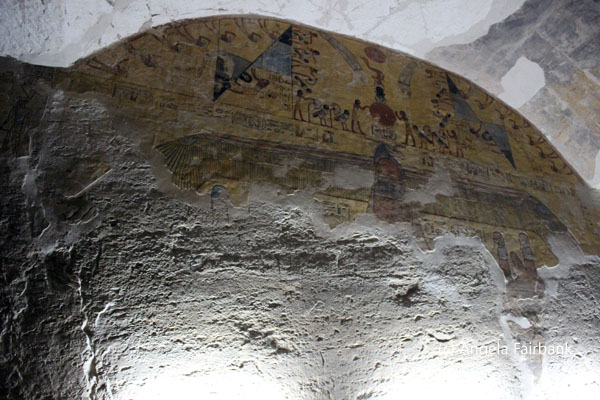 Our final visit to the tomb of Merenptah (also known as Merneptah), the 13th son of Ramses II, who ruled from roughly 1213 to 1203 BCE, is confusing to me. When I look up the name on Google it shows up as a male pharaoh, yet I was led to believe we were looking at the tomb and sarcophagi of a female. Perhaps it was a daughter? I did hear our guide say that sometimes members of the family were entombed with the Pharaohs. However, my confusion may very well stem from the fact that we had had no food since 7:00 a.m. or earlier and it was coming up to 2:00 p.m. and in the great heat, some of us were ready to faint. Luckily, it was announced we would have lunch at Howard Carter's house, (where he had lived while working on the archeological digs from 1910 to 1939). “The house was built around a domed central hall and contained two bedrooms, workspaces, a photographic darkroom, and servant quarters. During Carter's lifetime, the house had no running water, electricity, telephone, or garden. Carter furnished it plainly with locally made furniture, his own artworks, and a small collection of antiquities. The house was converted into a museum in 2009. A replica of the tomb of Tutankhamun was installed in the grounds in 2014. The house and gardens were restored in 2022 for the centenary of Carter's great discovery.”
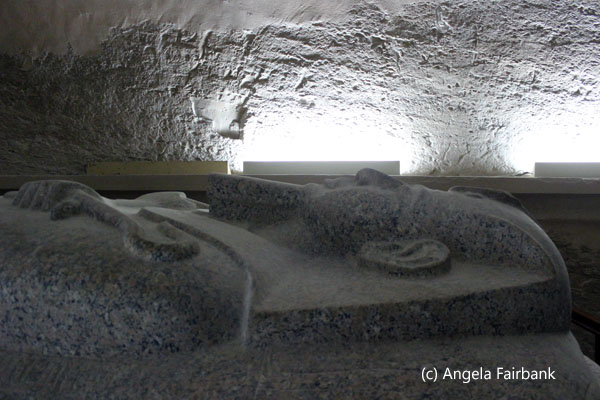 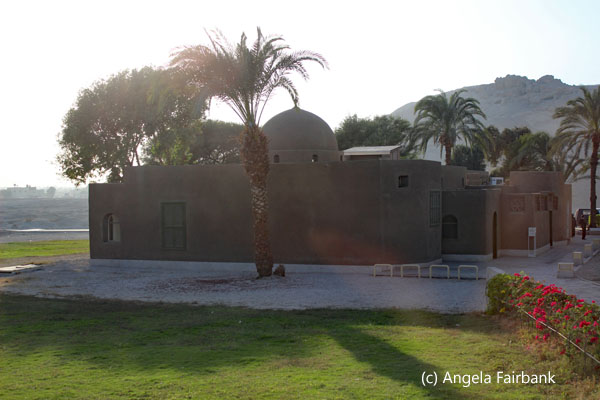  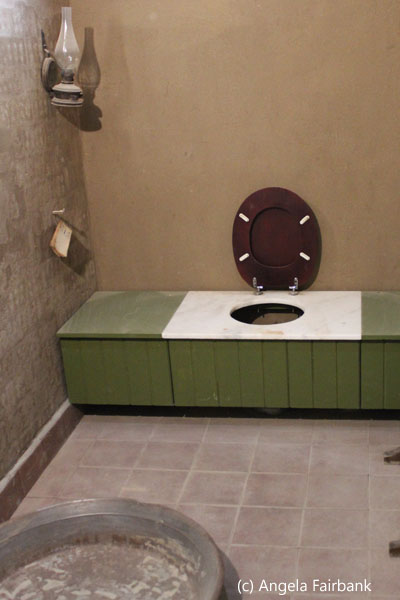 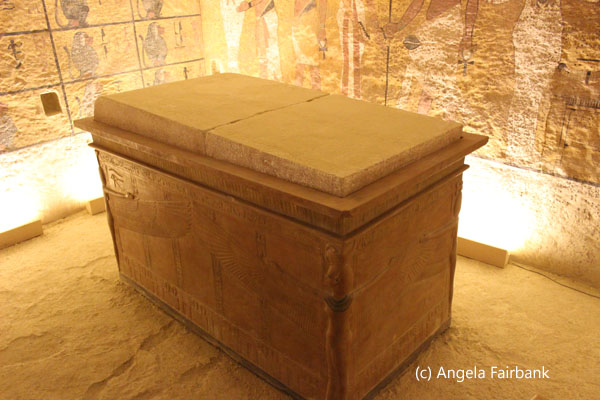 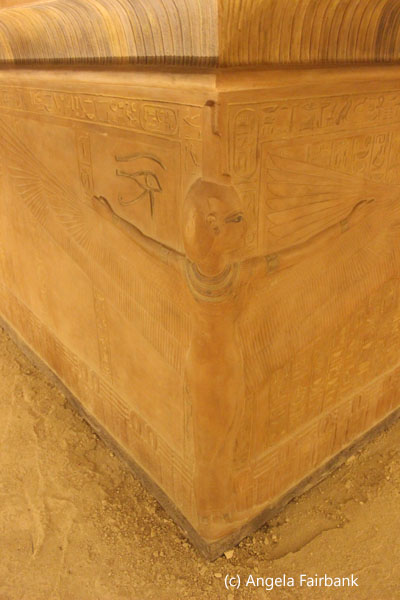 Unfortunately, when I went to wash my hands before lunch, I found it still had no running water. After touching the bannisters frequently to descend to and ascend from the tombs, I was desperate to clean them. Luckily, the bus driver produced some hand sanitizer. The lunch had not been prepared at the house, you'll no doubt be happy to hear. Instead, it was catered by a nearby 4-star hotel, at which another tour group from the ship had lunched. Delaying our meal even further, we were first given a tour of the house and then invited to take a look at the replica of Tutankhamun's tomb. As a result, when I went inside, I had a sense of déjà vu. The advantage here was that there were many more photos and explanations depicting and describing the excavation and discovery, and one could actually go down into the replica crypt and see the carvings on the sides of the wooden outer coffin, especially of four goddesses embracing the coffin at each of the four corners. A further note of interest that I read inside the replica tomb at Howard Carter's house is that the gold King Tut mask, which has been seen by millions if not billions of people around the world and is so famous, actually seems to have been made originally for Queen Nefertiti, due to the piercings in the earlobes which females had, but not males. It would seem, moreover, that most of the objects in King Tut's tomb had been prepared for Queen Nefertiti (Nefertari), the wife of Ramses II. However, King Tut died in roughly 1324 BCE, while Queen Nefertiti died in 1330 BCE (i.e. 6 years before), which only confuses me more.
Tuesday, December 5, 2023: Jeddah, Saudi ArabiaThis was my first time to Saudi Arabia and country number 137 for me. Apparently, the kingdom opened its doors to tourism ten years ago but then, with COVID, things were stopped for a bit. They currently welcome tourists, and many cruise ship companies now include Jeddah on many of their middle eastern itineraries. As it was my first and perhaps my only time here, I wanted to make sure I saw as much as possible, so I chose the longest tour on offer, an 8-hour one called The Best of Jeddah and the best of Jeddah it probably was. First a little intro. Jeddah is located on the Red Sea in Western Saudi Arabia and is the port for pilgrims making their way to Mecca and Medina (we saw some of those pilgrims flocking to various mosques today). Some passengers had had difficulty procuring visas so I expected there would only be a few of us getting off the ship but to my surprise in fact the majority of us got off with at least three of the five offered tours operating. One, a desert camp experience, was cancelled due to there not being enough interest, but I don't know what the fate of the fifth, a 7-hour expensive snorkelling trip to Bayyadah Reef, was. Nevertheless, there was a lot of sitting around as the ship awaited clearance from the authorities, and our tour, which was scheduled for 8:30 (and we were asked to be in the lounge at 7:50) didn't get going until 9:40. This was mainly due, perhaps, to there being two cruise ships in port at the same time. However, once the immigration people got their act together, things went fairly swiftly. And after all our worries about getting the correct visa, and whether or not all our given names had to be on them, the immigration officer I lined up for didn't even look at my visa. He just took my passport and stamped it, added some Arabic handwriting, and I was good to go!
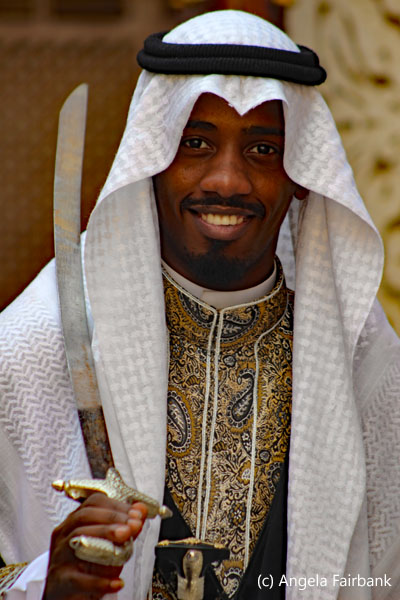
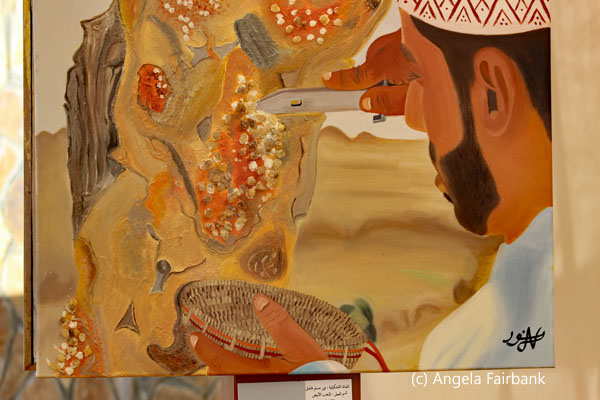
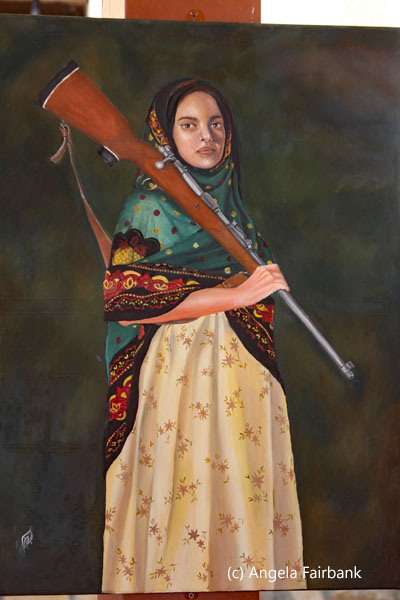
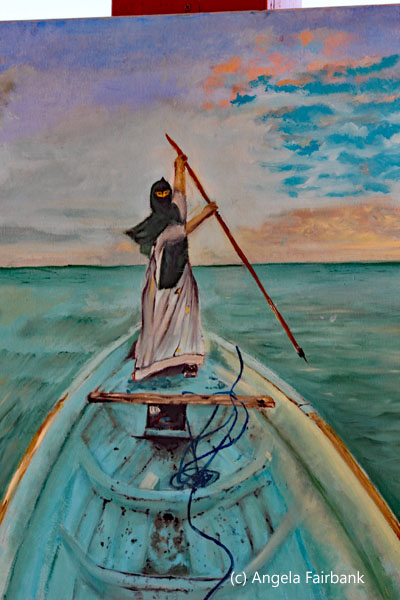
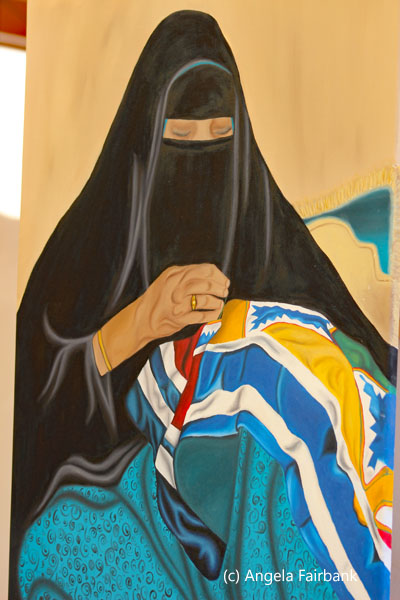
Once we were in our tour bus, our guide, Marwa, introduced herself and told us what we would see. She informed us that Jeddah was named after Eve, the wife of Adam, and considered the grandmother of all humans. She had even been buried in a graveyard in Jeddah, which Marwa pointed out to us. There was a bit of back and forth along the main roads to give both sides of the bus a chance to photograph many of the sculptures she was so proud of. We were surprised that there were vast spaces of land with nothing on them and were told that the government had cleared the land to rebuild houses on them. For the moment, however, they were being used as free parking lots. We also noticed McDonald's, KFC, Starbucks, and Tim Hortons franchises with bilingual signage. 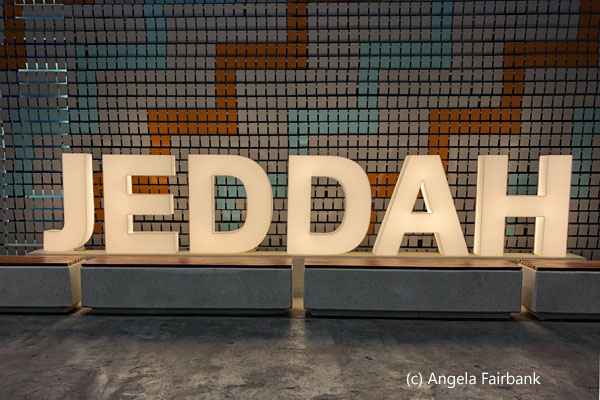 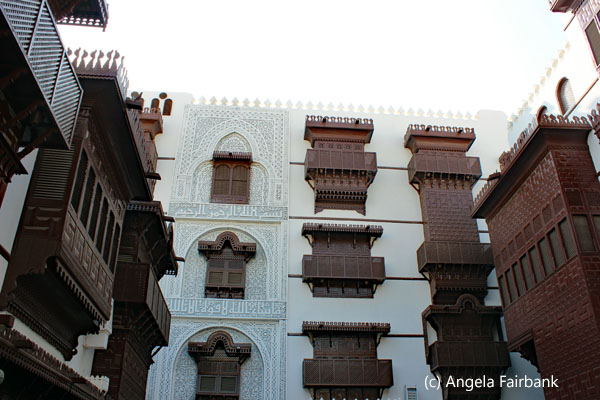 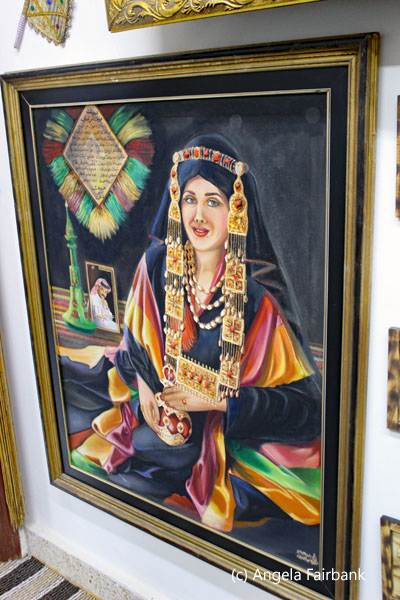 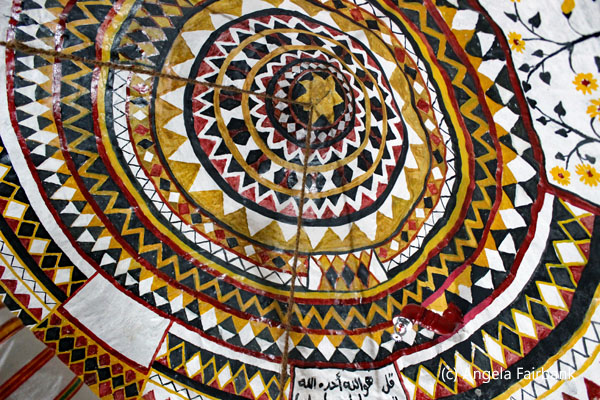 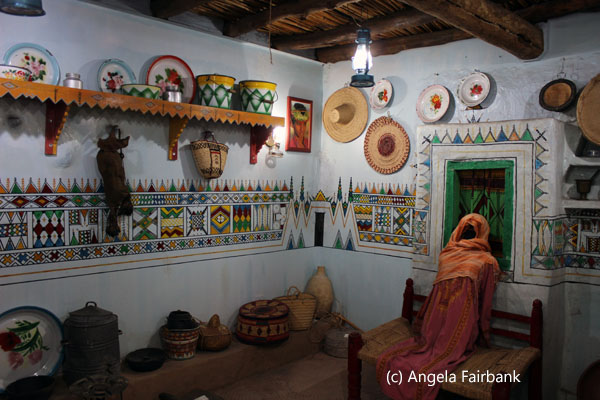 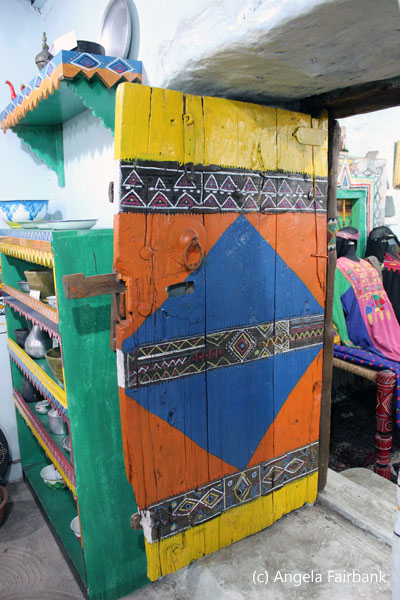 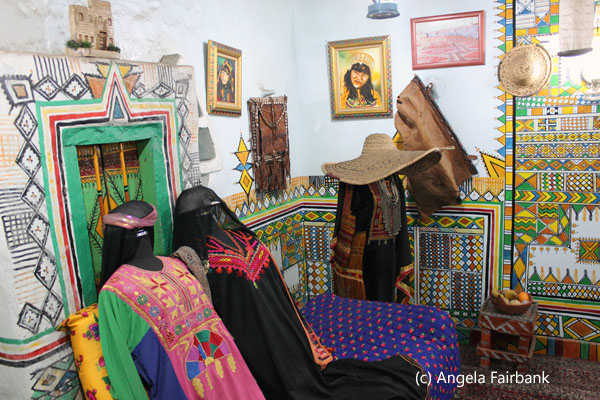 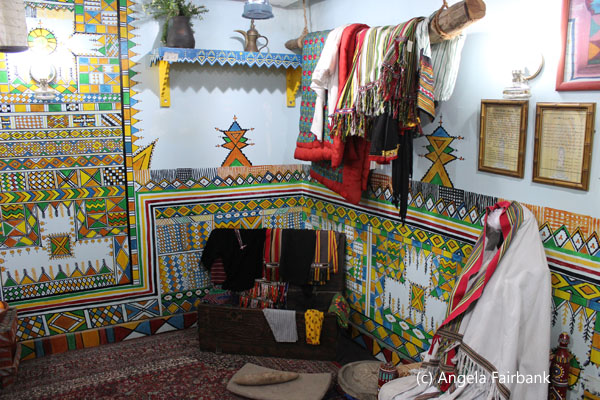 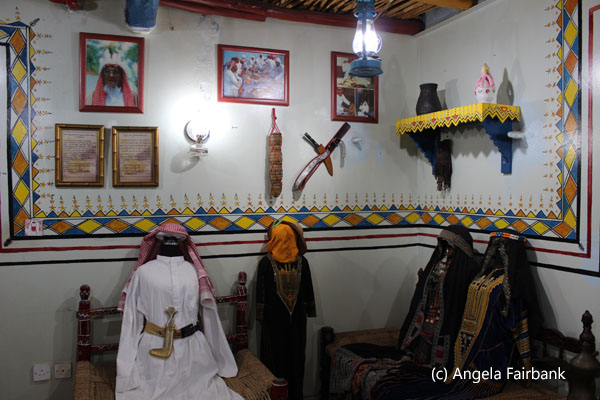 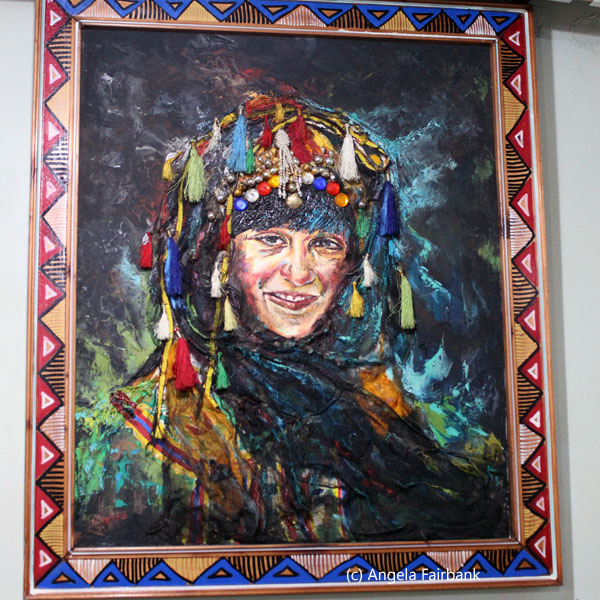 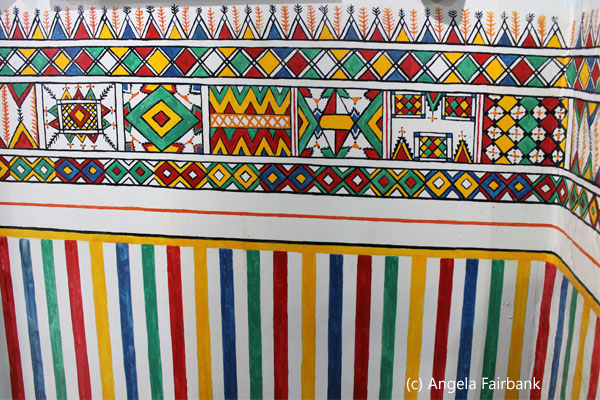 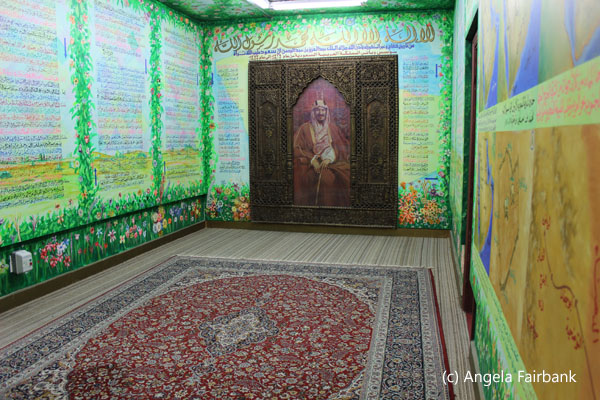 We finally reached our first destination, the Al Tayyebat Museum, or, officially, the Al-Taybat International City Museum of Science and Information, according to the sign outside, founded 40 years ago by a Mr. Abdulraouf Hassan Khalil, who had had the foresight that the country would be opened to tourism from abroad in the future. Unfortunately, he didn't live long enough to see this come to pass. We were greeted at the entrance by some young men in costume, bearing swords, and playing drums and singing. The multi-room complex contained magnificent displays of, well, everything you always wanted to know about Saudi Arabia, and then some. You could tell that people had been assiduous and diligent in collecting up their history, architecture, and heritage. There were not only model-size replicas of buildings from different regions of the country, but also tribal costumes, jewelry, furniture, carpets ... in short, far, far too much to see in one day, let alone the hour and a half we had. The museum was on three floors, and each had a theme. The floor I enjoyed the most was where they had reconstructed typical houses of various regions, complete with furniture, costumes, indoor wall decorations (which were fabulous), and then tons and tons of artwork. Locals had been asked to paint pictures of their country and their people and what specimens they were! I had to limit myself to showing you only a few here. There were also several rooms dedicated to their beloved late king and all his exploits during his reign. Most of the texts were in Arabic but there were many translations provided in flawless English. (I was surprised to learn, actually, that English is Saudi Arabia's second official language after Arabic.)
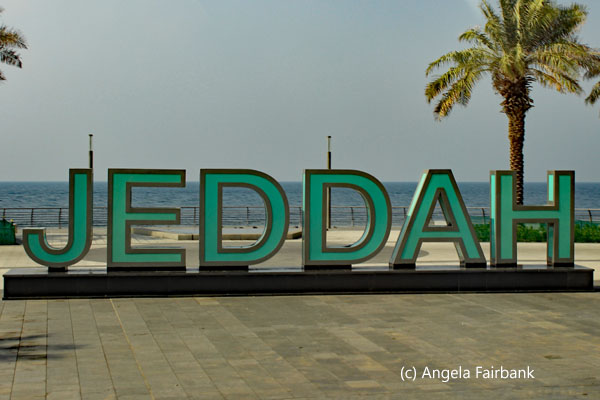
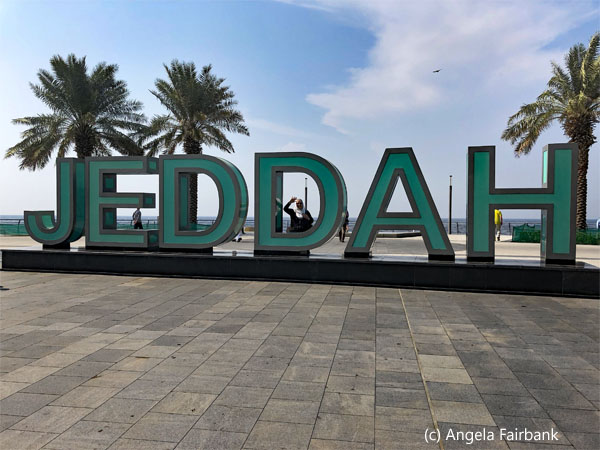
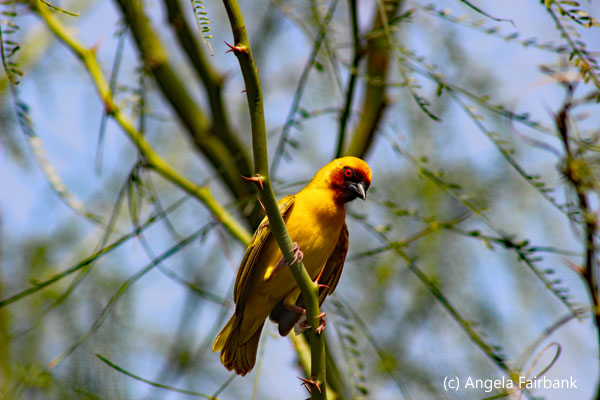
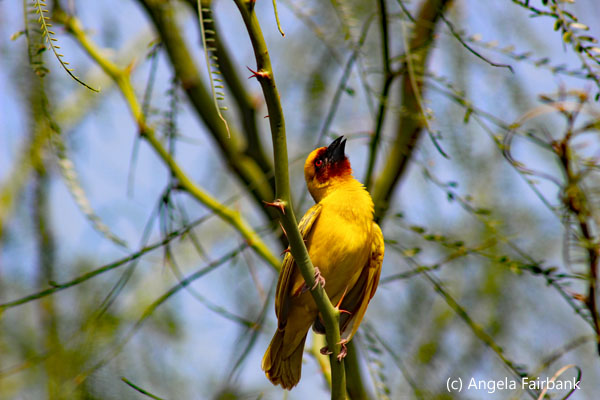
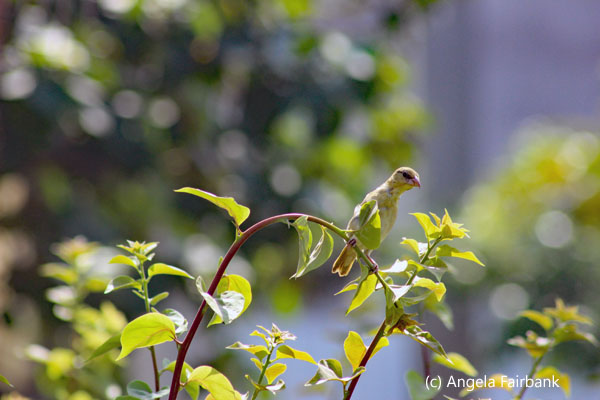
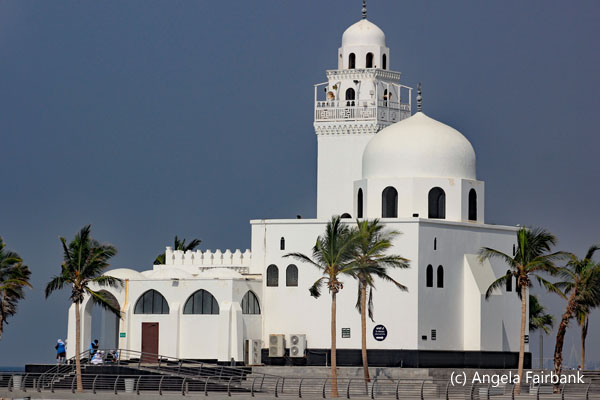
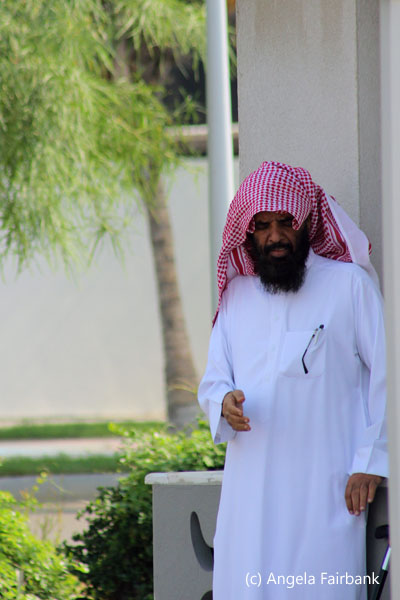
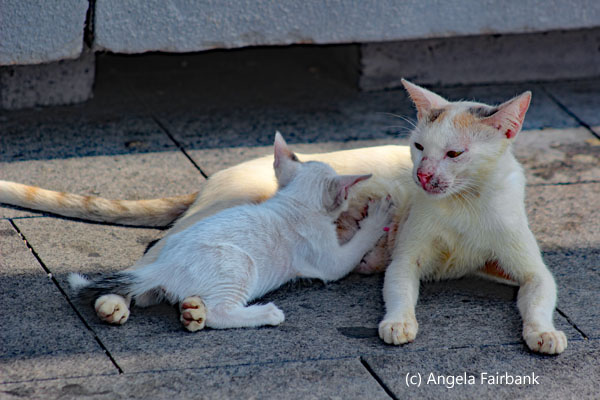
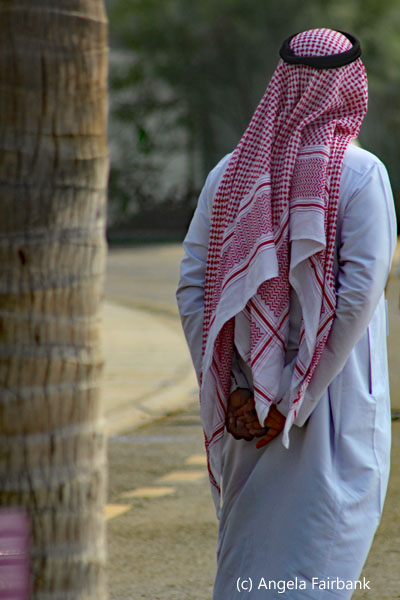
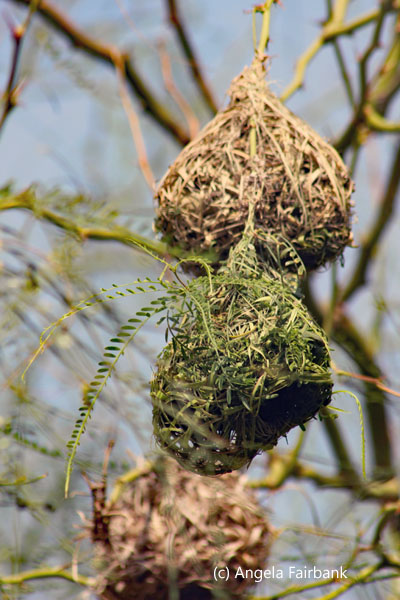
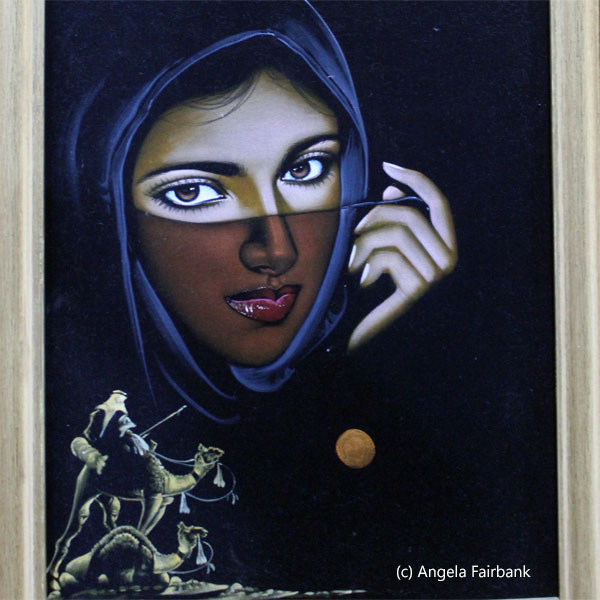 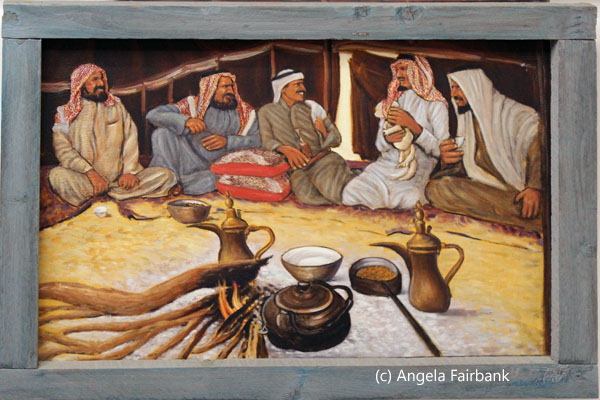 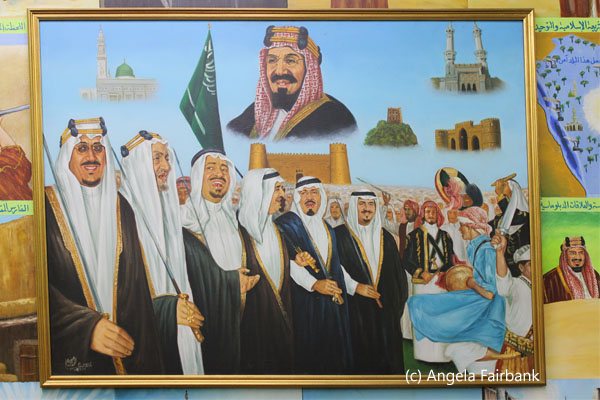 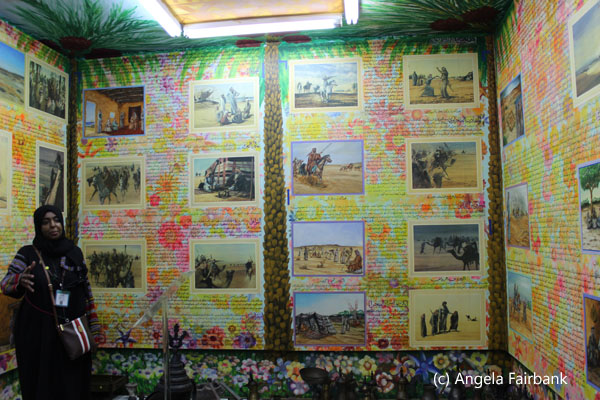 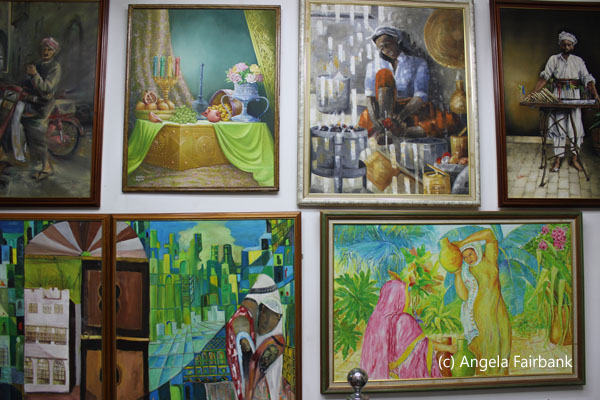 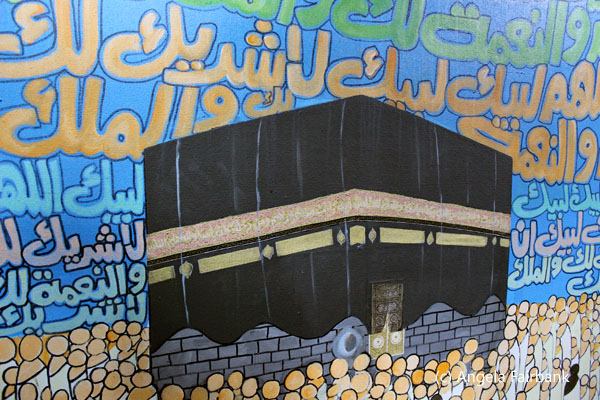 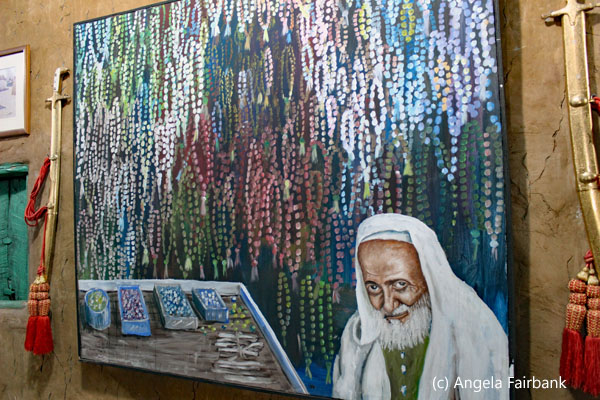 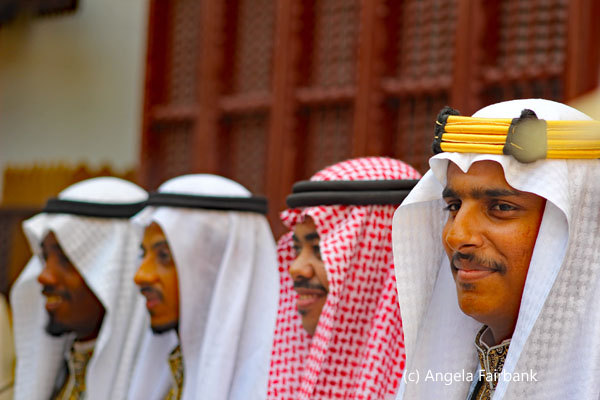 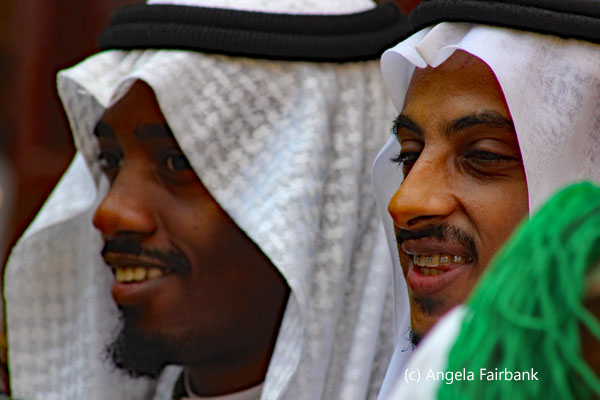 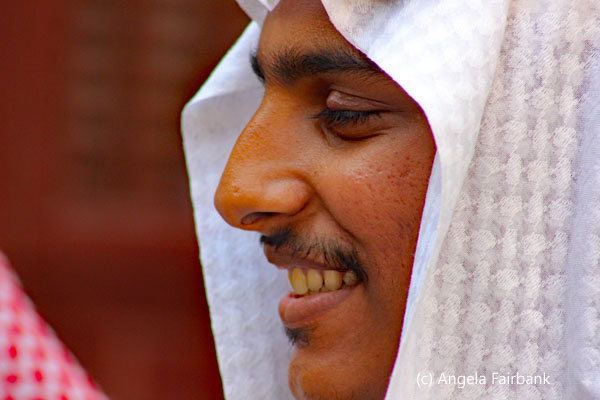 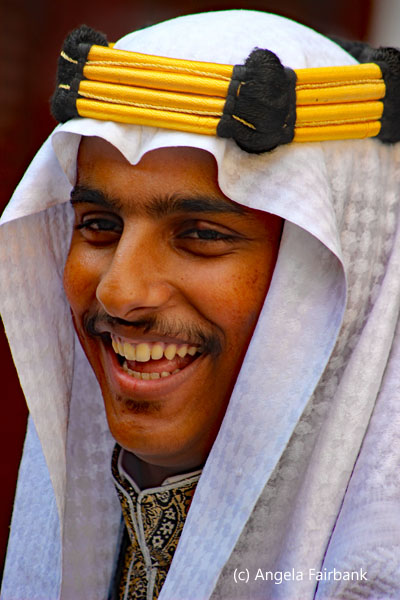  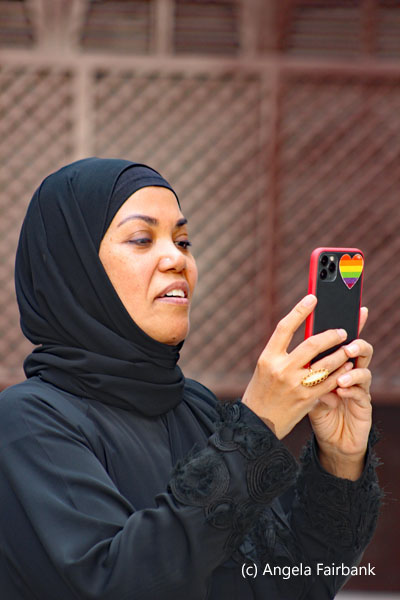 Our next stop was at the Corniche aka the waterfront walk, which was practically empty due to the fact that locals don't go outside much when it's as hot as this. Nonetheless, the thing we all wanted to photograph was the Jeddah sign. However, a few twitchers and I noticed that right where our bus stopped to park was a tree with a number of Rueppell's Weavers' nests complete with said weavers or a least one weaver feeding its young inside at least two of the nests. I also walked along the Corniche for a bit, photographing what I could: a few souls on their own and a cat feeding its kitten, plus a mosque.
          We then had lunch at a large restaurant called Tofareya. As we were about 80 (two bus loads), we had the entire top floor. We were served various courses starting with a flat bread with hummus, a cucumber salad, and something that we were told was wheat mixed with yoghurt. Then came some beef or chicken samosas and then the main dish of half a chicken with rice, a Chicken Biryani, I think. After that, we were presented with another kind of chicken with rice dish, which I didn't try being already satiated. They cleared everything away and then came desert, delicious flan followed by donut holes (think Tim bits Saudi style), dates, and Saudi Arabian coffee, which was nothing like the coffee we were used to. It was more like a tea with spices. In any case, we all agreed it was a wonderful meal.
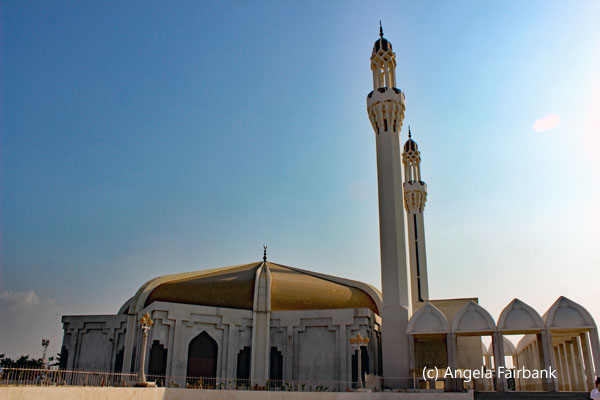
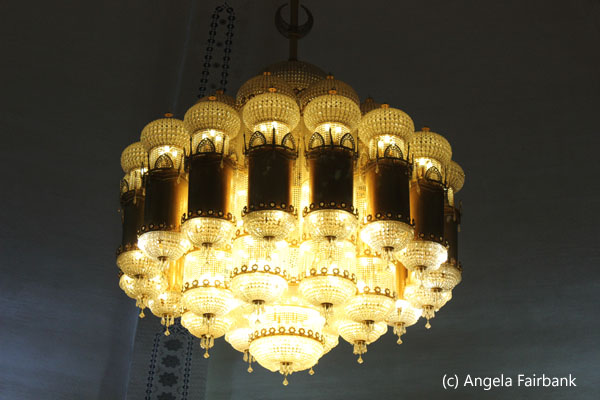
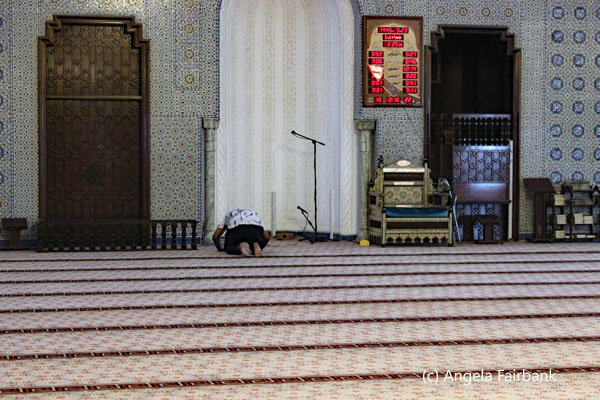
  Our penultimate stop was at the Enany Mosque, also on the Corniche but at a different section of this 4-kilometre-long waterfront. We were allowed to enter it, so we women covered our heads, and we all removed our shoes before walking on the carpeted floor and admiring the central chandelier hanging above us. We were in luck, as it was just then that the muezzin made his call to prayer facing Mecca. With his back to us, he sang into a microphone, which was not only heard throughout the room but also outside via the loudspeakers in the minarets. A very cool experience indeed.
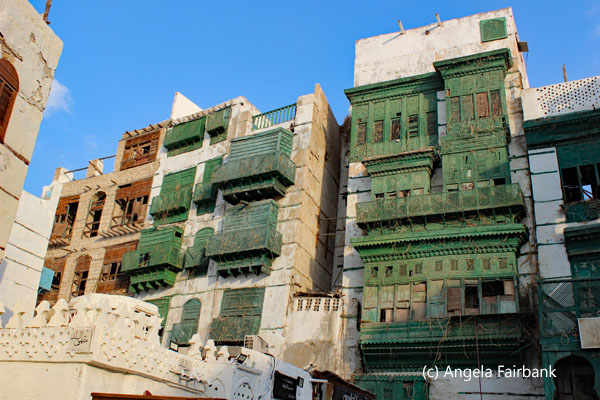
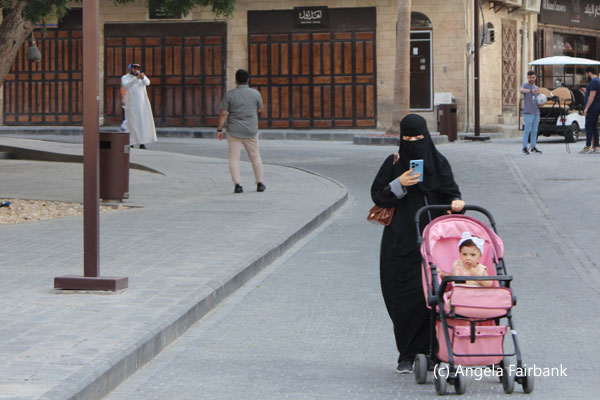
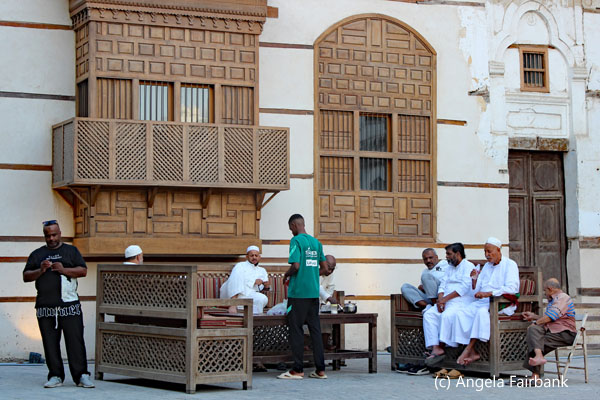
   Our final visit was to the UNESCO World Heritage Site, Al Balad, the old town of Jeddah, which is currently undergoing restoration by the Ministry of Culture. It was also the area of the central souq and as we entered further into the historical site, the stores started opening and locals gradually entered the area just as we tourists (from both cruise ships) were doing the same. This meant we got to mingle with the locals and take photographs of each other! I was in my element! Though there were a lot of cats in the old Jeddah area and on the Corniche, I noticed they were all fairly skinny and did not look well cared for. The Ministry of Culture had set up a cat-feeding station in an effort to keep them alive, and I include a photo of it among the images here. As it was an 8-hour tour and some of our fellow bus passengers had mobility issues, they asked to be taken back to the ship just after the walking tour started. This meant our bus was delayed getting back to the old town to pick us up. Our ship was made aware and did not leave without us--the advantage of taking a ship's tour as opposed to a private tour. We now have three sea days before reaching our next port and will be going through a tricky area off the coast of Yemen, where there has been some trouble, apparently, due to the Israel/Hamas situation. Fingers crossed we make it through this narrow strait unharmed.
   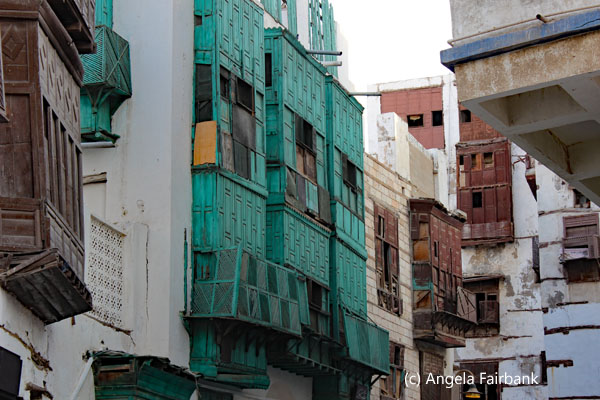 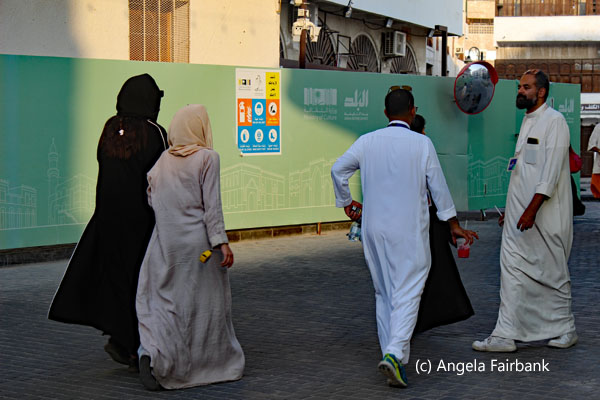 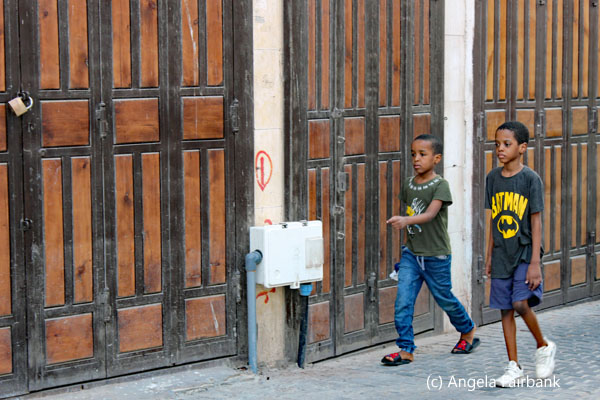 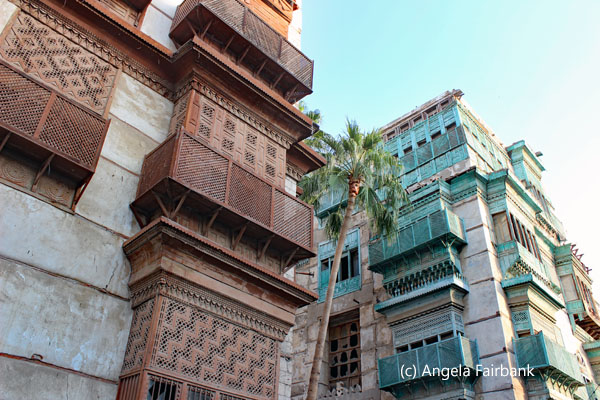 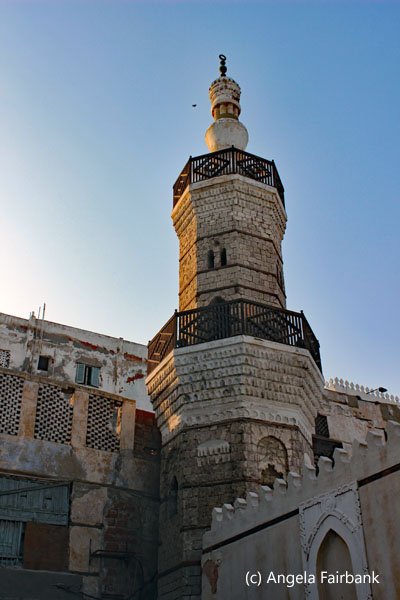 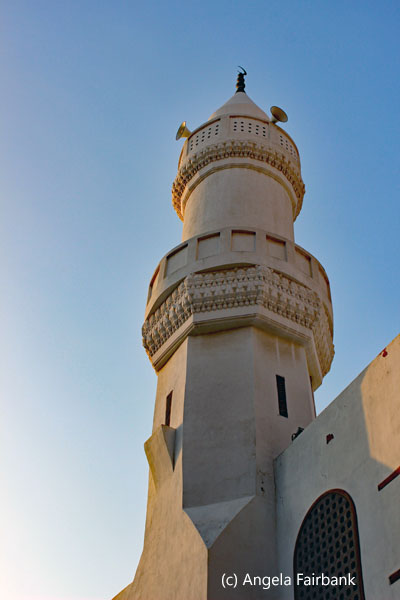 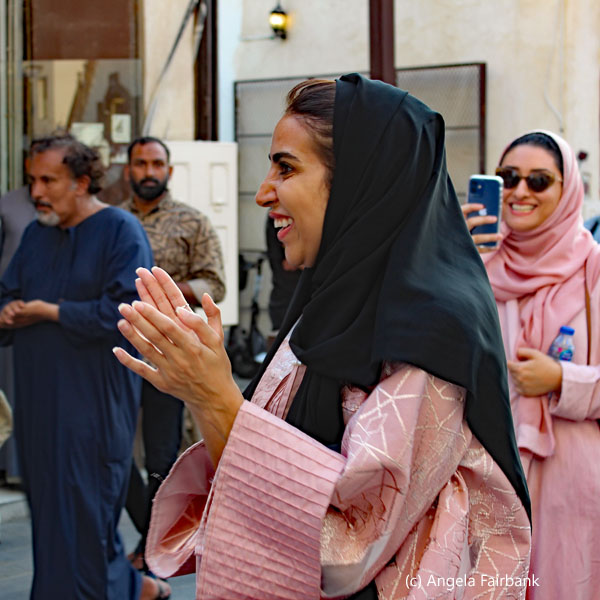 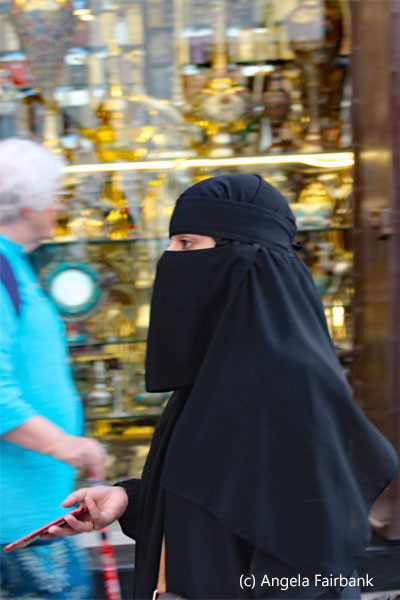 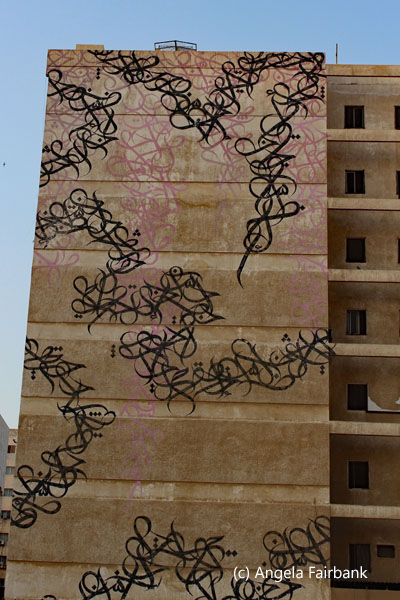 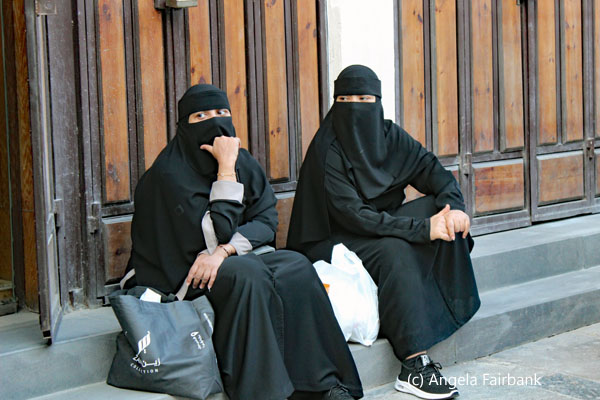 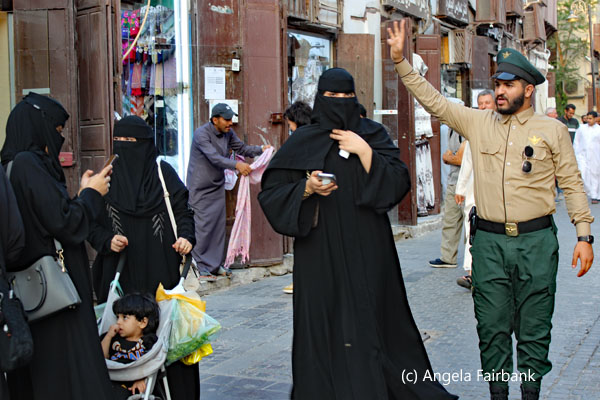 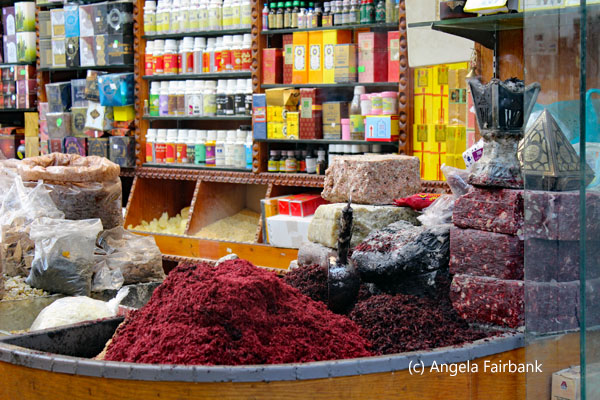 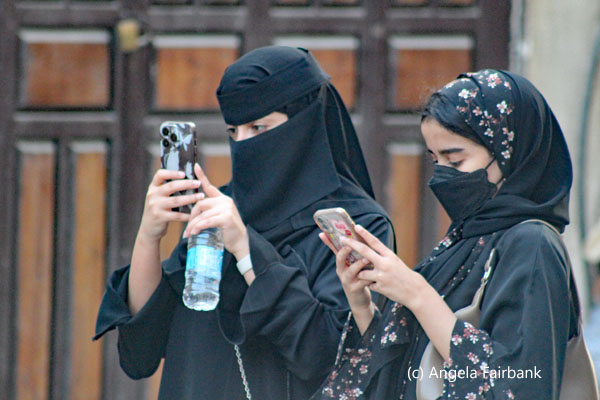 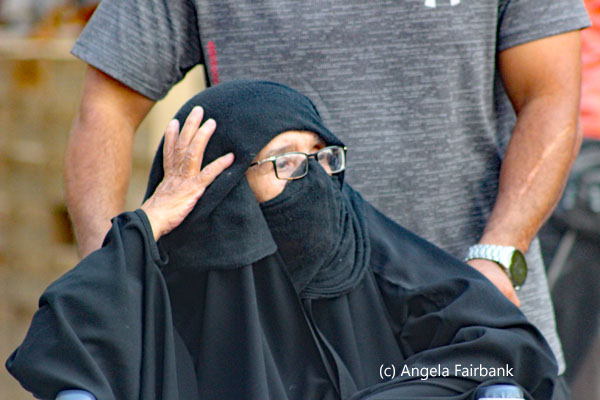 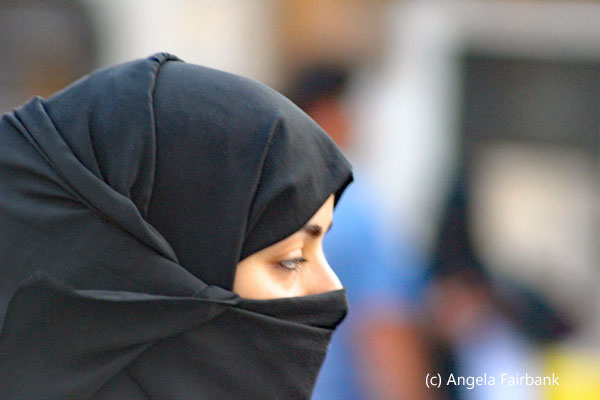 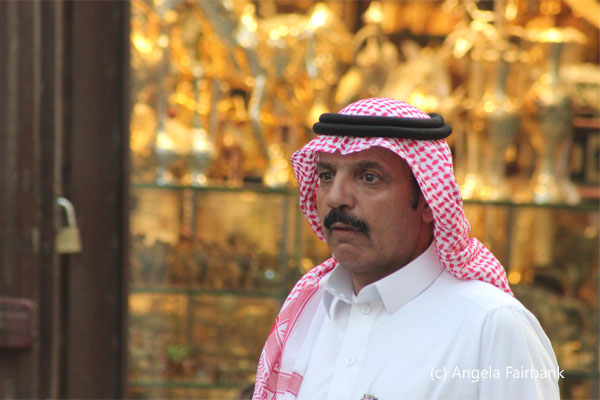 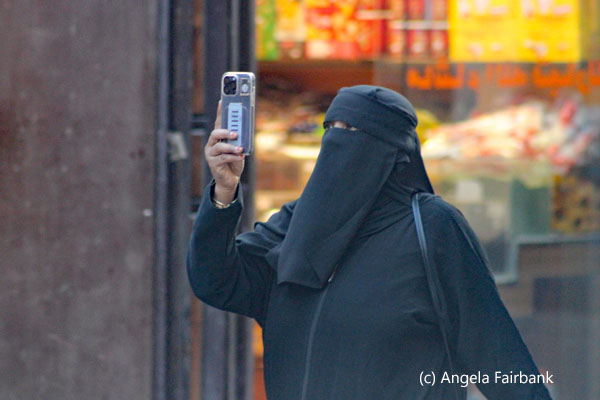 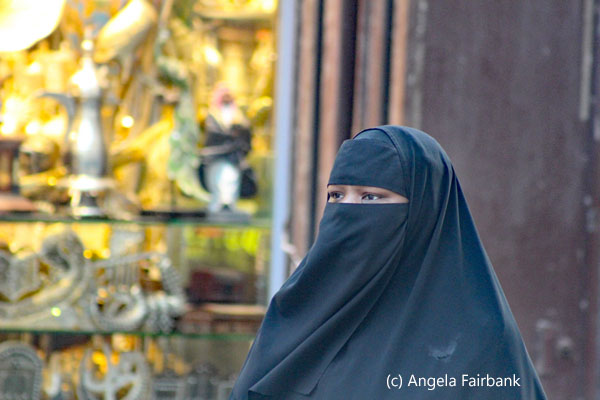 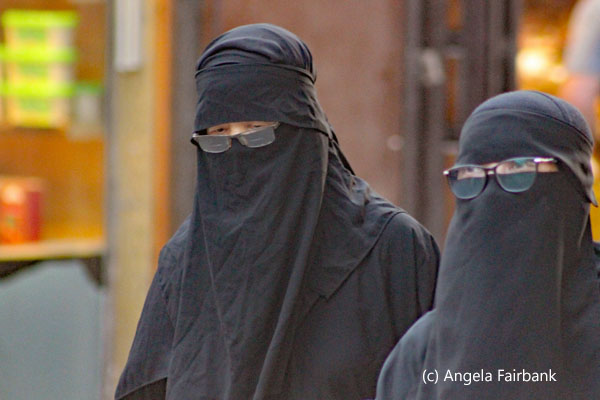 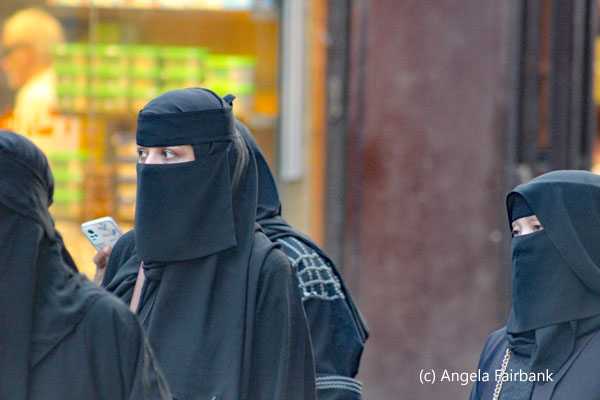 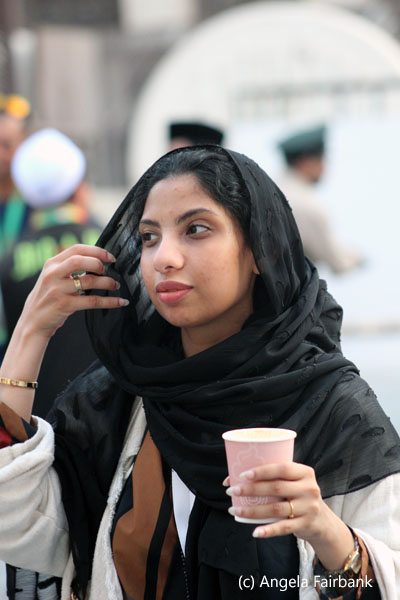 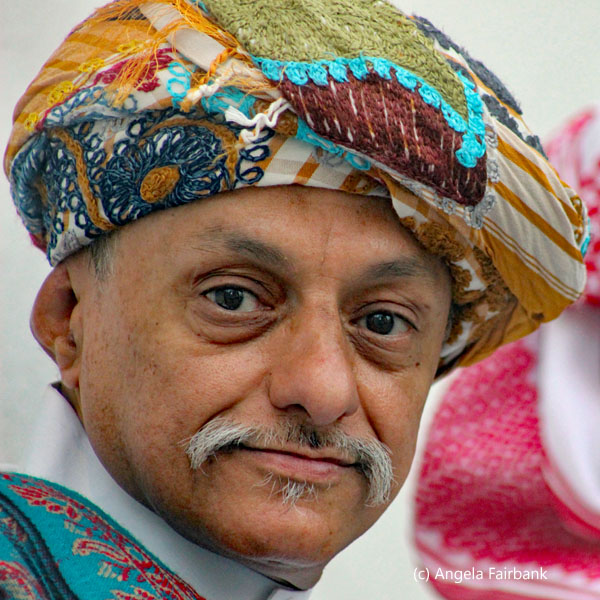 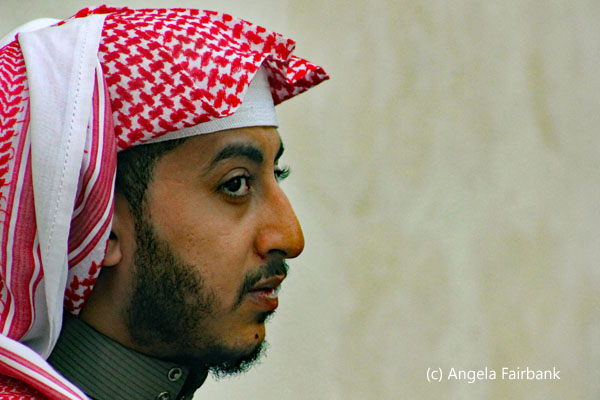 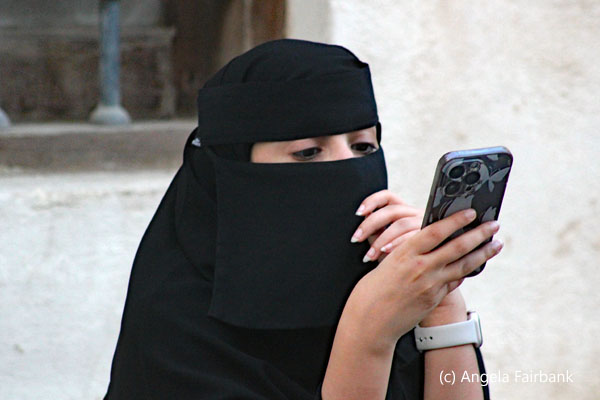 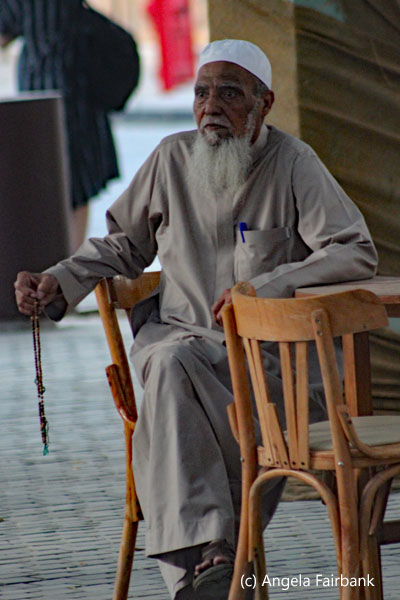 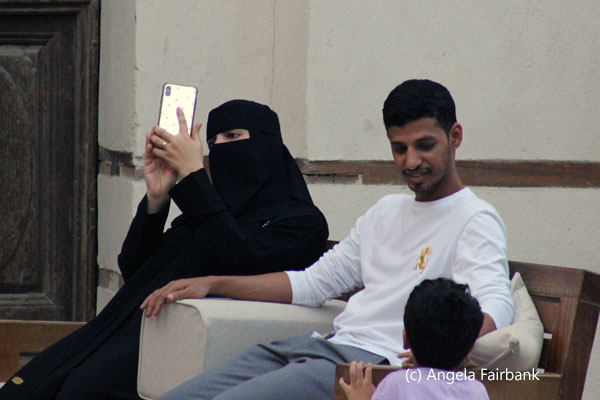 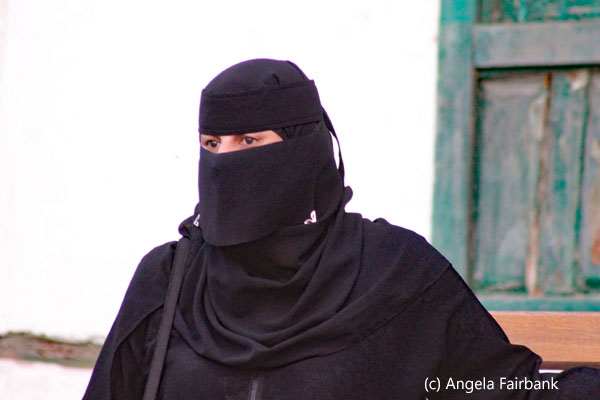 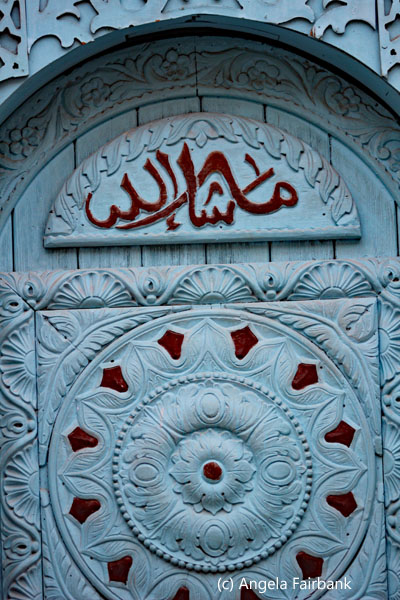 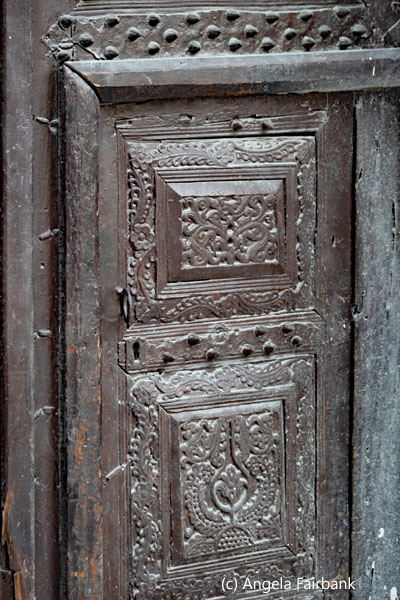 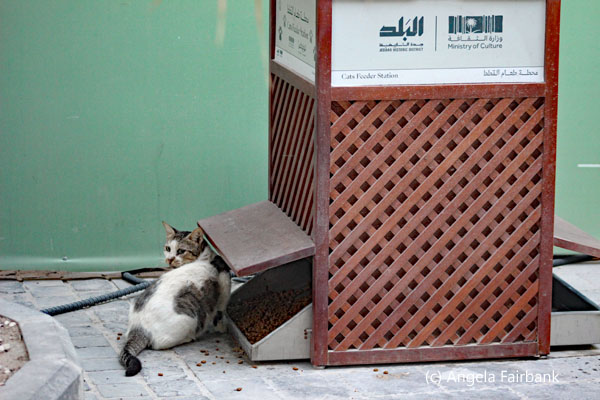 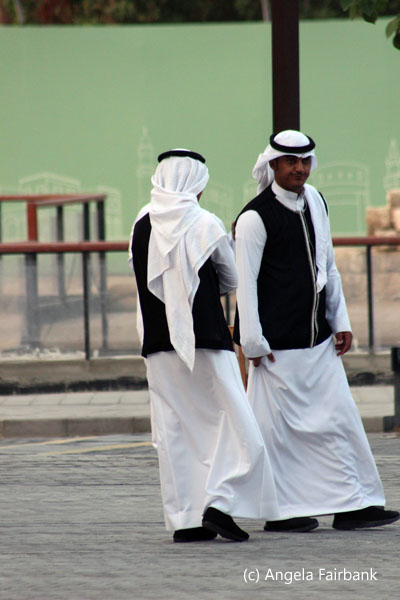 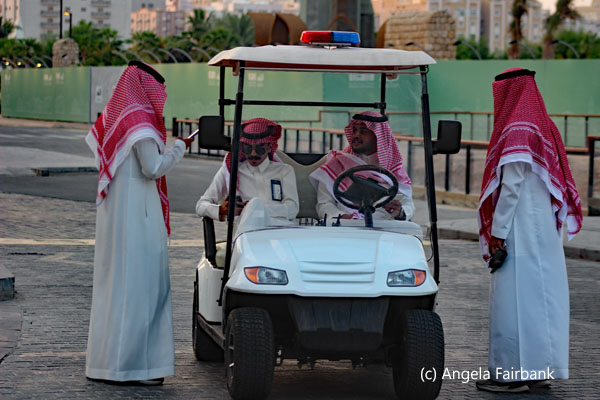 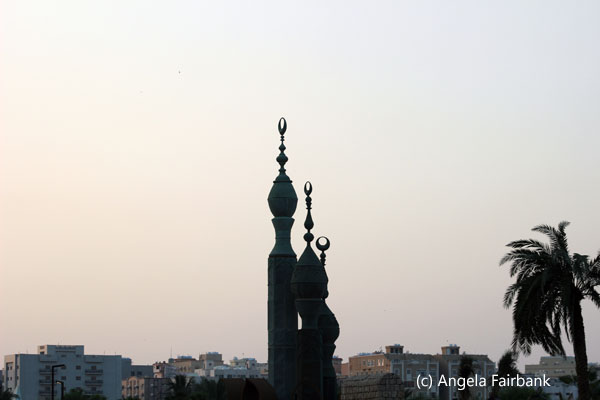 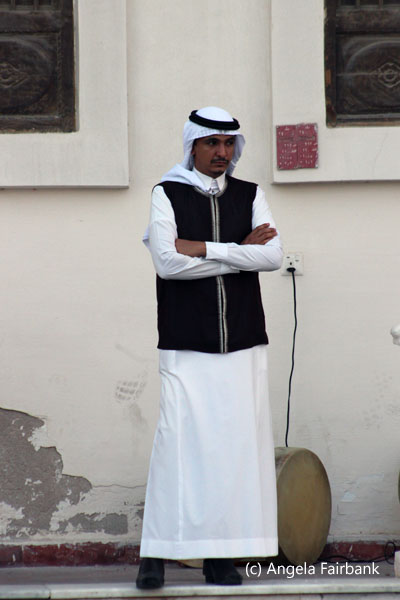 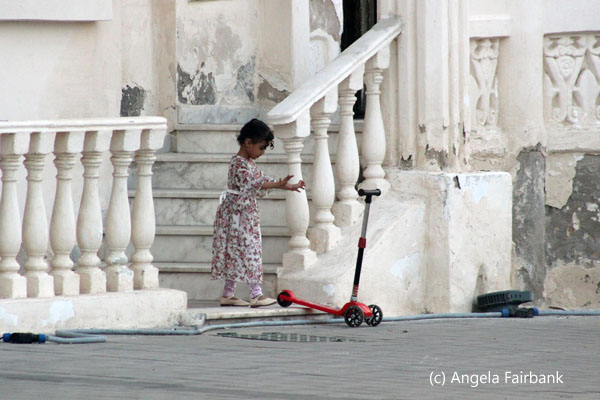 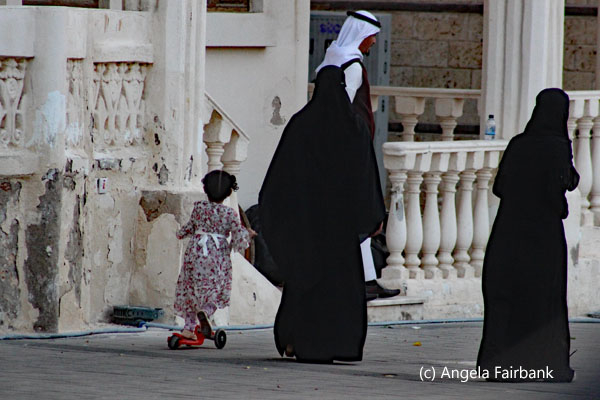 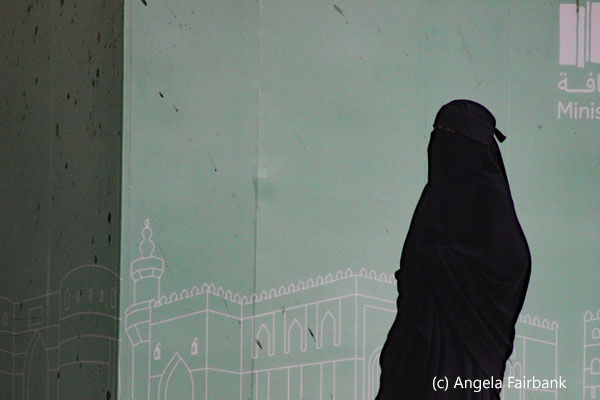 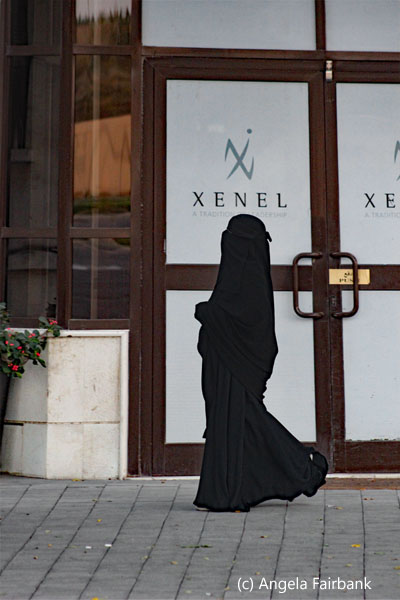 Saturday, December 9, 2023: Salalah, OmanCountry 138. Oman. Oh, man! We were in Salalah, which isn't the capital city of the entire sultanate. Muscat is. But it is the capital of its southern region, known as the “Perfume City of Arabia” apparently, and famous for its frankincense. There were six tours offered, two of them featured frankincense, one was whale watching, one was a bird tour, which had filled up before I'd even been sent the link to book tours and, well, the one that appealed to me was called 4x4 Adventure and promised us desert, camels, goats, cattle, and donkeys. OK, so I did see a couple of donkeys, and I certainly saw a lot of cattle and goats, but the camels were actually dromedaries, and there were clearly more of them than there were people, according to our driver, Salam, (35, 1 wife and 1.5 children only). He mentioned that a typical Salalah family could have as many as 50 camels.
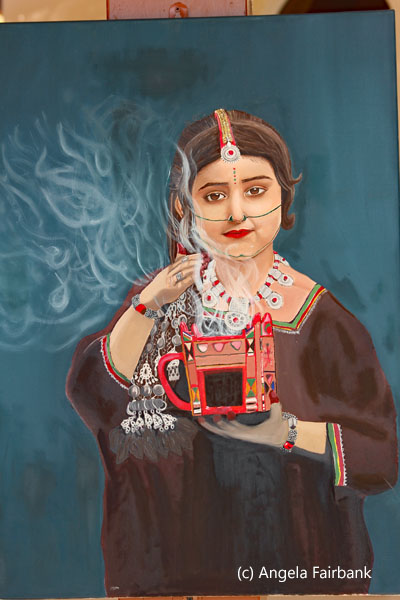
We first headed off to Taqah, which featured a beautiful beach, containing miles and miles of seagulls, and clear blue ocean waters. 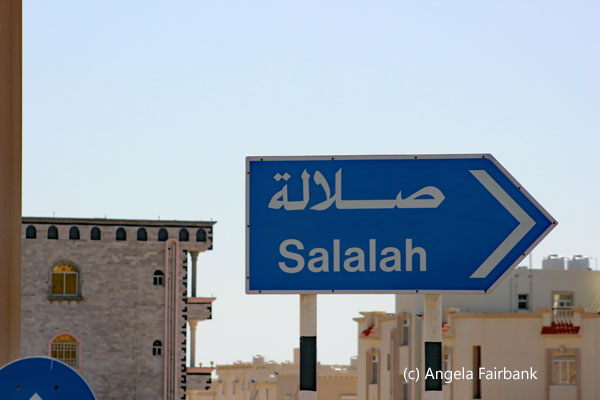 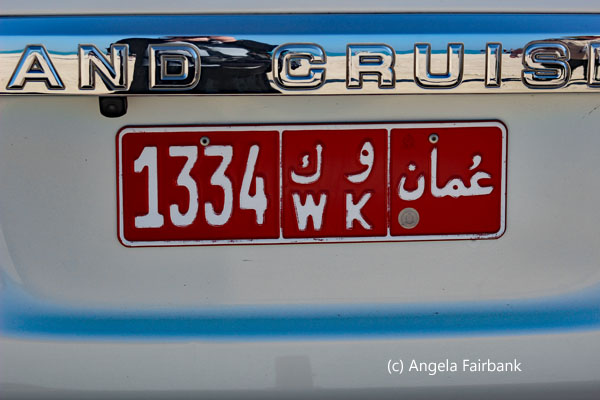 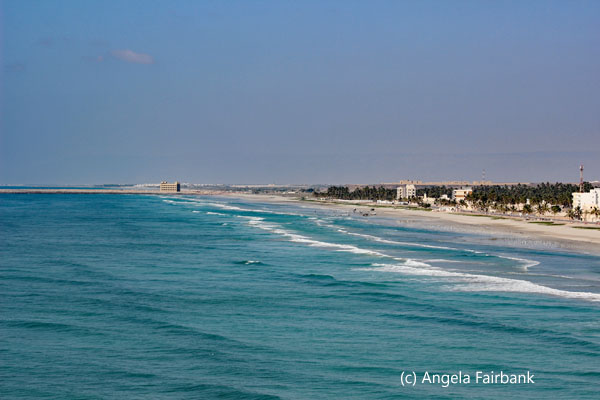 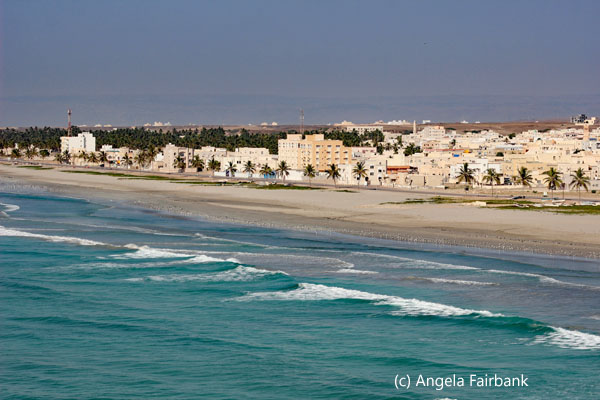 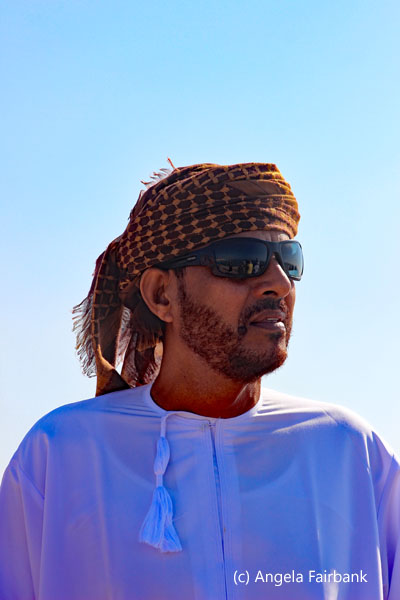 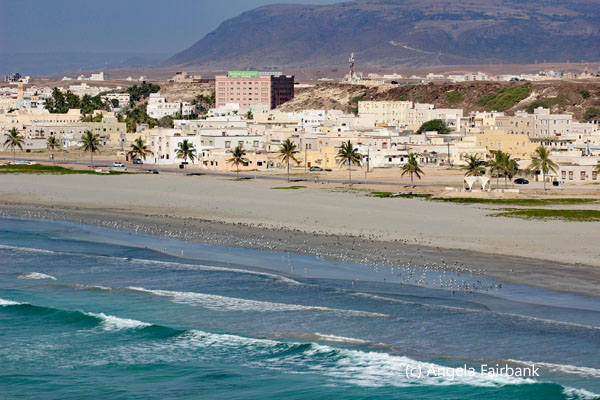 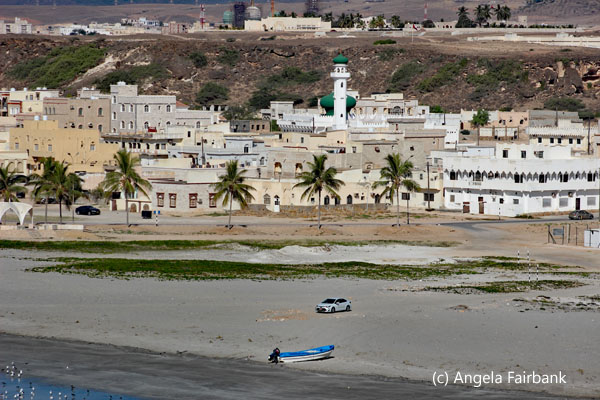 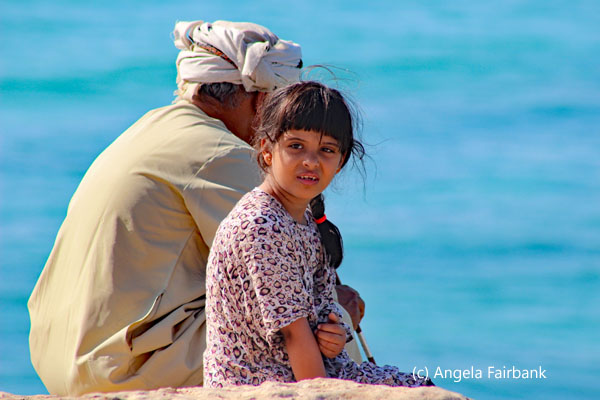 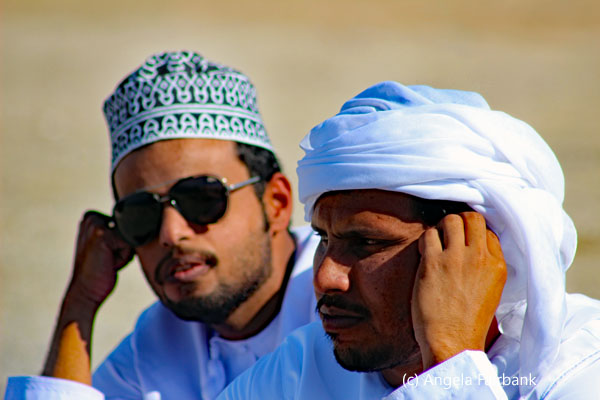 Next, we stopped at ancient ruins called Sumhuram in Khor Rori. According to the plaque, “Sumhuram was a wealthy port between the Mediterranean and India. The ancient site of Sumhuran (3rd century BC - 5th century AD), built in the area of Khor Rori, is the most important pre-Islamic settlement in the Dhofar region ... Outside the city wall, a small temple, and structures contemporary to the first phase of the city were excavated (3rd century BC - 1st century AD). The great quantity of iron and bronze objects discovered, as well as the presence of a workshop for metals, suggest that the city was also a very important centre for internal trade towards south-eastern Arabia and the northern coast of Oman, which was rich in copper.” There was a small café here and flush toilets as well as a souvenir shop, but what attracted me were the local paintings showing Omani scenes and people. The drivers had coffee and smoked while we walked through and around the ruins and photographed a bird or two. A lagoon below the walled city contained a great blue heron, but it was too far away to photograph.
     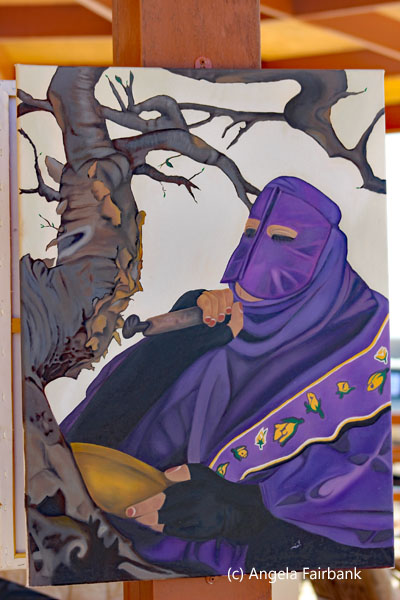 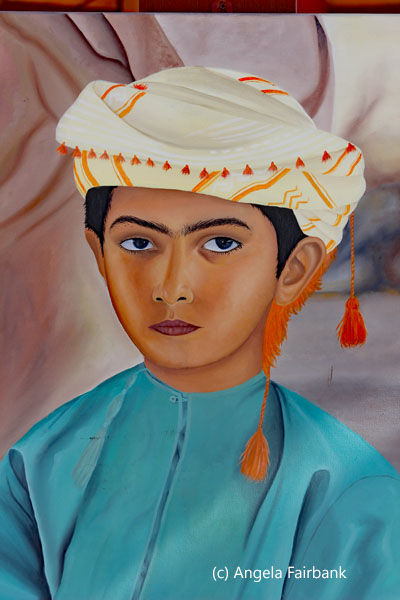 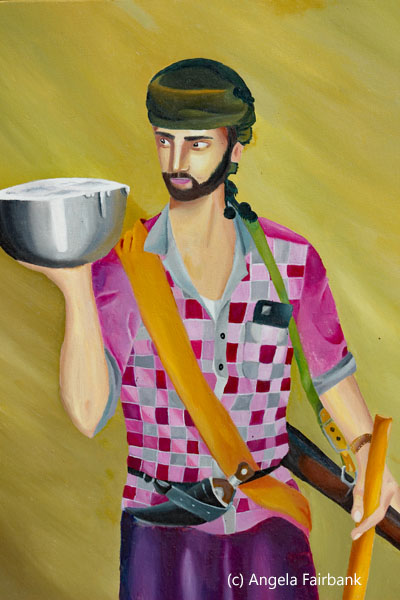 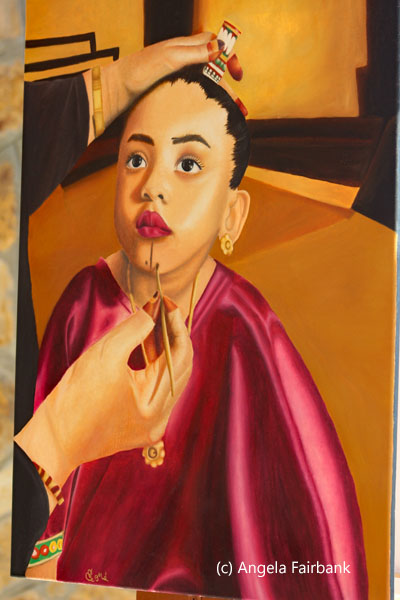 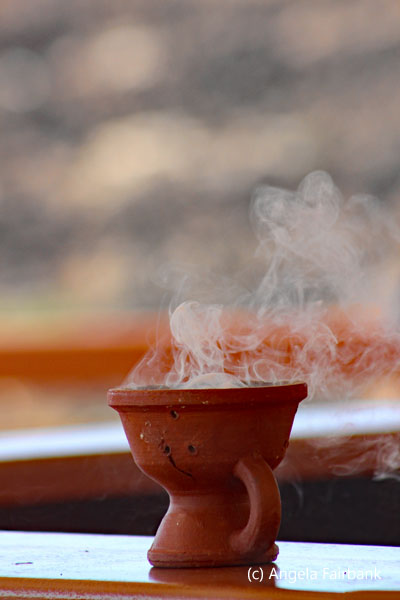 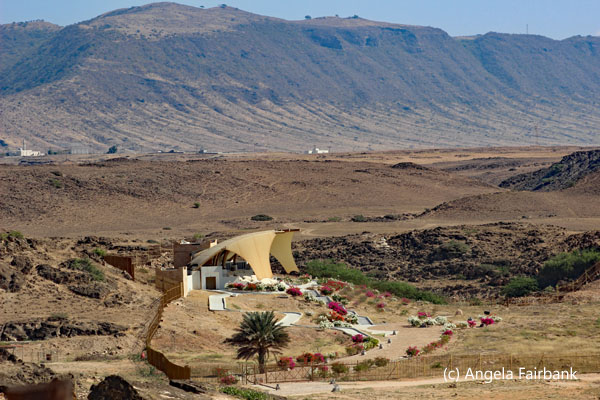 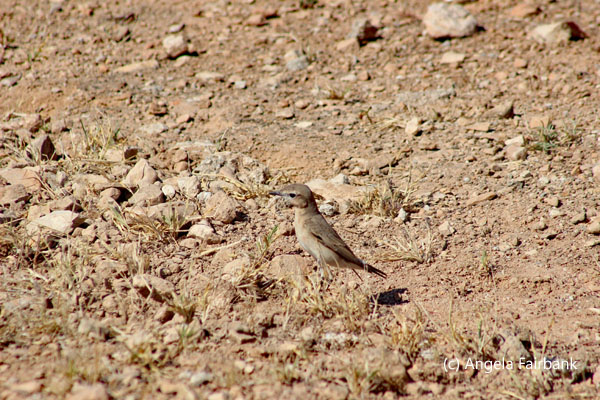 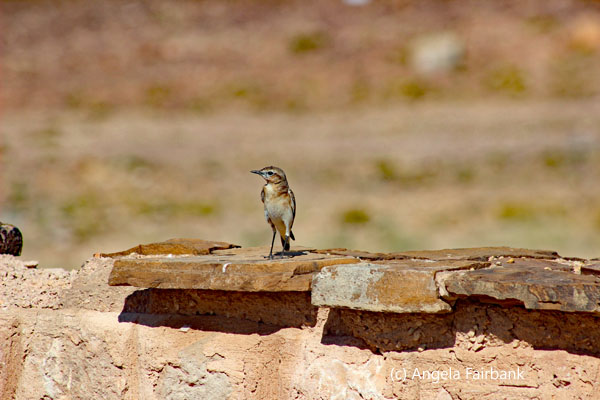 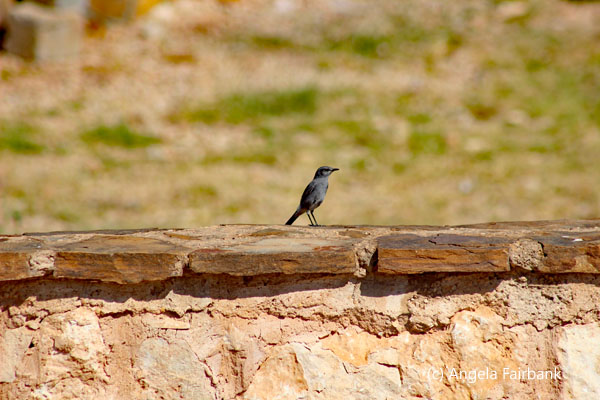 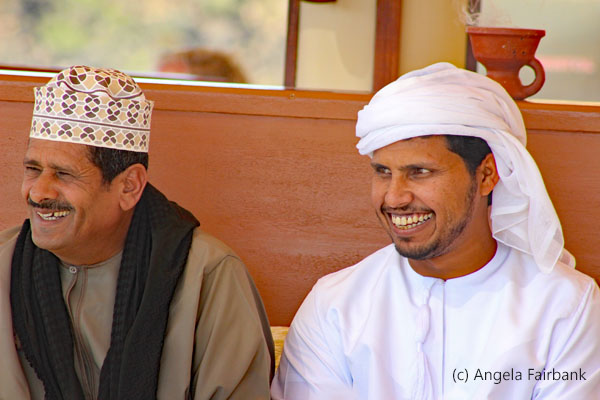 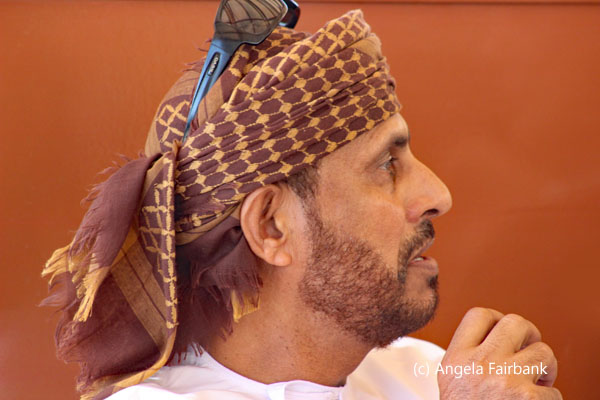 Next, we were driven to Wadi Darbit, and I was expecting to see a dry riverbed, but instead it was an oasis with dromedaries--and dromedary droppings. There were also waterfalls, and the water was emerald green.
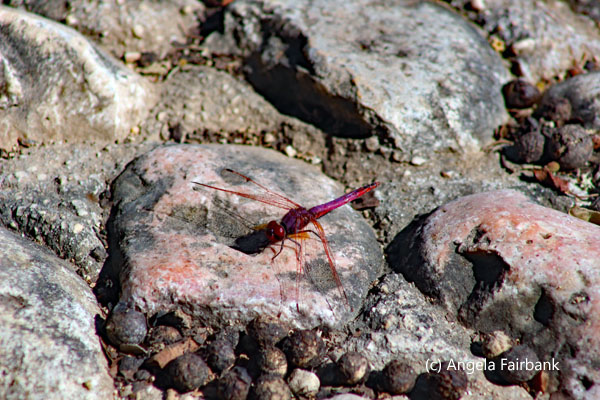
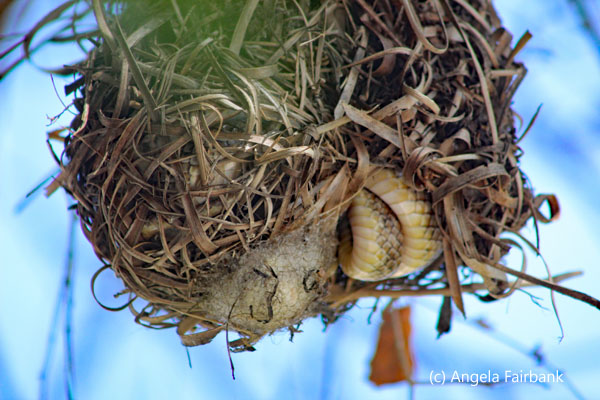
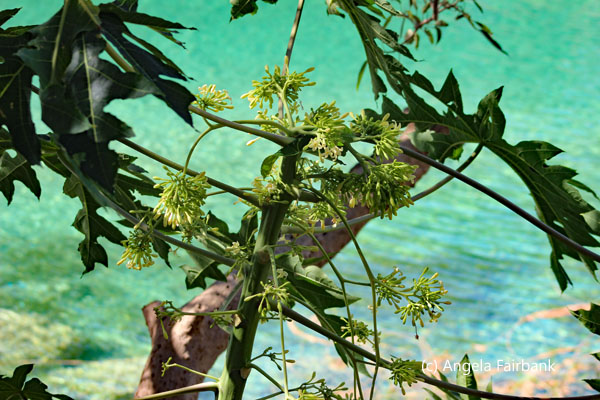 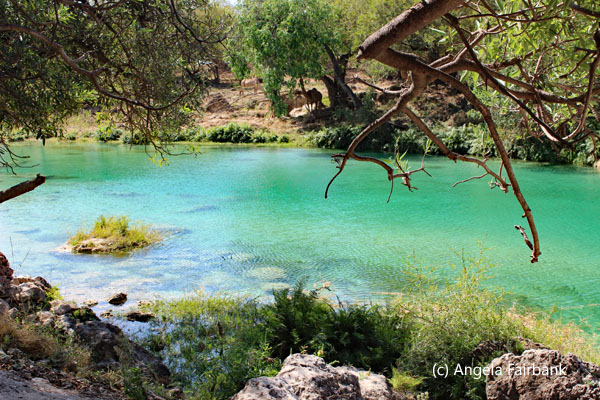 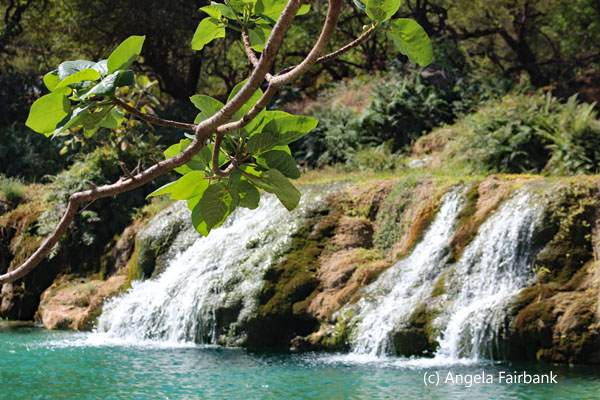 We then visited two springs, the first was a small pond with a warning sign not to swim because it “harbors snails which transmit bilharaziasis (sic) disease.” I was fascinated by the red and blue dragonflies flying about, and weaver nests in the acacia trees above. The one I photographed seemed, to my eye, to contain a snake. Luckily, it kept inside and didn't drop out while I was standing beneath it.
  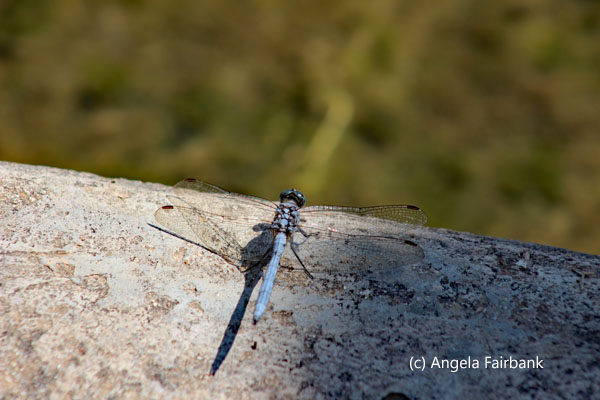 The second spring, Aiz Razat, was larger and located in an oasis containing a large flower garden full of bougainvillea as well as many other species, some of which you will see in the images below. Dromedaries were wandering around freely here too, and I asked our driver if they were wild, but he said no, they all have owners.
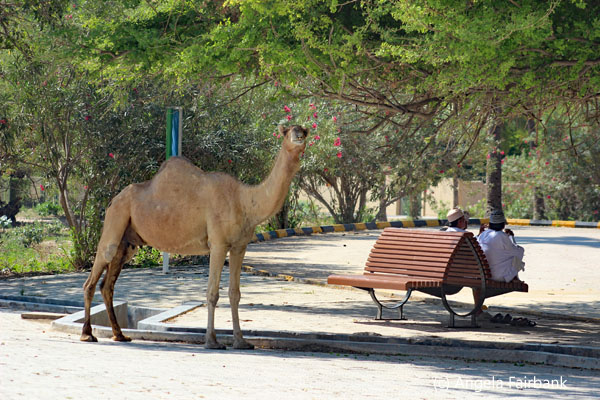 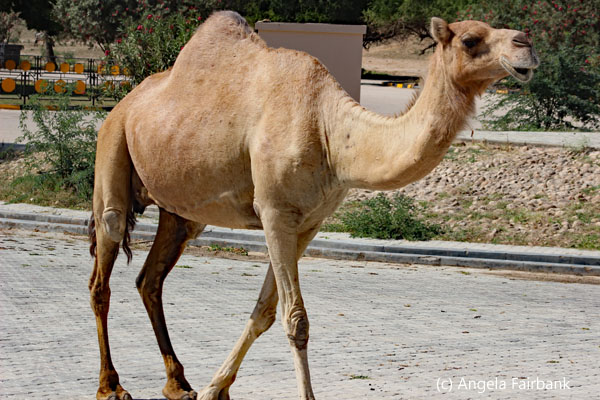 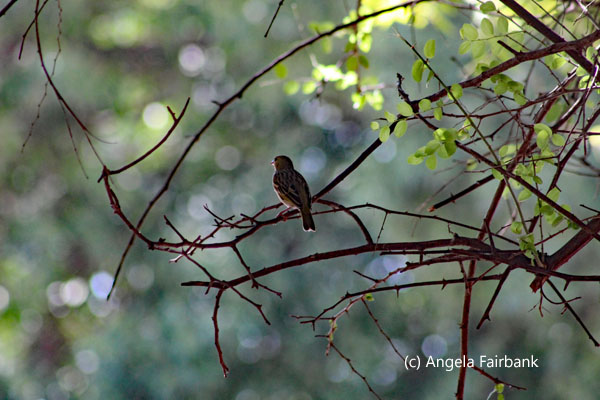 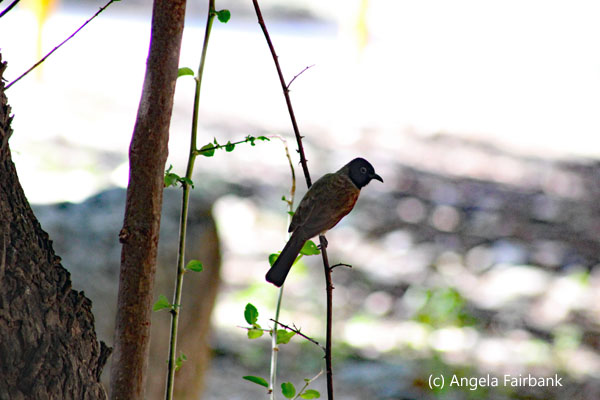 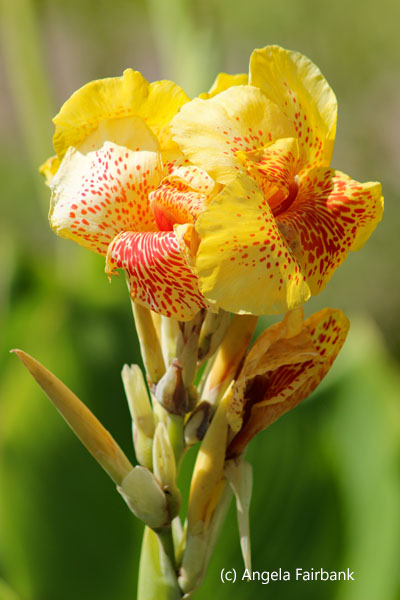 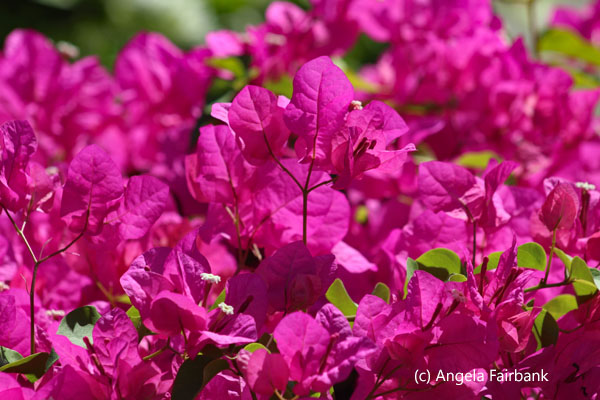 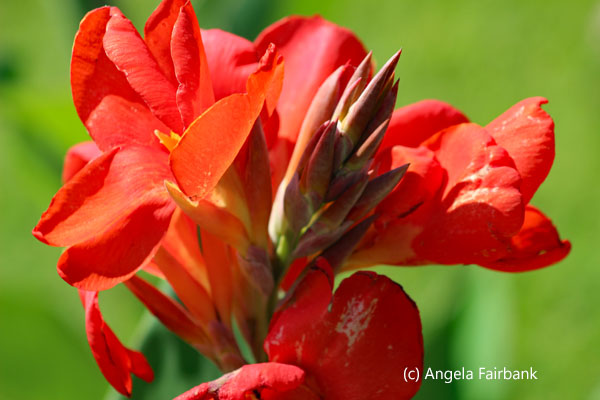 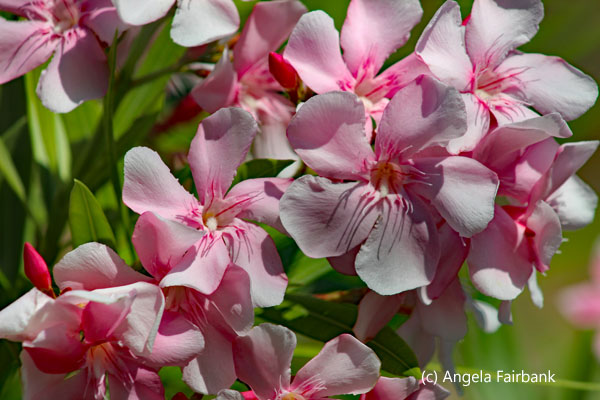 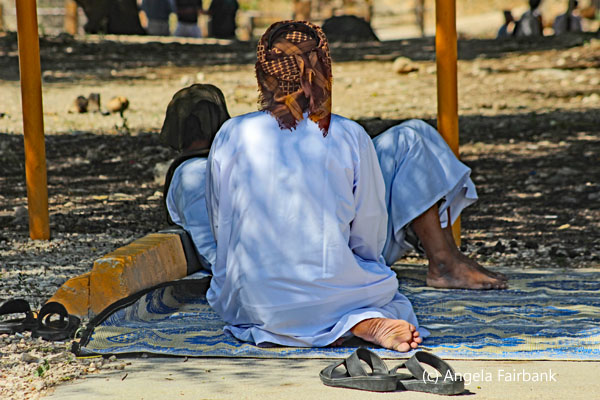 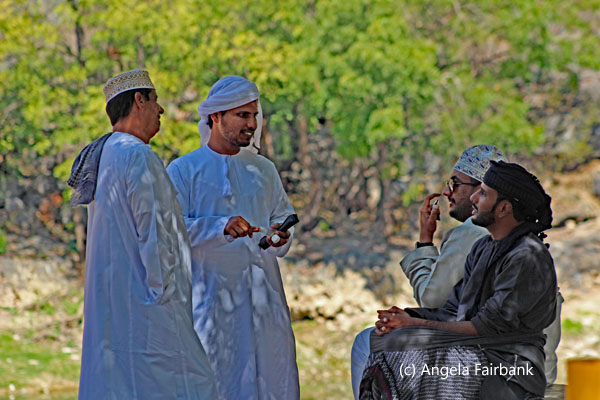 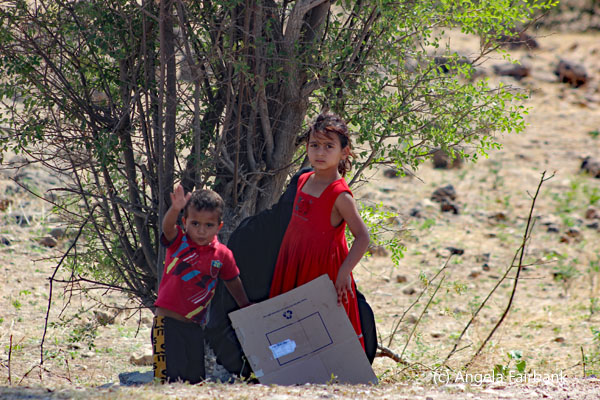 My only regret was that we didn't see more local people. Almost all the Omanis you will see in my photos were our collection of drivers. And I forgot to mention that we went everywhere in a convoy of about 16 Toyota Land Cruisers, with a driver and four passengers each. Each car had a sticker on it with our ship's name and a number and we were in car number 4. We got back to Bolette in time for a late lunch and our ship left the port at 4:00 p.m. so it was still light out, and, for once, we could watch the casting off and see ourselves sail out of the port in daylight. There were some Indian ships berthed and we were watched by Indian crew, which I photographed. There was a marvellous sunset too, just before 6:00 p.m.
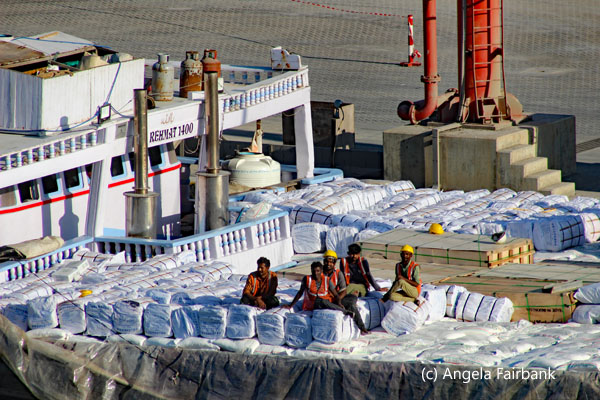 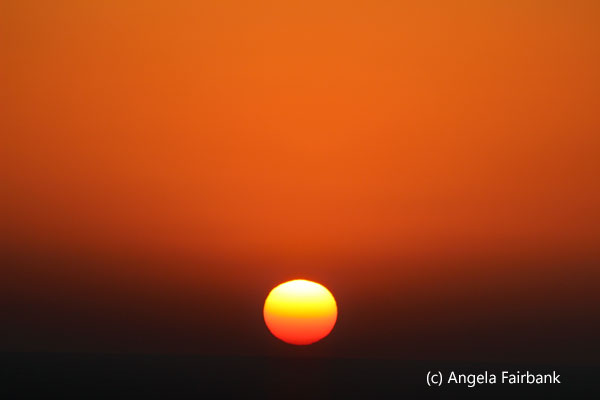 Tuesday, December 12, 2023: Mumbai, Maharashtra, IndiaNamaste. Finally, we are on another continent, South-East Asia, in Incredible India, on our first of four stops in this nation, the seventh-largest country by area; the most populous country as of June 2023, with more than 1.43 billion people; and from the time of its independence in 1947, the world's most populous democracy! This is my third time in Mumbai, with 1992 and 2010 being the two previous times. Mumbai came under British control in 1661 as part of a marriage settlement between King Charles II and Catherine of Braganza, sister of the King of Portugal. In 1668, thinking it was of no value, the Crown leased it to the British East India Company, who turned this natural harbour into an important maritime centre to trade spices, silk, cotton, indigo dye, tea, and opium. Eventually, it became the gateway to the entire Indian Peninsula.
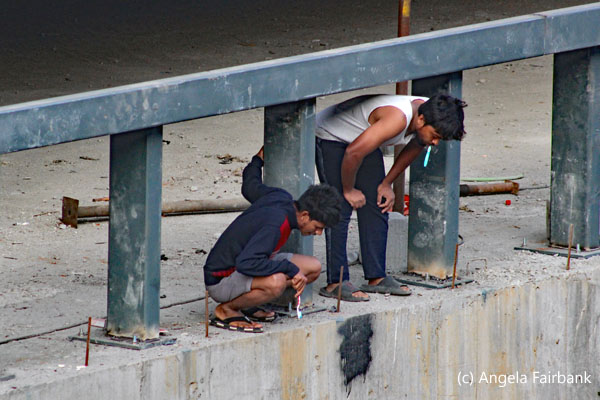
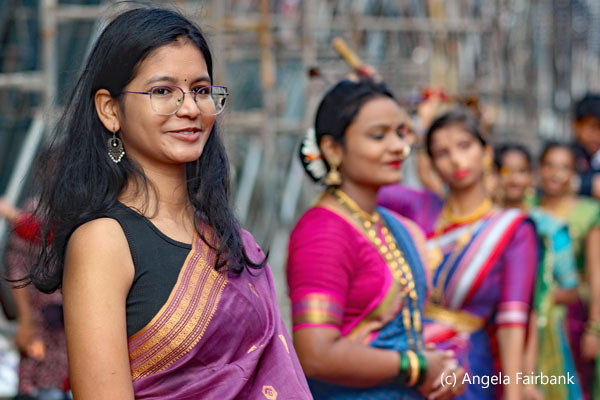
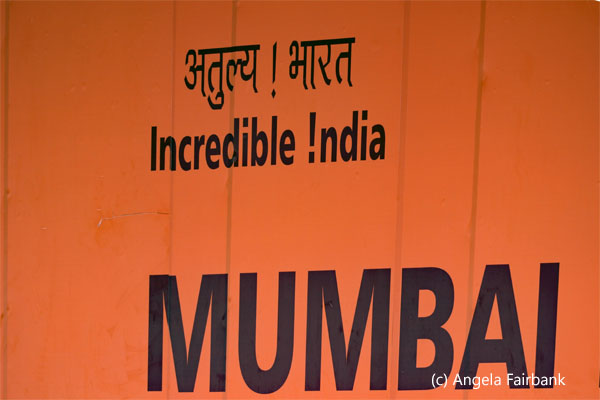 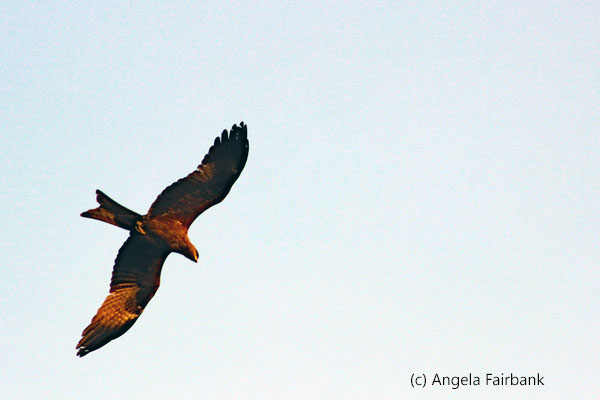  We arrived at our berth in Mumbai on a smog-laden morning and the immigration building beside us was in the midst of being built up higher, hence the workers opposite our ship windows, who were also waking up, brushing their teeth, and posing for photos. Kites (the bird kind), local crows, and pigeons flew overhead. A female dance group met us on the pier as we descended from the ship and a red bindi (tilak or tika) was applied to our foreheads as a welcome and a symbol of good fortune. Then we had a wait as we went through immigration and security. Finally, emerging outside, on the other side of the immigration building, we waited again amongst organized chaos as several buses, ready to whisk tourists away, struggled to park, to turn around, and to fill up with passengers. There was another ship alongside going through immigration and getting on tour buses at the same as us--a Seabourne ship--a younger crowd, clearly, and perhaps also a smaller group. Finally, our bus arrived, our two small groups climbed in, and we pulled away from the port area.
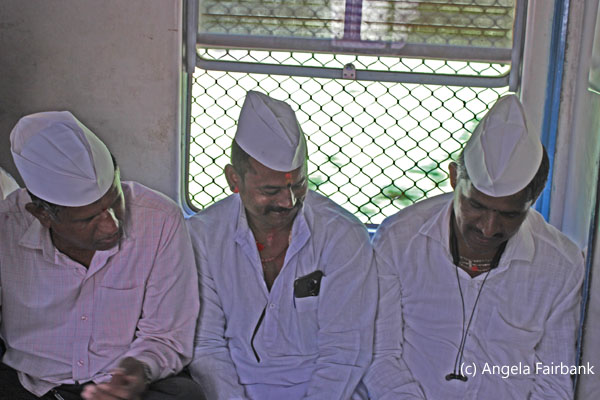
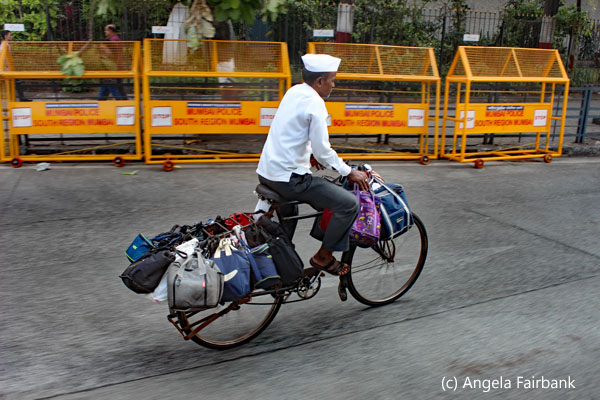
 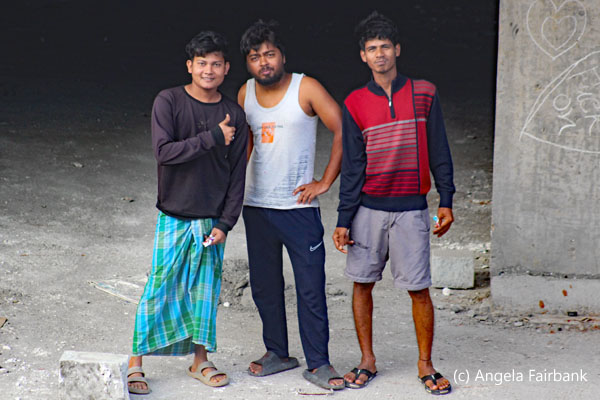  We had two enigmatic young men called Adi and Abhi as guides. There were nine in our group and the other group were ten, but, basically, we travelled round together. Our tour was rather special and called Delivery with a Dabbawala. “They are an essential part of daily life in Mumbai, with a team of around 5,000 ensuring that 200,000 workers get their lunch every day.” Dabbawalas deliver tiffin boxes (i.e. lunch made usually by the mothers or wives of office workers), which they collect up, sort, and deliver to offices in time for lunch. Some Dabbawalas ride bicycles while others travel on foot and/or take the train. We were first driven by bus to the headquarters of the Dabbawala association, where we were introduced to the boss (we were told by our guides that we could easily identify a boss by the fact that the girth of his waist would be larger than those of his employees), who showed us the old-fashioned metal tiffin tins in four sections, and then his own more modern tiffin box, somewhat smaller and now carried in bags, whether of canvas or plastic, according to the social level of the owners. We were told they usually contain rice in the first section, some kind of Indian flatbread in the second, then a kind of curry stew in the third and lentils (dahl) in the fourth. However, when the Dabbawala boss opened his tins, we found rice in the first, flatbread in the second, flatbread in the third, and ... flatbread in the fourth. He told us through the interpreter/guide that his wife makes his tiffin.
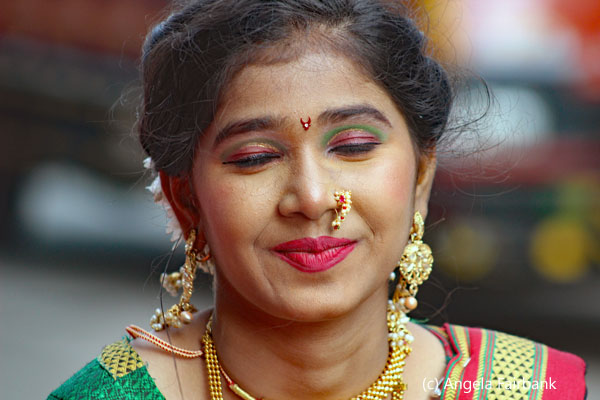 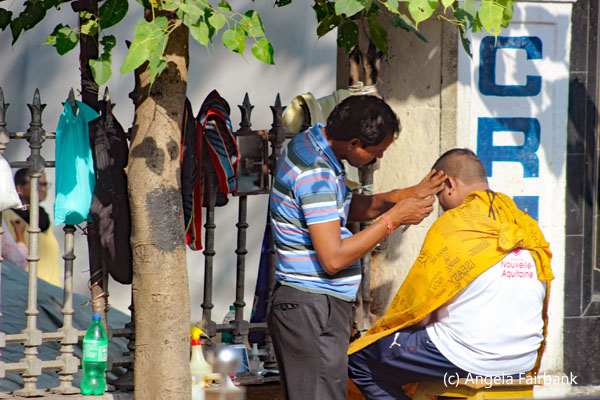 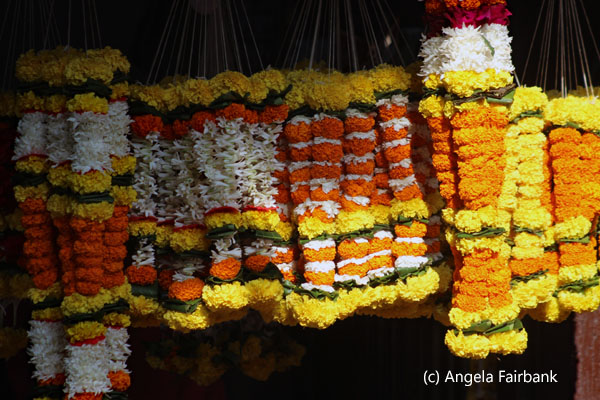 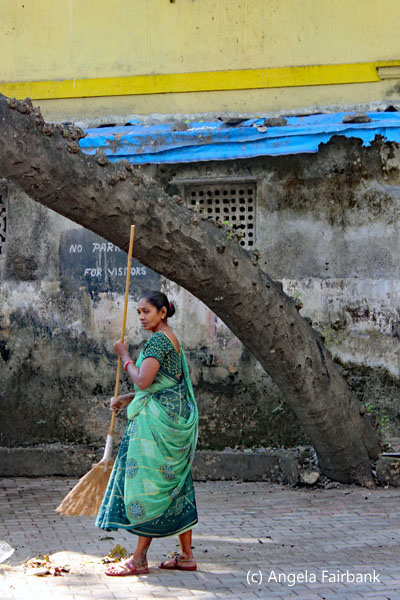 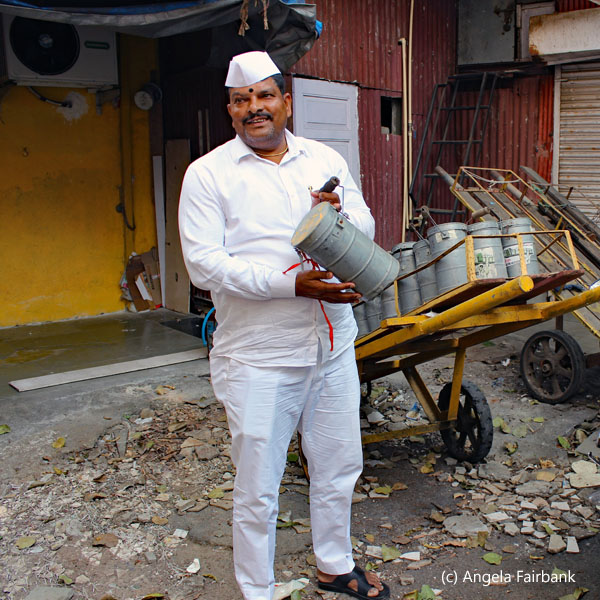 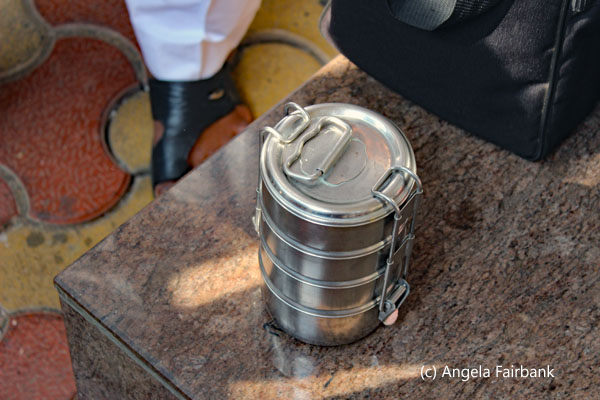 To give you a bit of history, this is a service that started in 1890 at the request of a Parsi banker in Mumbai who, wanting to have a home-cooked meal in his office, hired the first ever Dabbawala. Thus, these wholesome meals are cooked, as mentioned above, by the wives and mothers of office workers so that they don't have to eat not-so-wholesome meals served in snack places. “With an increasing number of migrants arriving in the city from around the country, all with varying tastes, the idea of having home-cooked meals delivered to their workplace took off. A man called Mahadeo Havaji Bachche saw a great opportunity in this informal arrangement and developed his lunch delivery service in the present format with a team of 100 Dabbawalas. As the city grew, so did the service. In principle, the system is simple. A man bikes to a customer's home to collect a freshly cooked lunch, which is then swiftly transported to the train station and sent, via rail, to a central hub for sorting. It is then delivered by bicycle to the relevant recipient before midday. But all this takes place in one of the mostly densely populated cities in the world, and despite high illiteracy rates among the Dabbawalas, mistakes are rarely made--only one in six million. A coding system of colours and alphanumeric characters is used to identity each tiffin's collection point, destination, and other crucial information, and from beginning to end, each meal changes hands at least five times. Almost all of the Dabbawalas are from small villages near Pune, many of them part of families that have worked the industry for generations. Amazingly, the structure of the business is much the same as it was over a century ago.”
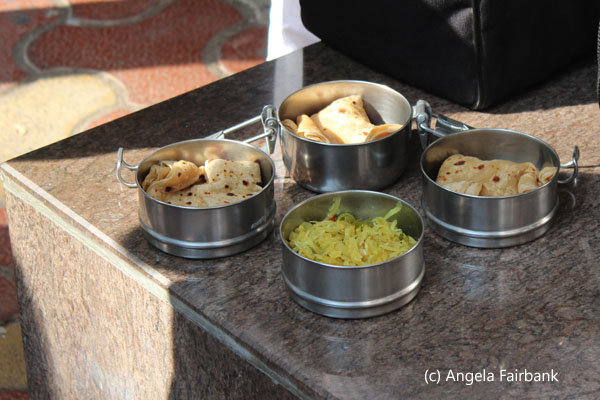 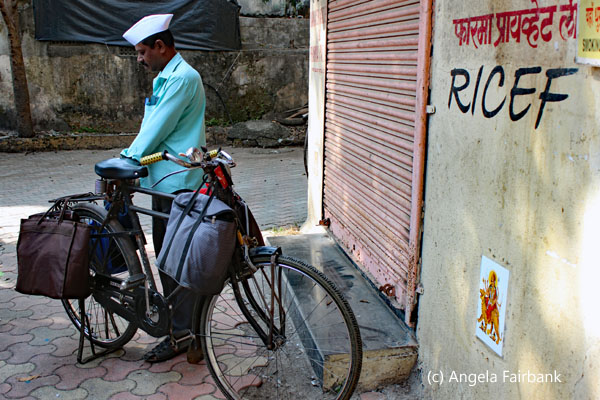 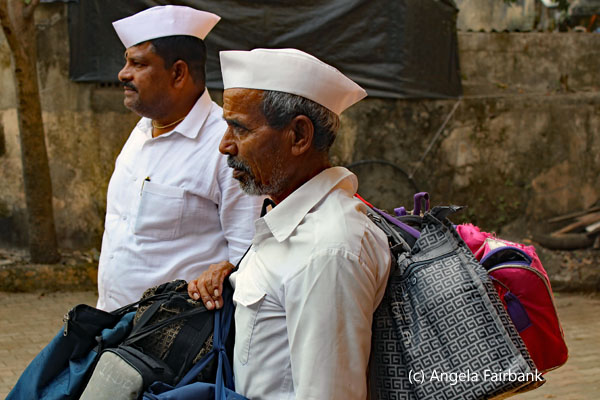 Unfortunately, business has gone down 40% since COVID, not only because more people work from home, but also because there are competitors such as an Uber-eats-like operation and because some offices now have cafeterias for their workers. We were told to watch a movie called The Lunch Box, which is all about this service. We were also told that Jains represent 35% of customers because they do not eat anything that grows underground (e.g. potatoes, onions, garlic) and are very particular about their food. These tiffin boxes are considered wholesome, healthy, and hygienic. We also saw that some tiffin boxes now consist of tupperware tubs instead of the metal containers we saw because most offices offer microwaves so instead of having to keep the meals hot, workers can microwave their meals prior to eating them. We were also told that King Charles, prior to his marriage to Camila Parker-Bowles, and while he was still Prince of Wales in 2003, had heard about and become interested in the Dabbawalas and had met some during his trip that year to Mumbai. Consequently, he invited a couple of them to his second wedding and they brought among their gifts a sari for Camila. According to our guides, Dabbawalas earn the equivalent of about 80 pounds sterling per month, and they pay about 12 pounds sterling a month to belong to the Dabbawala association.
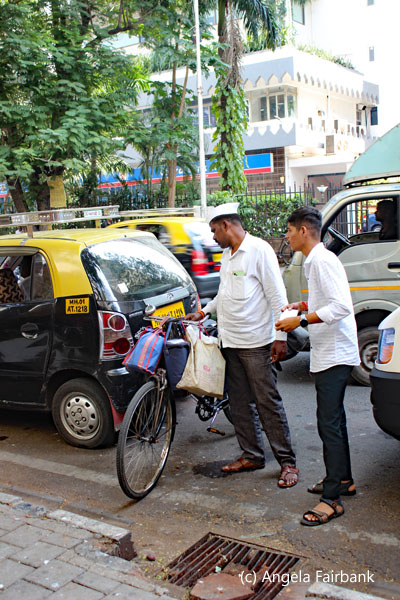
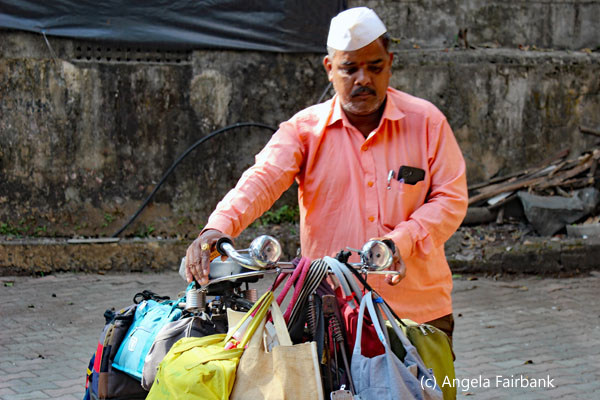 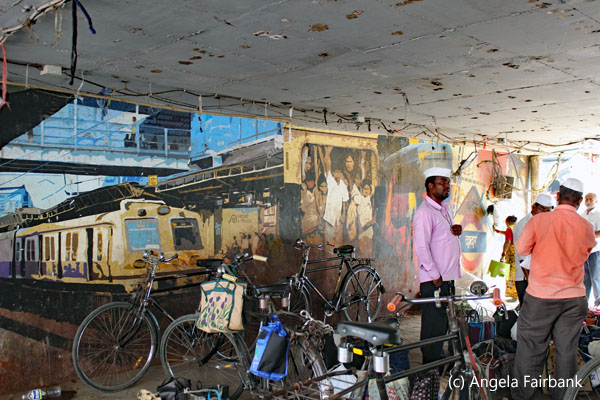 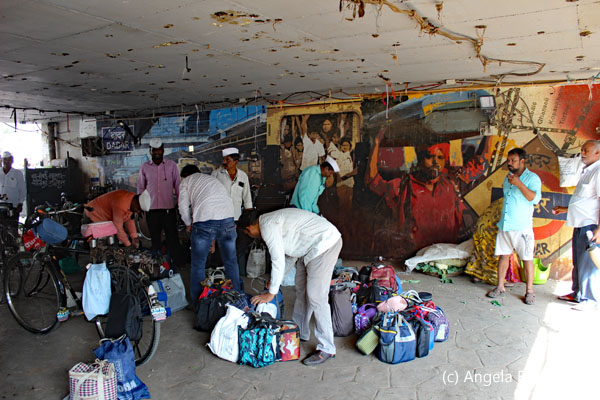 So now to tell you our story. After meeting the boss Dabbawala in the Dadar district--“a densely populated, residential and shopping neighbourhood in Mumbai, but also a prominent railway and bus service hub with local and national connectivity”--as well as some of his employees, who had arrived at the headquarters on bicycles or on foot while we were there, we were introduced to a young Dabbawala who would accompany us (photographed below with me at the train station), and who is currently a student of medicine about to write his final exams. We were presented with white, nylon, Dabbawala hats, which all Dabbawalas wear to distinguish them. These men (and I think they are all men, no women were mentioned in the tour, except as cooks of the meals) get to ride on the trains for free but they ride in the luggage carriages, which are less crowded. We were also told that when you ride in an Indian train in the passenger compartments, they are so crowded, you get a bonus of a free body massage in the winter, which was now. In the summertime, it rains a lot, but temperatures can go up to 50 degrees Celsius and Dabbawalas work 365 days a year rain or shine, except for five days in March when they get a holiday and go back to their hometowns. Consequently, during the summer months, if you ride on a train in India, you not only get a free body massage, you also get free aromatherapy!
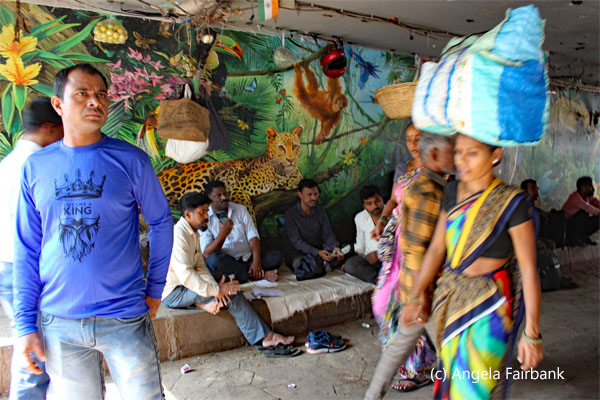 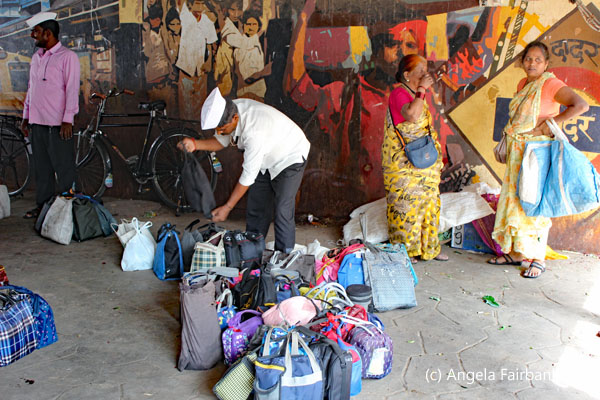 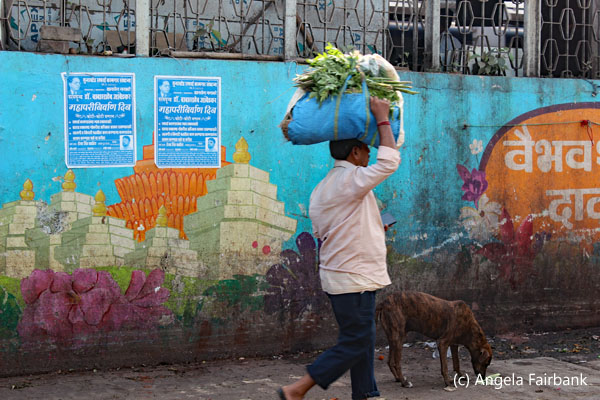 We then walked over to the Dadar train station together. This is where Dabbawalas meet to sort some of the tiffin boxes. Then we got onto the train with them--in the luggage car--and accompanied them eight stations to the terminus: Churchgate train station. Adi was quite the social networker and took photos for us as well as videos in each of the two train stations, where we were asked to stay completely still for a minute as life went on around us. He sent these to those of us who wanted them via WhatsApp.
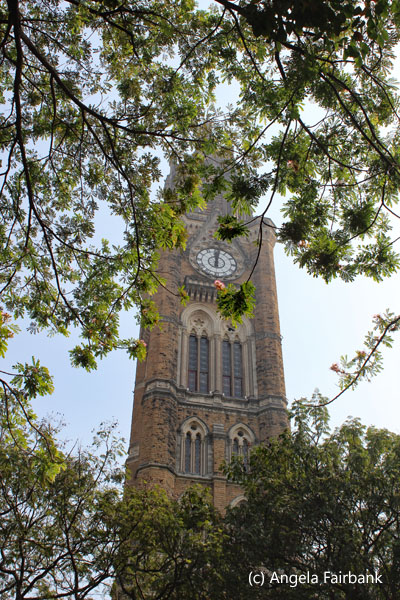
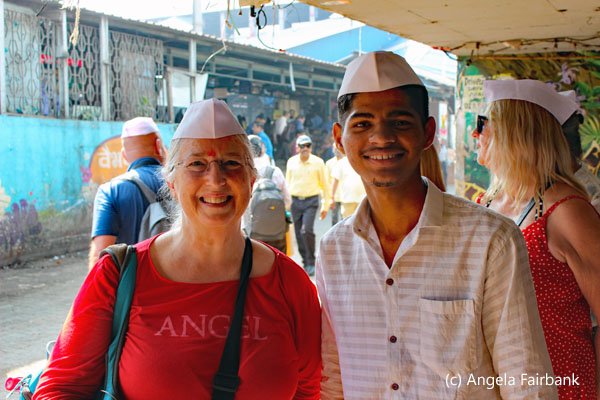  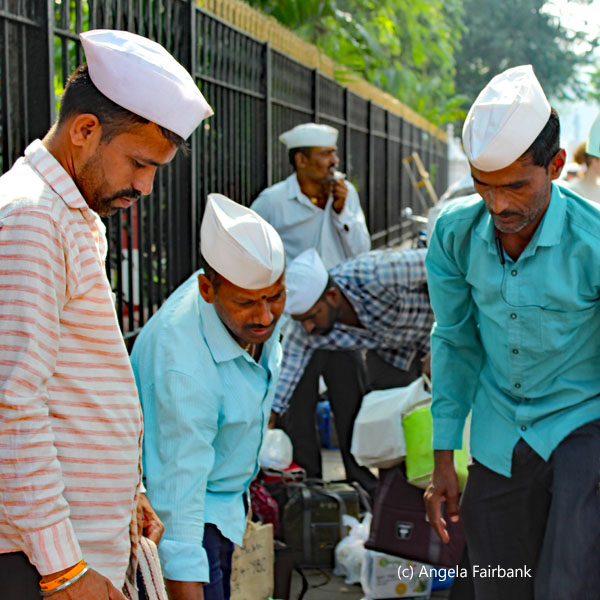 Having arrived at the terminus, we followed the Dabbawalas and their cargo to the street outside where more sorting was carried out and we met several other tour groups at this stage also photographing the sorting operation. Back on our bus again, we had some time to wait so we drove down Marine Drive, supposedly the second area for art deco buildings in the world after Miami Beach, though, to be honest, I noticed only one building in that style. We also drove past a humongous cricket ground bordered by some impressive old buildings, one of which was modeled on Big Ben, called Rabajai Clock Tower and part of the University of Mumbai. It stands at a height of 85 meters (280 feet or 25 storeys). The tower is part of the Victorian and Art Deco Ensemble of Mumbai, which was added to the list of World Heritage Sites in 2018 (according to Google). Then we caught sight of a Dabbawala on his bicycle, so we followed him to a shopping area on the opposite side from the 5-star Oberoi Hotel.
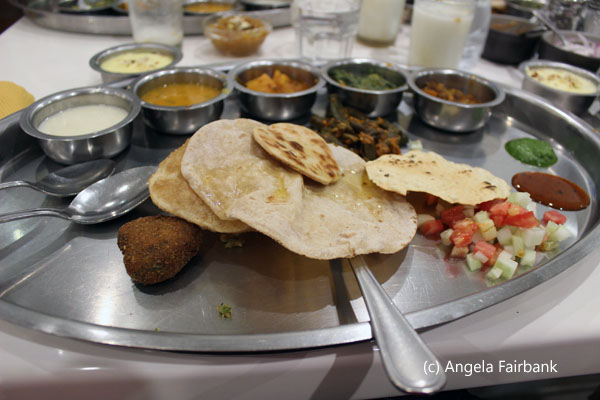
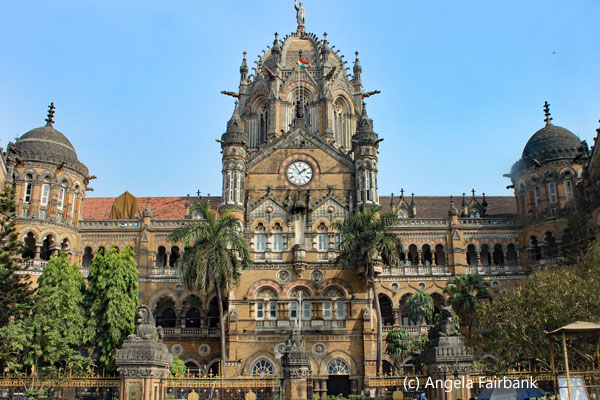
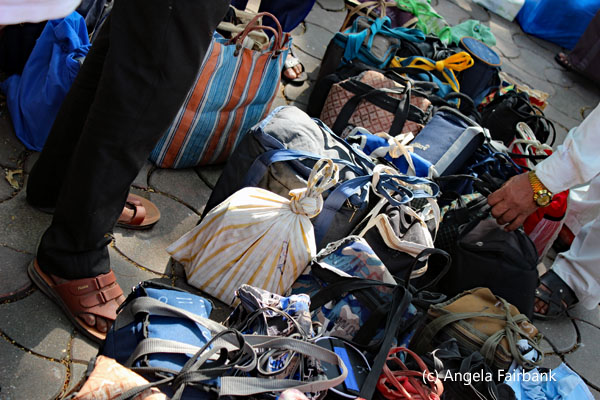 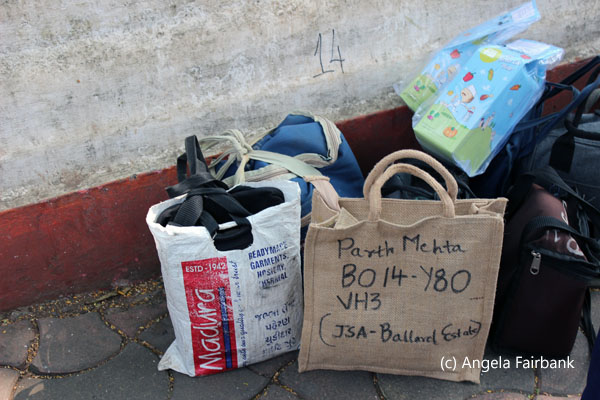    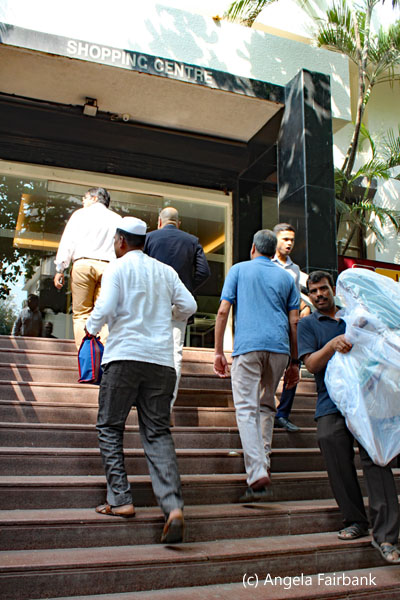 After getting our final images of the delivery, we were then taken for our own vegetarian lunch at Samrat, a lunch that was far more copious than what you might find in a tiffin box, called a thali, and consisting of lots of little bowls of sauces, plus various styles of bread, choices of rice dishes, and desserts. It was good, although a bit spicy, but certainly too much for any of us to finish. On our way back to the ship, we briefly stopped for a photo at Victoria Terminus Station--the second most photographed building in India after the Taj Mahal, we were told, and now called the Chhatrapati Shivaji Terminus. According to Google “it is an outstanding example of Victorian Gothic Revival architecture in India, blended with themes deriving from Indian traditional architecture.” It is seen below. Perhaps more interesting to some is the fact that it was the location of the dancing/singing scene Jai Ho in Slum Dog Millionaire and was filmed between 1:00 a.m. and 4:00 a.m. one morning as this is the only time the trains don't run.
  All in all, a good tour, and a good day, but I wish the tour had been longer, and that we could have seen some more iconic places. Another tour I wasn't able to take because it was offered at the same time, but which interested me, was to the Mumbai slums, Dharavi, an economic zone, full of independent artisans and more. Perhaps next time...
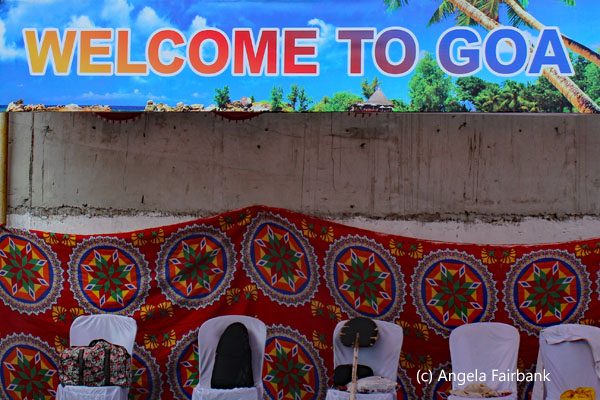
Wednesday, December 13, 2023: Mormugão, Goa, IndiaHaving four ports in a row has meant I have gotten behind somewhat in my travelogue, however, I took notes during the guides' spiels so I hope I can give you some important information around these visits to punctuate my photos. Mormugão is a port in Southern Goa, the smallest state in India, and the leading exporter of iron ore, in addition to bauxite and manganese. Tourism too is a major source of income with Russians being the number one tourist group. This state of 1.57 million people is also famous for its spices. The Portuguese were among the first Europeans to enter India in 1498 and ruled for 450 years, leaving as recently as 1961. Vasco da Gama arrived in Goa in 1510 with the goal of taking over control of the spice route. In return, the Portuguese offered weapons and ships.
      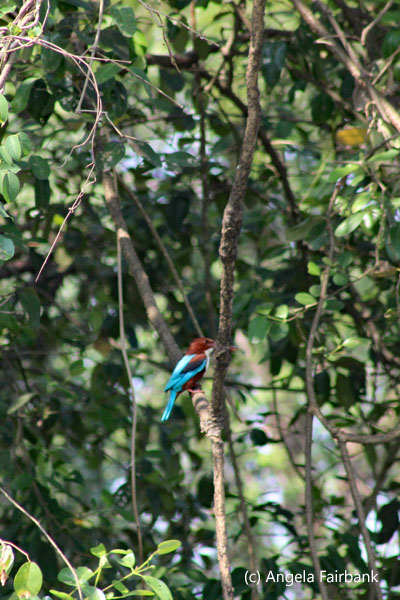 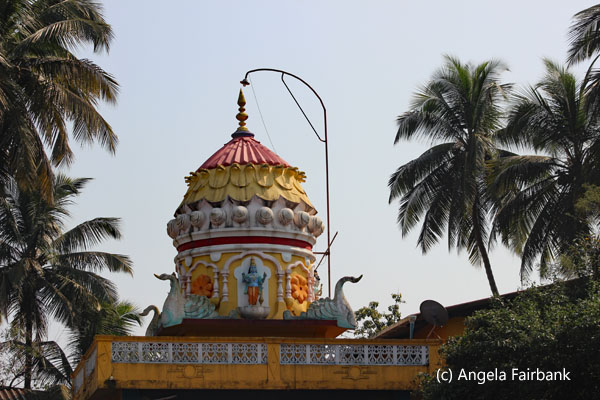 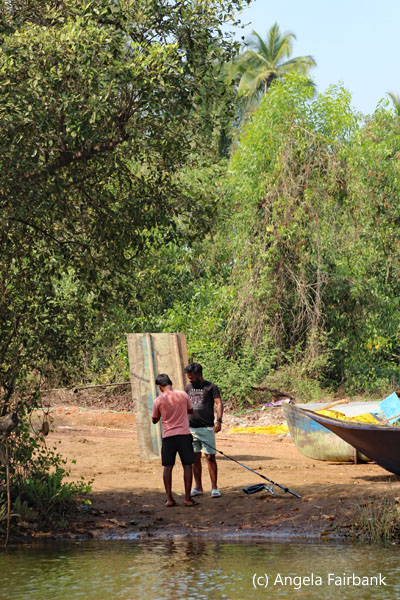 Goa has two airports and supports football/soccer rather than cricket. There are a number of punishable offences here not found in other states of India. These include begging, slaughtering cows (yet they are allowed to be eaten in Kerala and Tamil Nadu), and cutting mangrove trees for firewood. The latter incurs both a fine and time in prison. The state fish is mullet. There are three seasons: summer, winter, and monsoon season. Eight-seven percent of its inhabitants are educated. Goa offers ten years of compulsory school and its 380 villages each provide free medical facilities. Old Goa is known as “Rome of the East” due to all its (Roman Catholic) churches. In 1843, the capital was shifted to Panjim due to a plague, which killed half the inhabitants of Old Goa. Another unique fact about Goa is that castes and religions are allowed to inter-marry here.
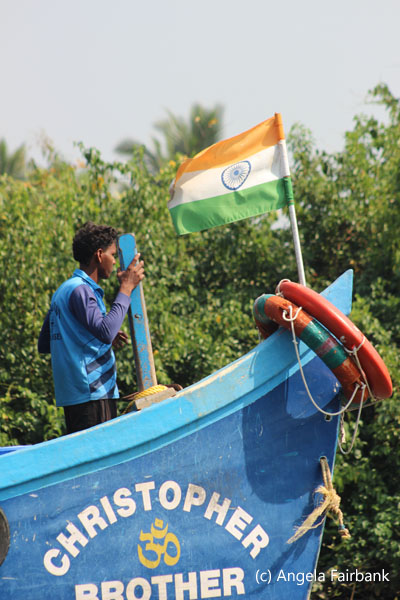 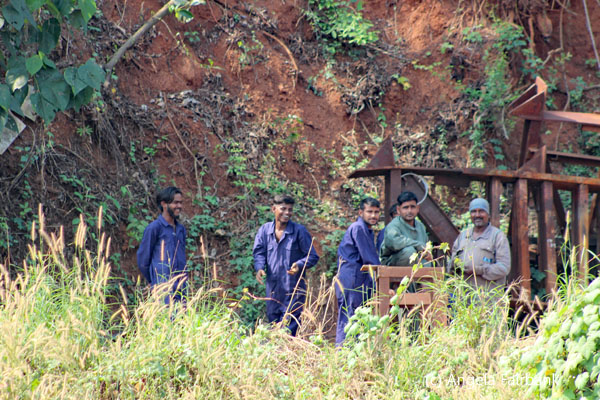 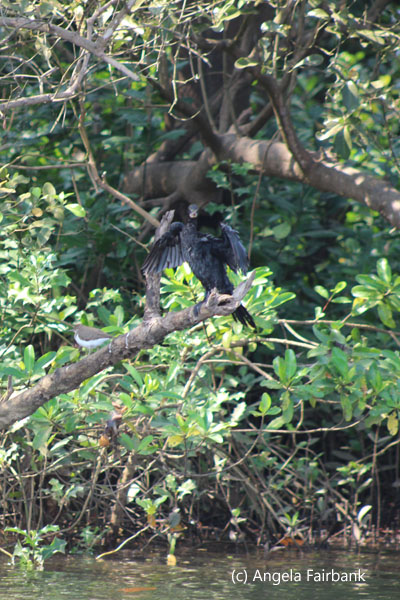 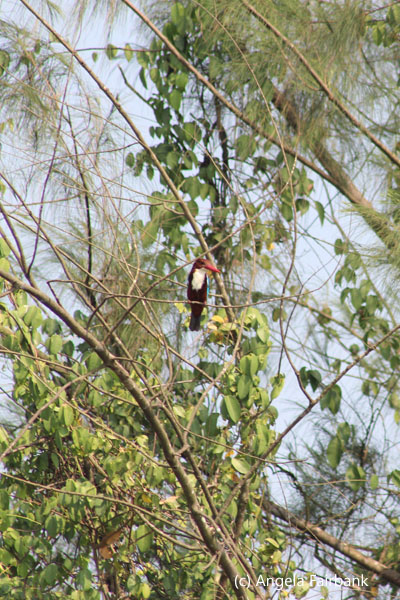 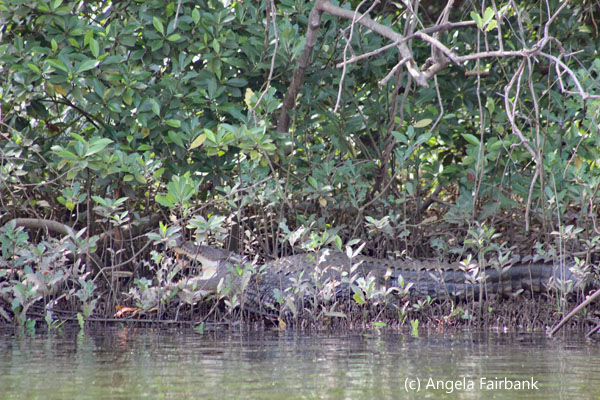 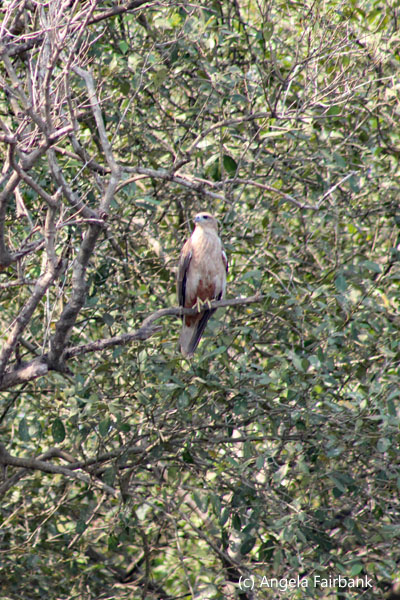 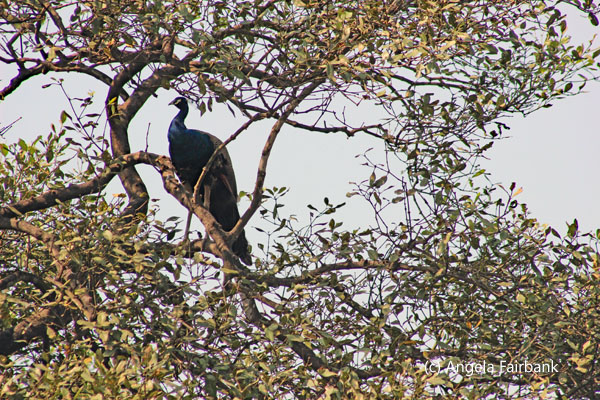 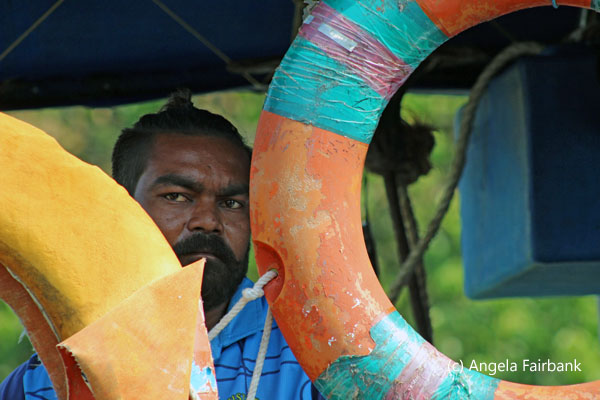 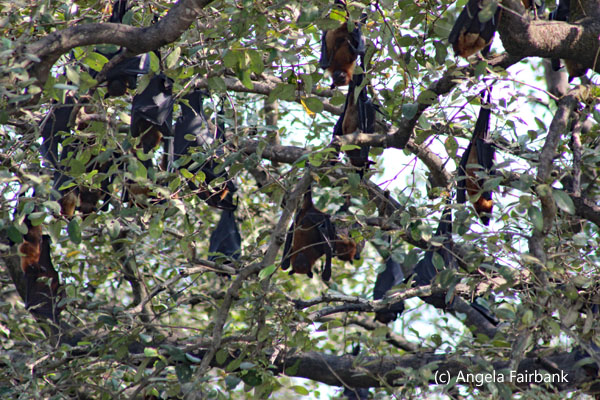 There was one lone drummer to greet us upon our entry into the immigration building where our e-landing card was stamped with a Goan stamp, and we then found our tour buses. Our tour today was called Waterways of Goa Wildlife Cruise, whose description I found the most interesting of the five tours listed for this port. I was afraid it might be too similar to the tour I had booked in Kerala, but it ended up being distinctly different. Our guide was called Sachin, whose native Goan language was Konkani, and we drove a good hour and a half to two hours to where we were to board passenger boats. However, this meant we could view Goan daily life from our bus windows and see buffalo, cows, egrets, dogs, kites (the birds), and monkeys. There were also plenty of beautiful flowers including more bougainvillea. It was a pity, however, that so much litter, and mud, cluttered the roads and the landscape.
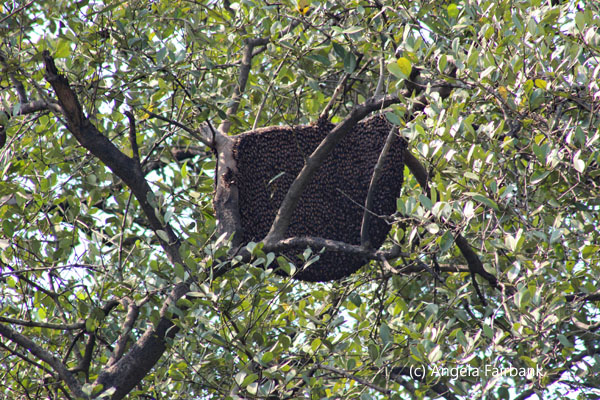
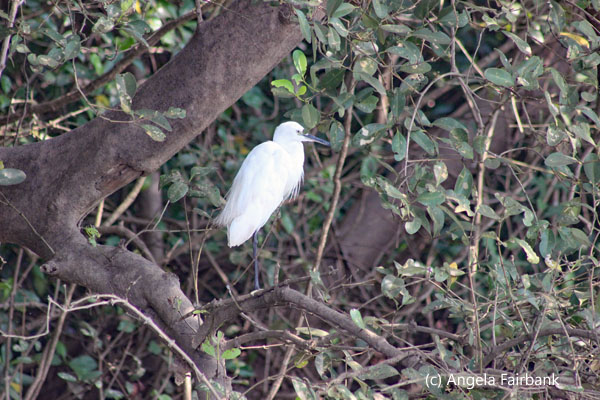
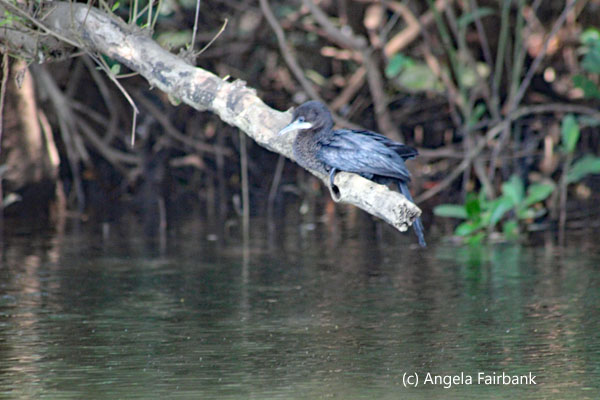
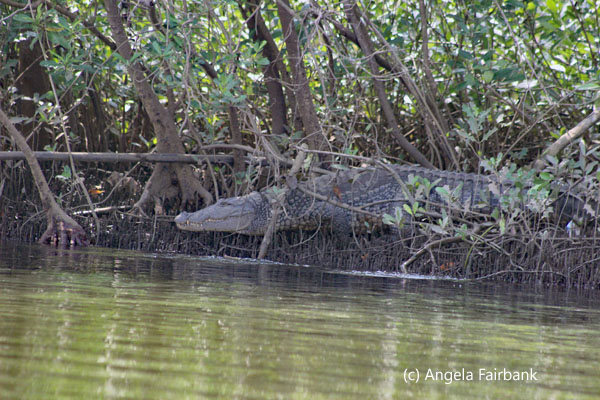 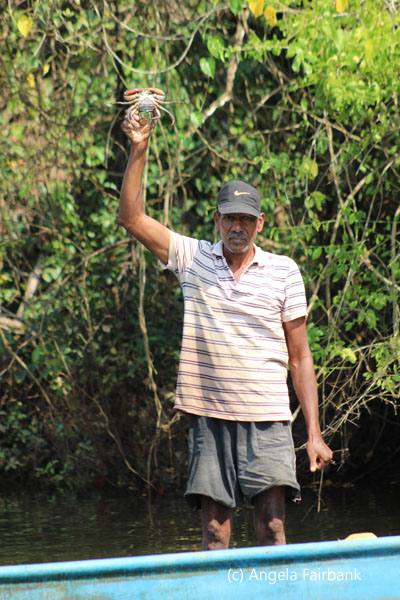 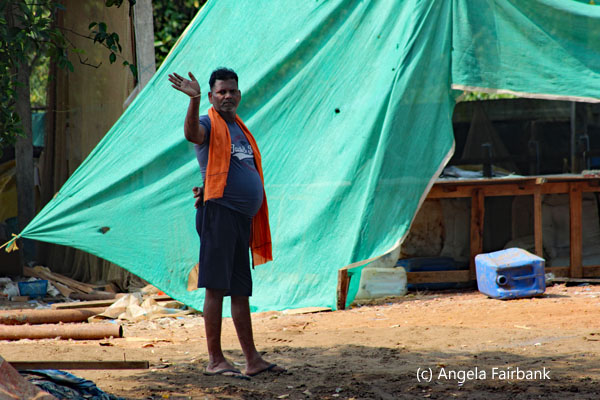 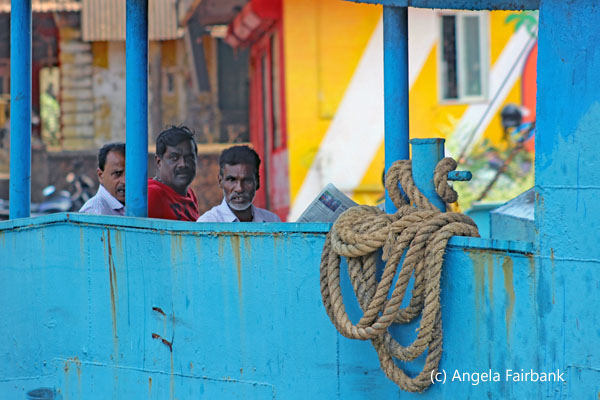 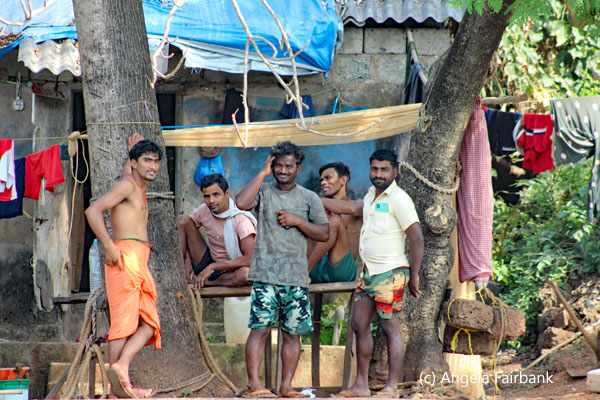 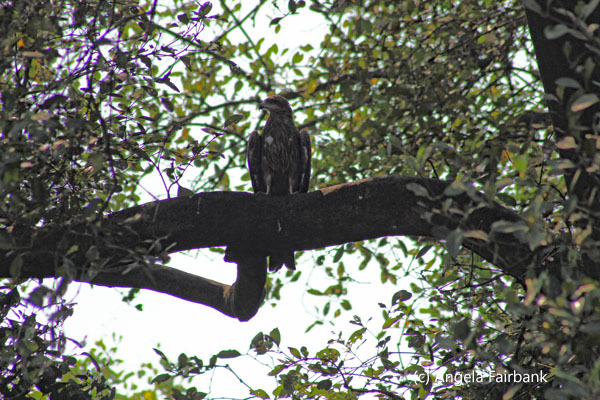 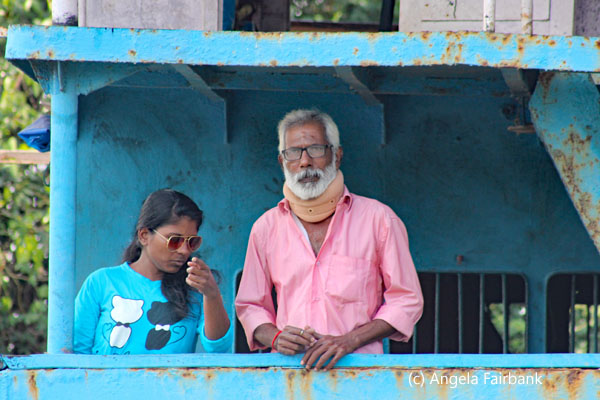 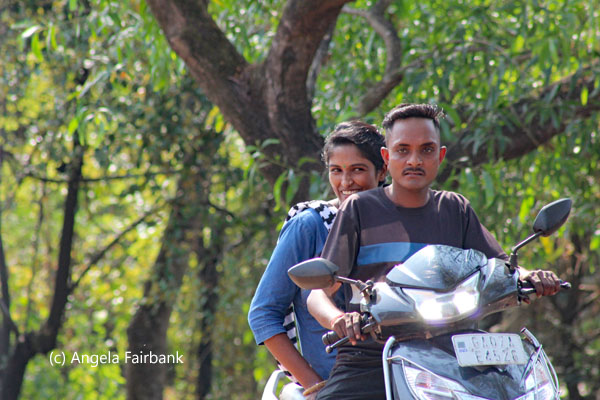 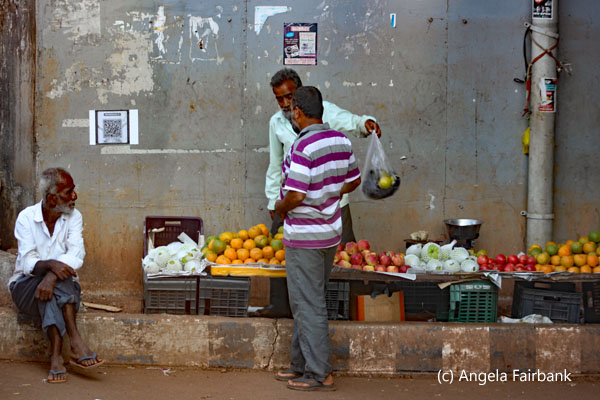 When we finally boarded our covered boat with blue plastic seats, driven by an outboard engine, and containing a toilet, which luckily I did not need to use, and with lifejackets within reach tucked into the ceiling, we were driven up and down the waterways for about 1.5 hours and were able to photograph the people and wildlife we met--e.g. boat builders, a large honey bee hive, egrets, kingfishers, a Hindu temple, cormorants, a crocodile, large bats, peacocks, a crab fisherman, people taking ferries--but the concentration of the tour was on wildlife rather than people. We then drove for about an hour to the Tropical Spice Plantation, where we were able to use flush toilets and wash our hands, and then partake in a lunch of various rice dishes and sauces plus some sweet bananas, local juice, and a sip of the local fire water called feni, made from cashews.
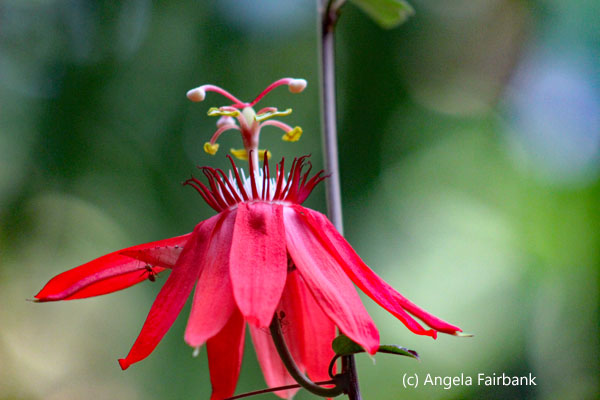
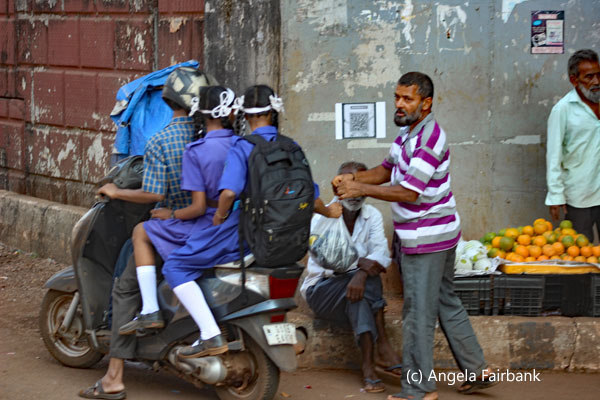 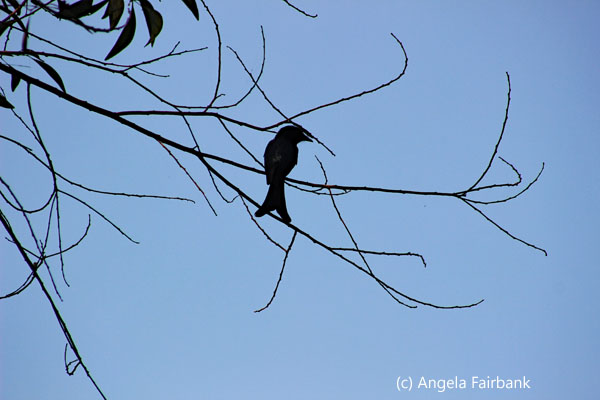 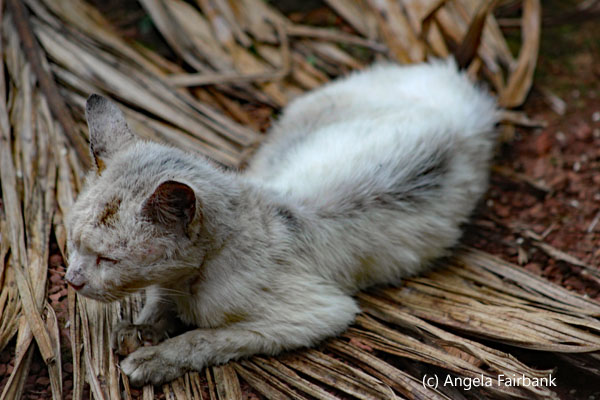 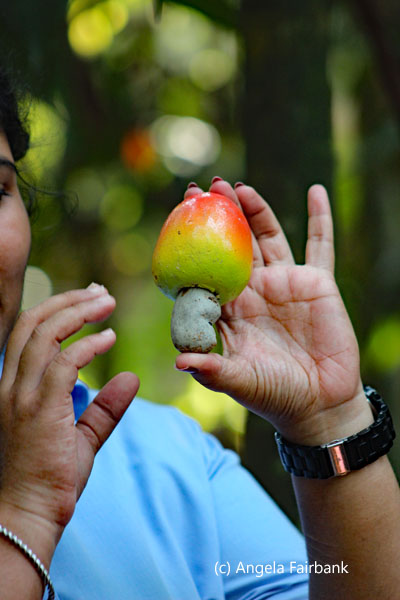 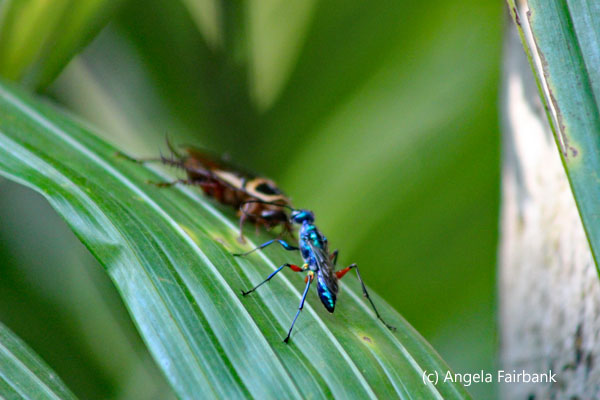 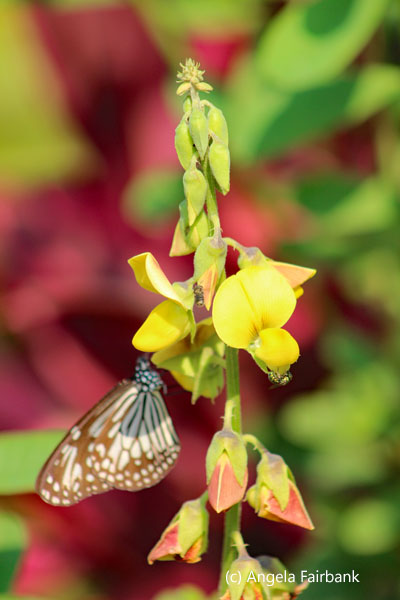 After lunch, we were given a tour of the plantation and were introduced to a number of spice-producing plants with medicinal or cosmetic purposes. I photographed a blue ant fighting with a cockroach and a number of flowers and bought some spices at the store for a reasonable price.
 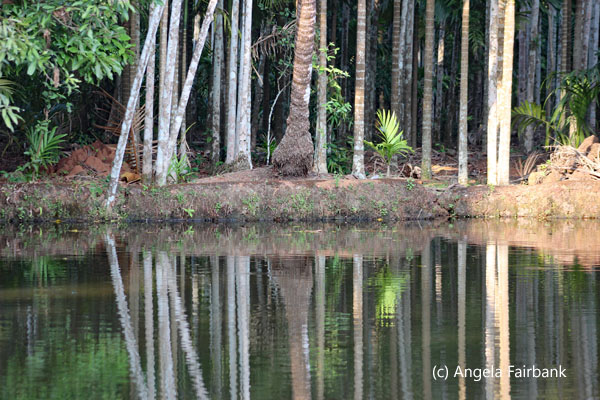 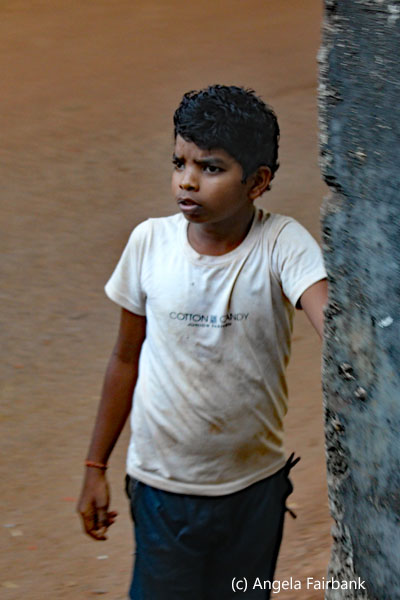 Thursday, December 14, 2023: Mangalore (Mangaluru), Karnataka, IndiaToday was probably my best day so far photography-wise and I had started off the day thinking I probably wouldn't find the tour very interesting. Boy, was I wrong! It goes to show that you should never underestimate the potential of a tour for photography.
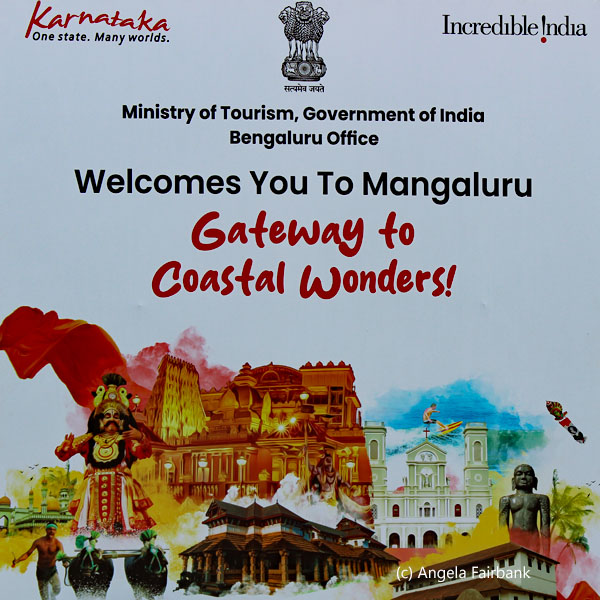 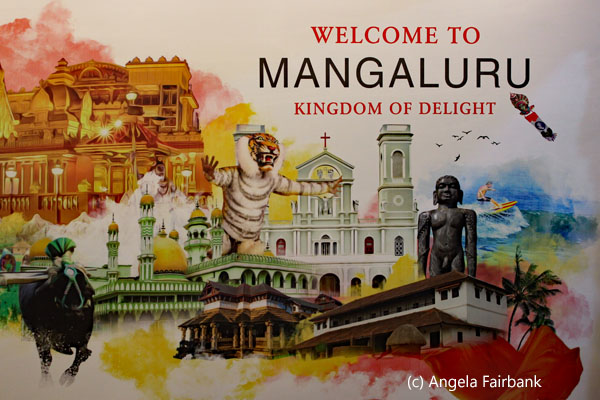 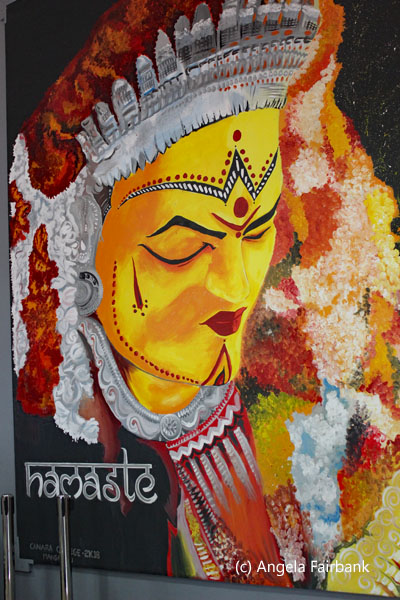 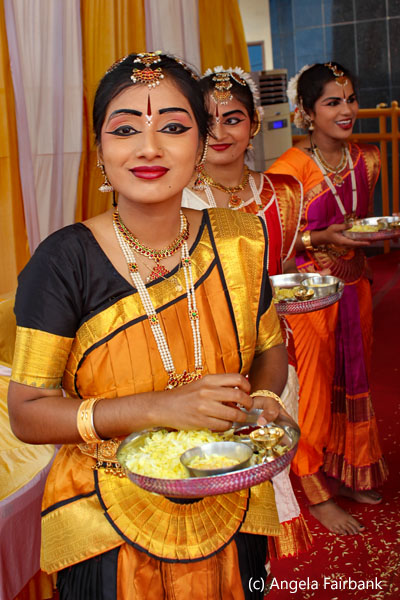 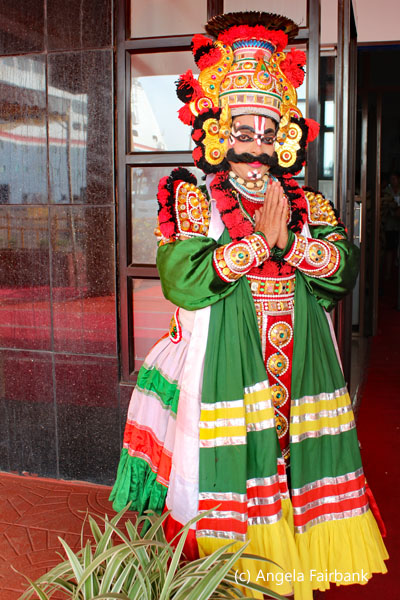 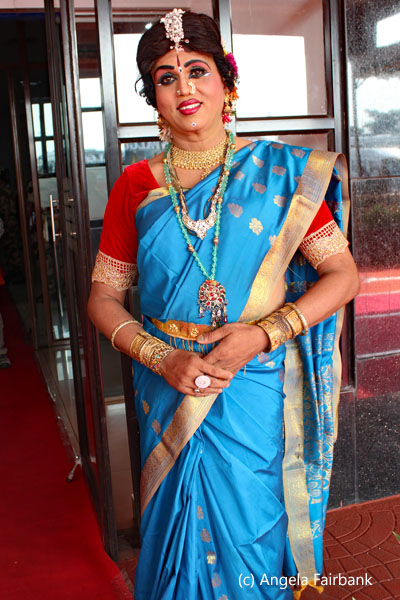  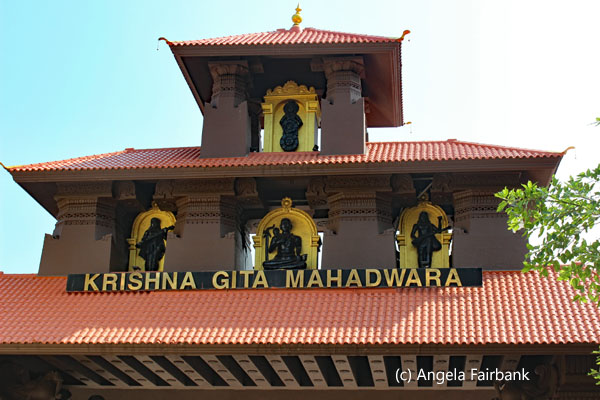  So now we were in Mangalore (Mangaluru) in the state of Karnataka, and having gotten up at a reasonable hour, I was able to watch our arrival into the port, the dock workers setting up, the entertainers (boys in wild cat costumes dancing to local drums), the red-carpet rollout, everything. When we were finally given clearance, tour ticket in hand, and our foreheads receiving tika marks, we went through immigration once again, and our e-landing card was stamped with the Mangalore stamp. Two male kathakali dancers in full regalia and make-up stood at the exit door and let me photograph them. Climbing onto the bus, we were introduced to our guide, Vish, for our tour to the Sri Krishna Temple at Udupi, 60 kilometers away, the first among seven places of pilgrimages for Hindus. Thousands of devotees flock to the Udupi Krishna Temple year-round to catch a glimpse of what is said to be the most beautiful idol of Lord Krishna, a roughly 1.5 foot statue of the deity depicted as a small boy (and photographs were not allowed!) through a silver-plated window with nine holes inside a large wooden structure located inside a temple, to which there was a long line up.
 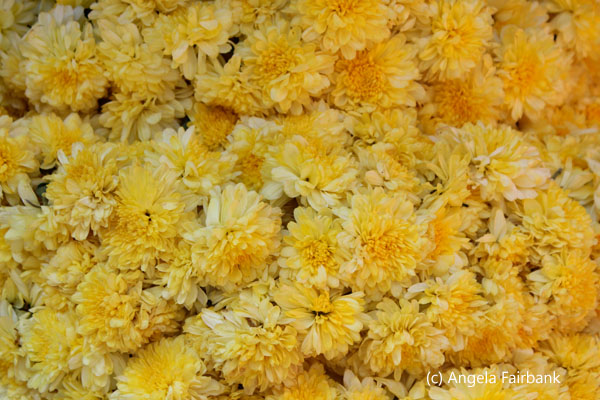 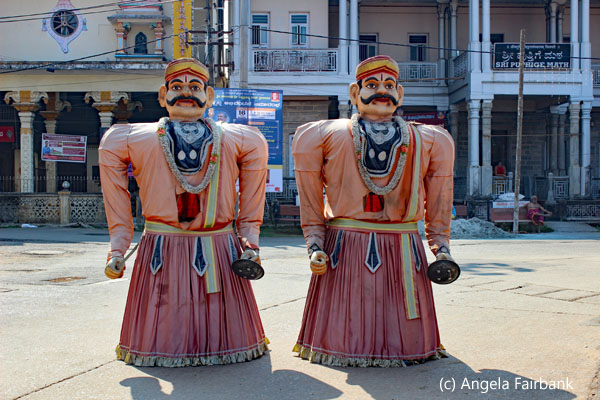 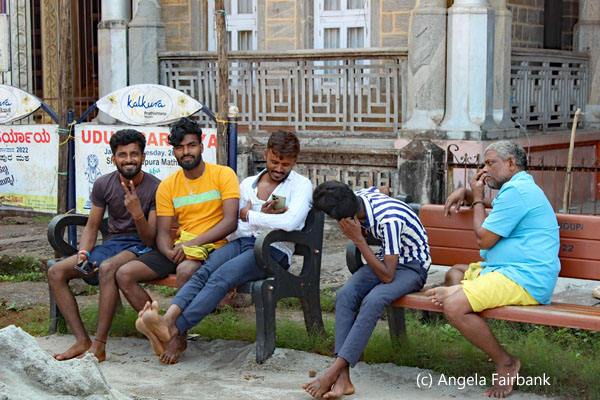 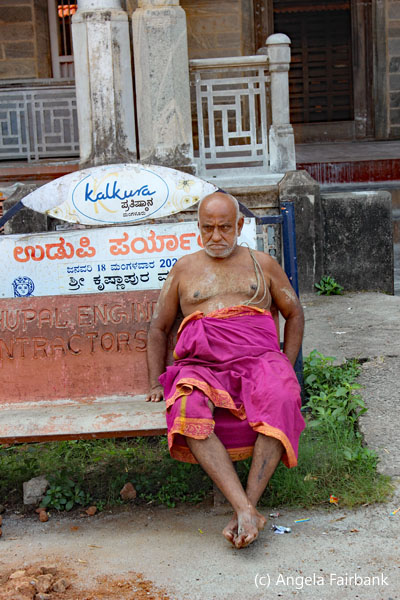 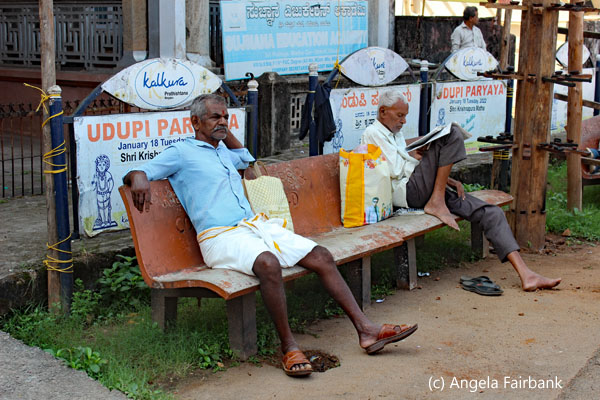    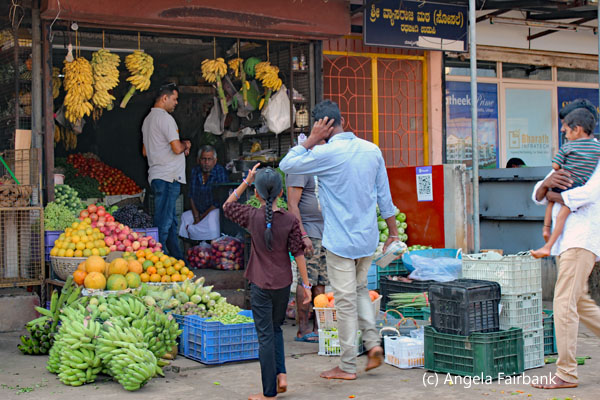 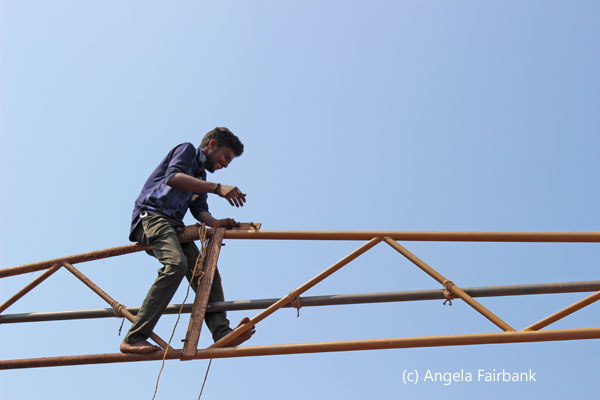  But first a bit more about Mangaluru, which means “a place where good things happen” in Kannada language. At school, English is an optional subject. Agriculture and fishing are the main industries, and the state produces three crops of rice per year. Coconuts, cashew nuts, and betal nuts are also produced (the cashew was introduced by the Portuguese.) Seventy percent of inhabitants are Hindus and there are vegetarian Hindus and non vegetarian Hindus, as well as vegan Hindus who eat no milk products and no spinach. There are 400 schools in the state, most of which were established by Christian missions. Five national banks had their origins in this state as did some IT companies. Cricket is the most popular sport here.
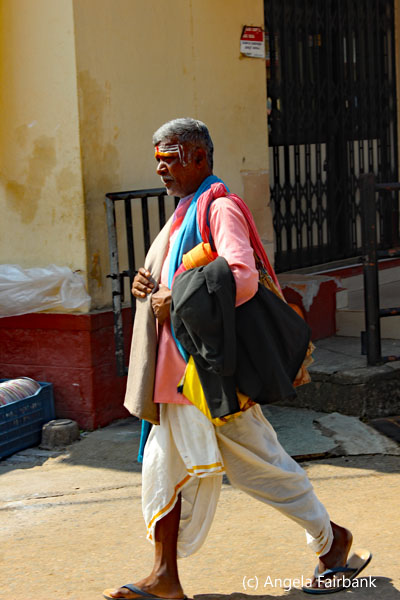 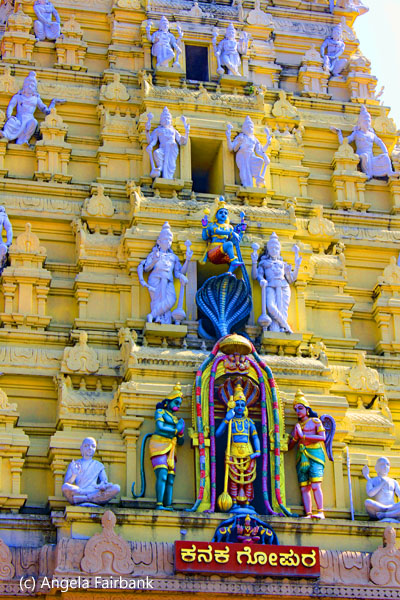 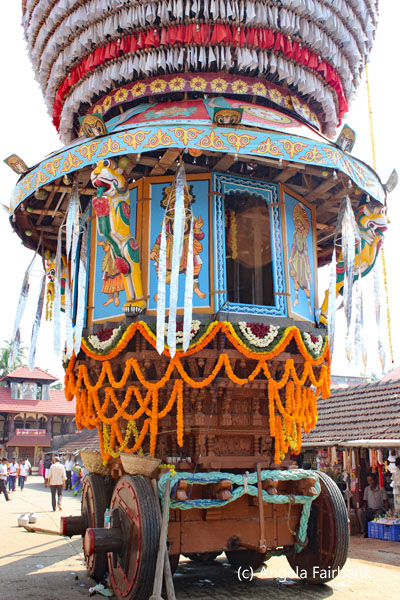 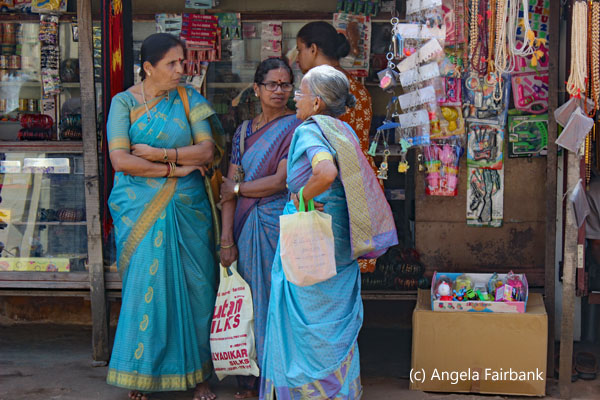 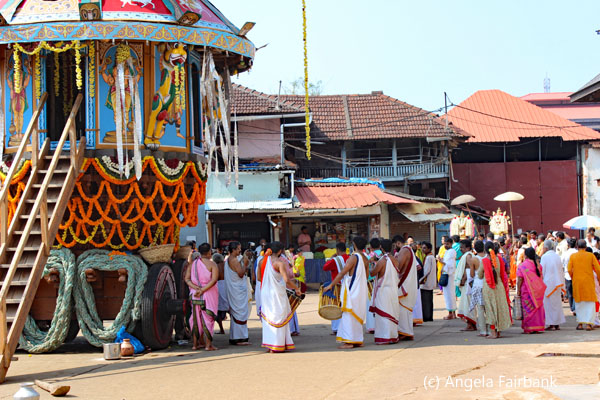 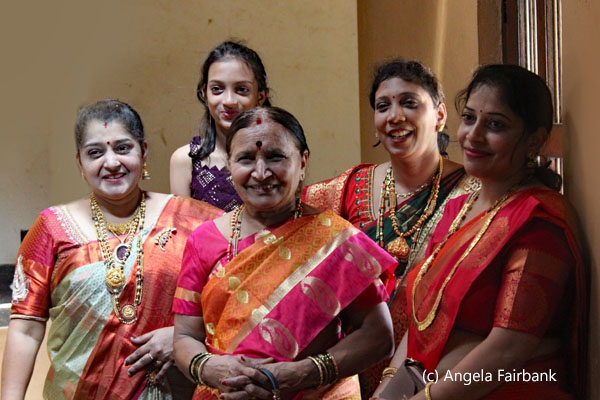 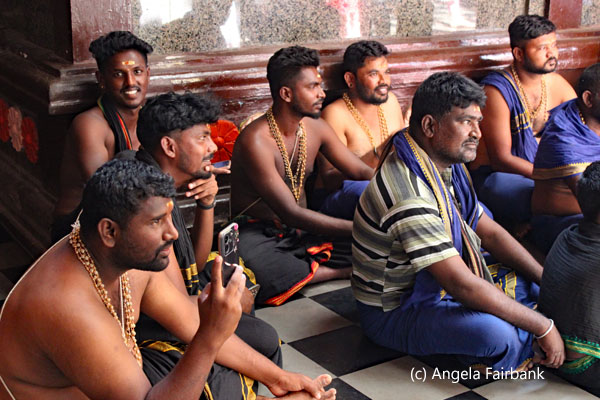 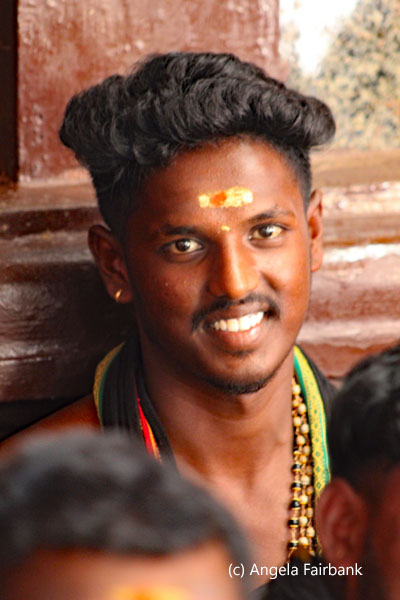 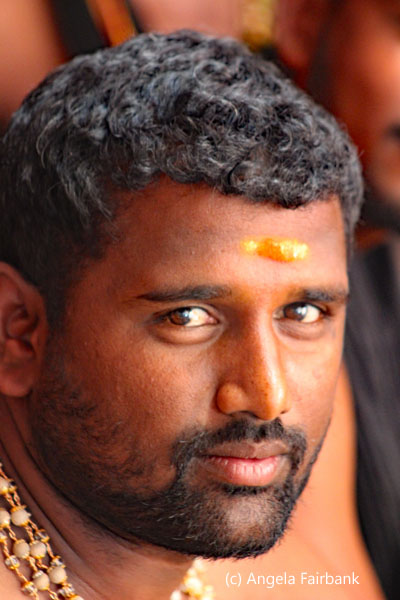 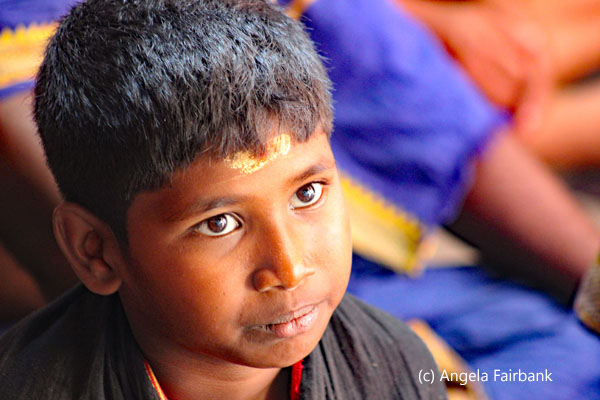 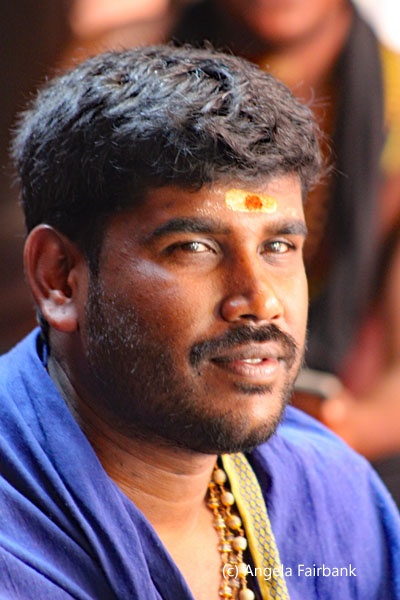 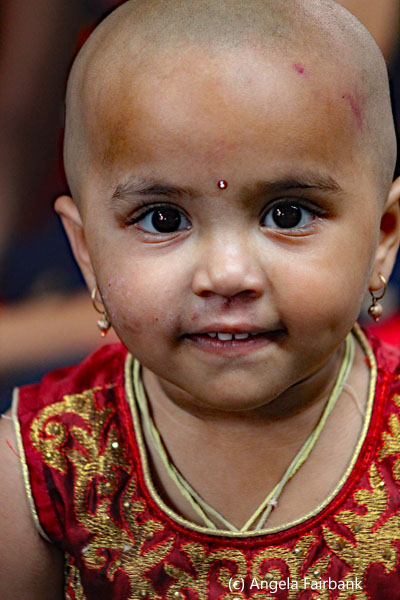 Our guide then started talking about the Hindu religion and tried to simplify things for us. Their prayers end with the word shanti which means peace, while the word namaste means “I respect the god in you.” There is a mother goddess who had three sons, Brahma, Vishnu, and Shiva. Vishnu has 10 incarnations: fish, turtle, pig, half human/half lion, small schoolboy, competitor, married man, administrator, enlightened buddha and then something to do with speed (which basically if you think about it represent the stages in an average human's life.) He also talked about two legends, the Ramayana, and the Mahabharata. There was a lot more, but I couldn't write it all down. This temple we were to visit also serves food twice a day to the pilgrims for free (donations come from abroad and from visitors), representing about ten thousand meals a day.
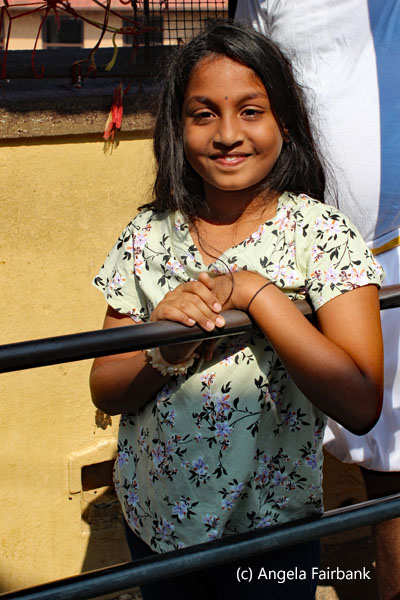
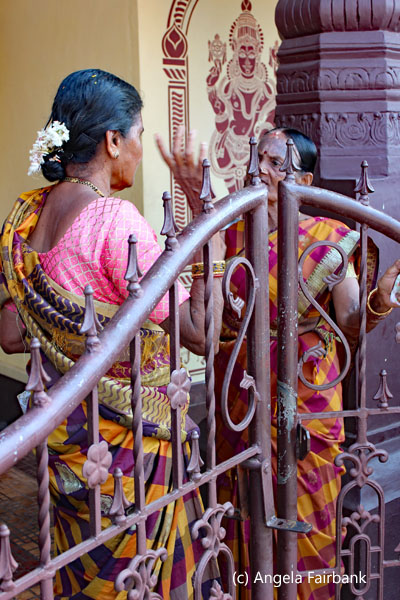
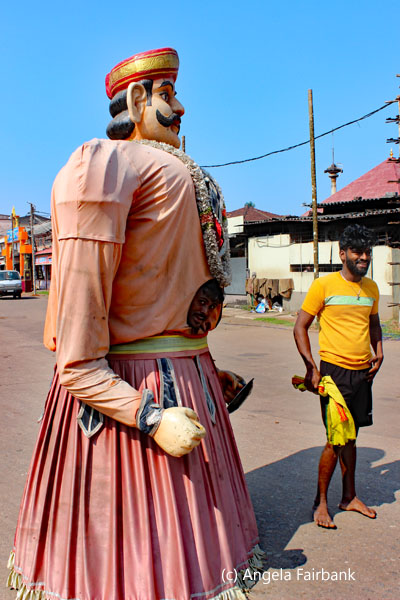
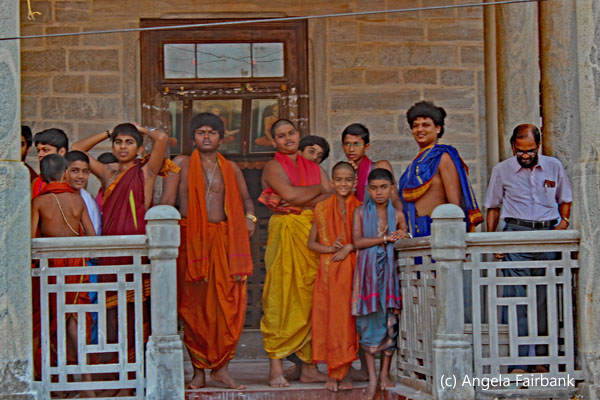
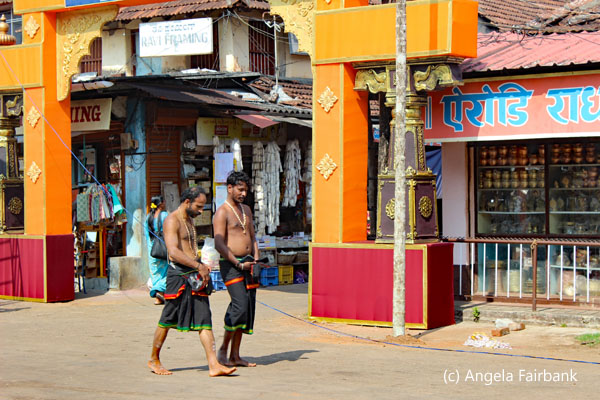
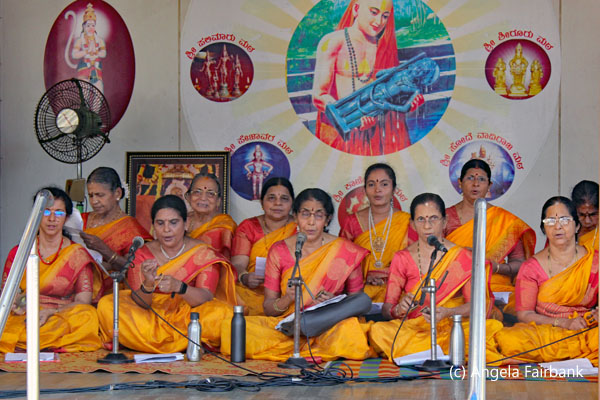
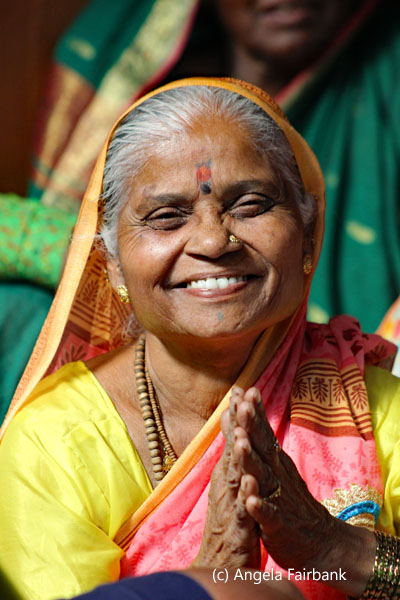 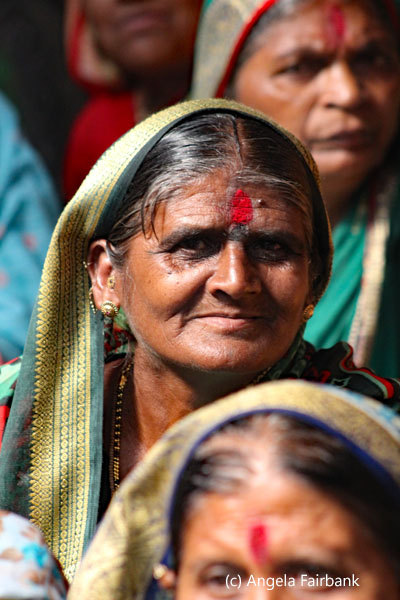 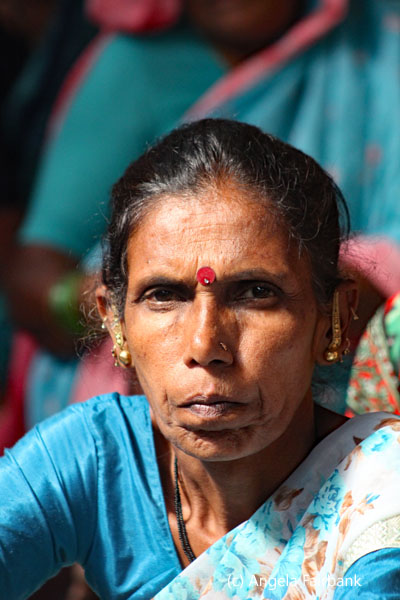 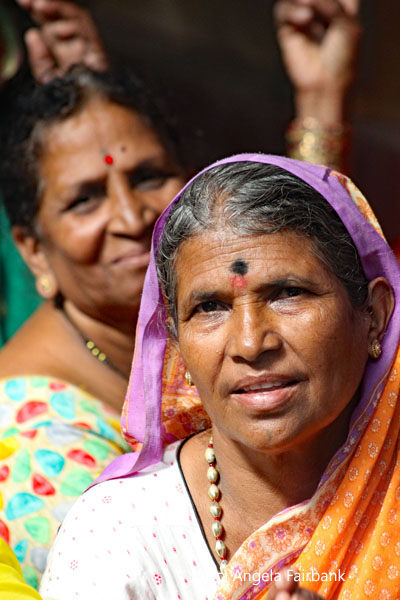 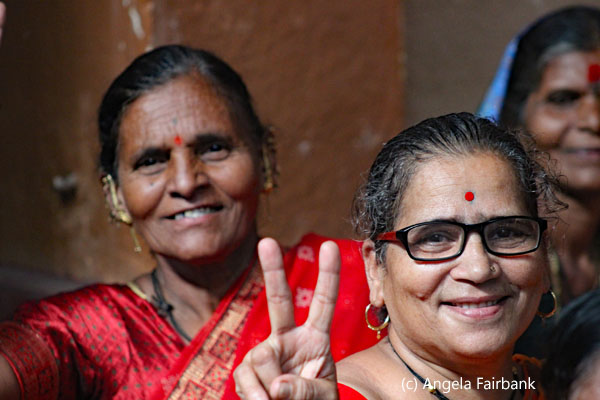 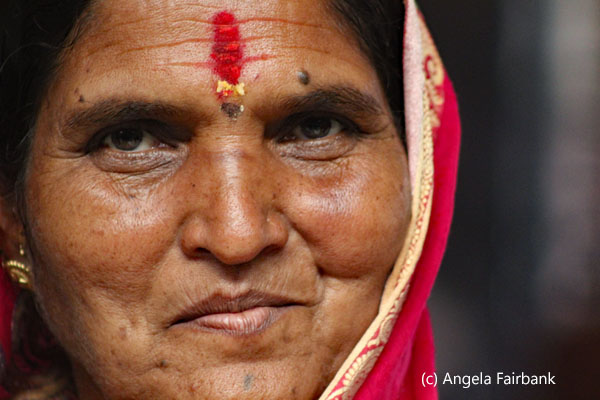 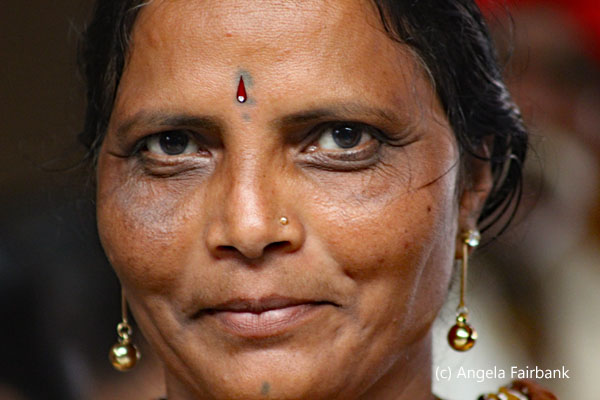 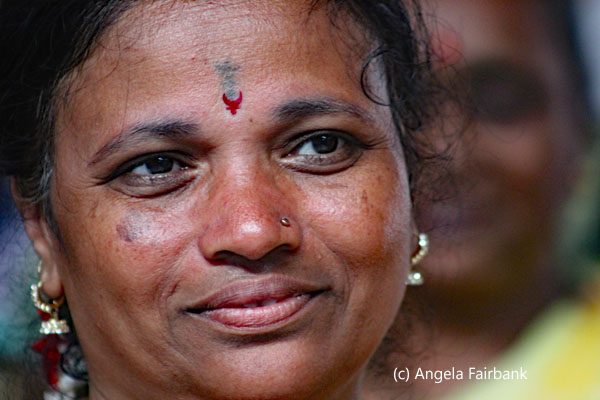 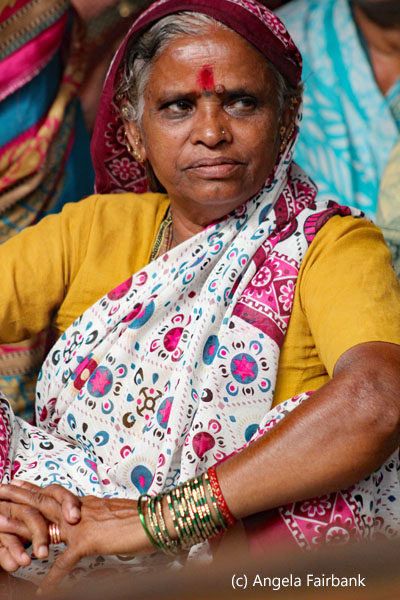 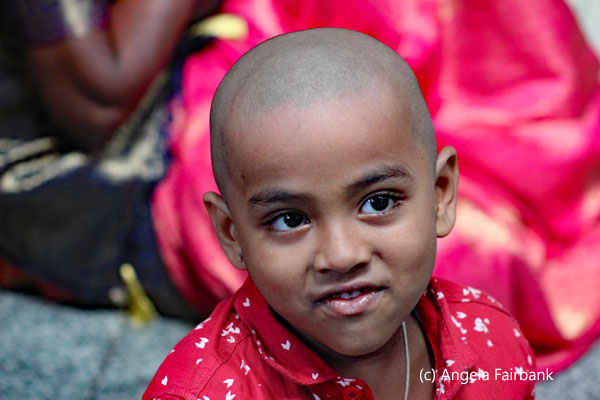 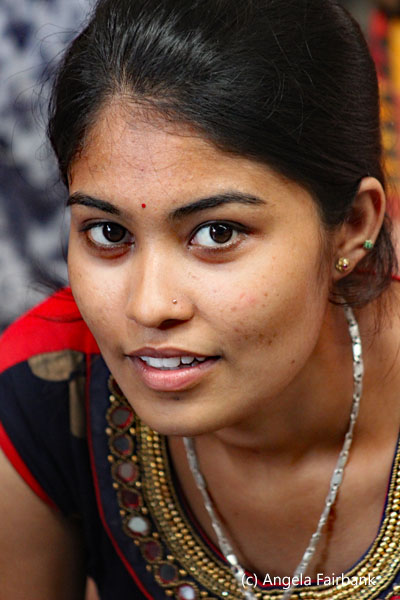 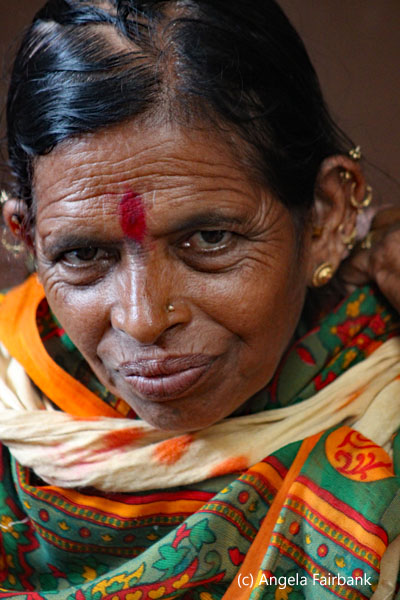 After our arrival at a large parking lot, where we could already see pilgrims arriving in all sorts of different attire, we went through the main gate and along a corridor into a huge main square, which we walked around. This is the location of eight monasteries (mathas) belonging to the temple and set up during the 13th century. Each monastery manages the temple for two years, after which management is transferred to the next monastery with a massive ceremony. We also saw decorated chariots and huge carnival-like images of men that are carried around in a procession with the priests. In one photo, you can see a young men carrying one these huge effigies and poking his head out the viewing hole at my request. Surrounding this square were a number of shops, not for tourists, but rather for locals as they contained items of daily use. There were also stands selling flowers, music being sung by a choir of 11 women, groups of school children ... just a lot going on in general. Finally, it was our turn to go inside, so we removed our shoes, which were put in a large sack for us, and I had to hop around a bit because the pavement was quite hot in the sun. Then we were allowed to enter and visit the cow shed and see people waiting around for various dining halls to open, or to visit priests. At one point, we learned that the line-up into the inner sanctum was too long and we would never make it inside. Moreover, all the men in our group were obliged to remove their shirts--probably to see what caste they belonged to (or at least that was the theory our guide suggested) because those of the top caste, the brahmas, all wore a string that went from shoulder to waist and up again diagonally across the body. When we as a group said we were okay with waiting, we sat or stood and watched people go by and photographed some and then when finally, the priests had passed by us, we were allowed to go inside to see this idol. I was then curious as to why the men were going in with shirts on (we had seen many coming out with their shirts removed and putting them back on in the area we were waiting in.) I had to wait until we were back in the bus to ask why this was so and learned that after the priests had passed by us to serve the meals, it was after the noon hour and shirt removal for men was no longer required. In any case, it was all fascinating and mysterious, and the pilgrims were all very accommodating for photography, as you will see above and below.
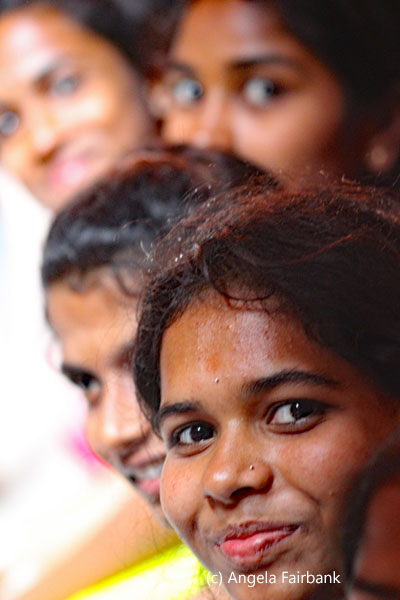 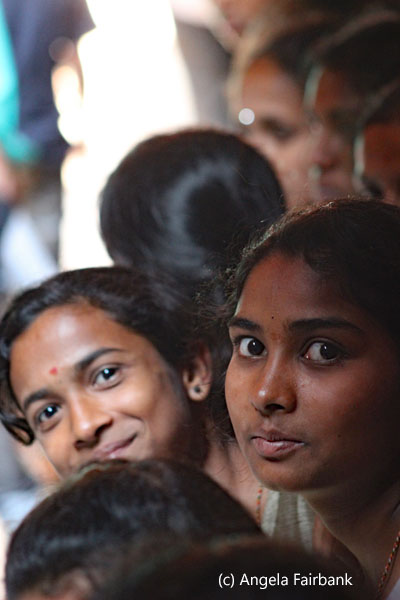 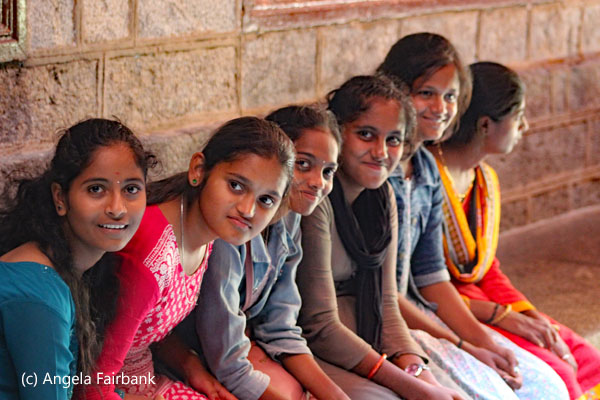 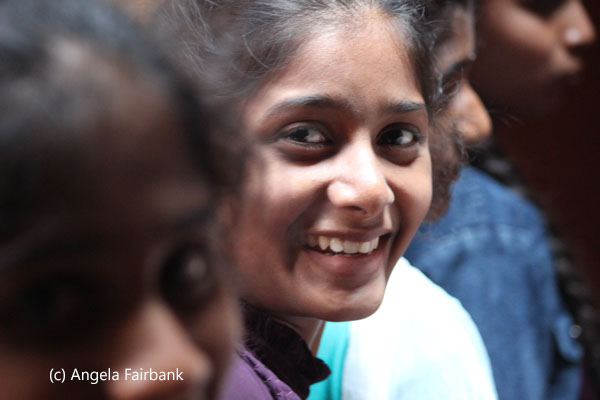 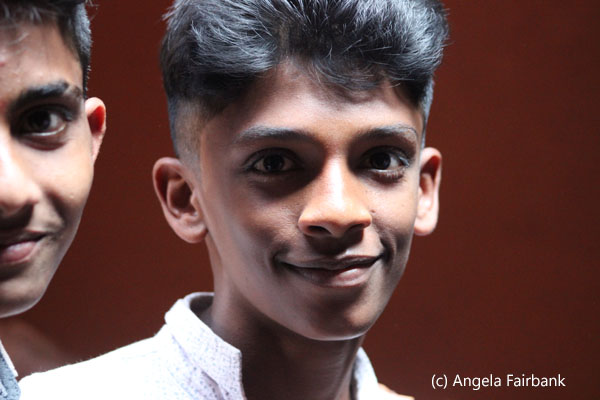 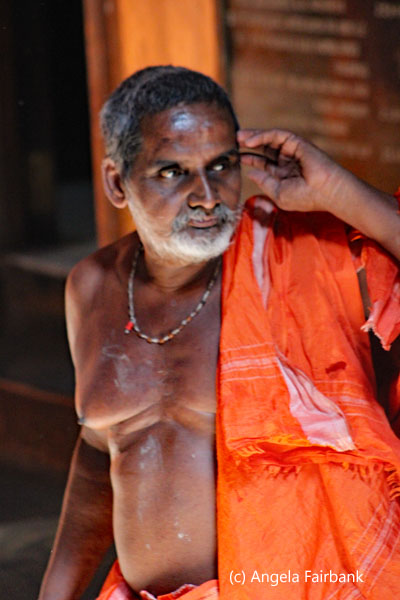 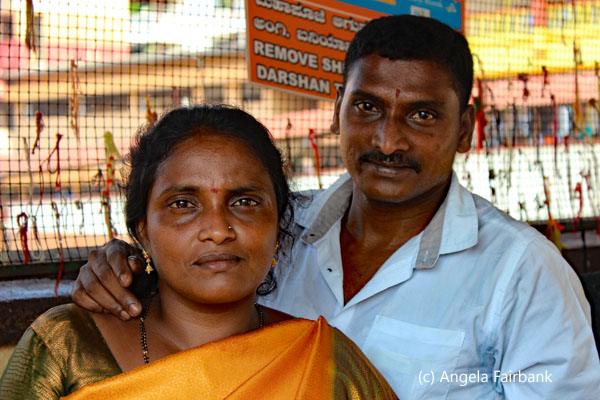 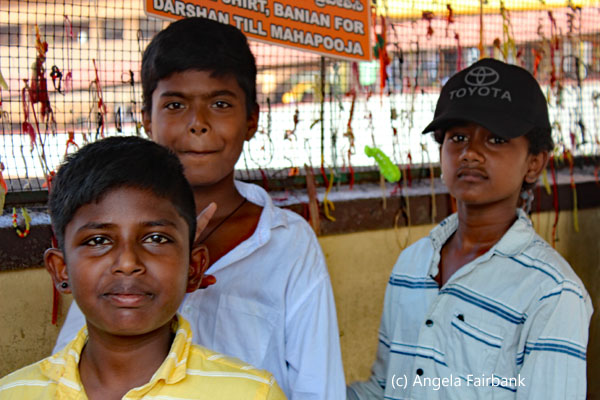 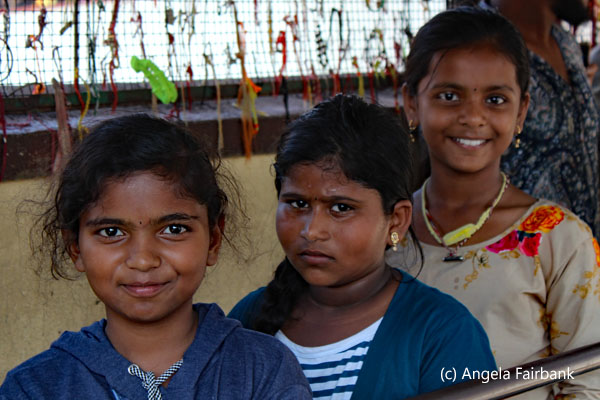 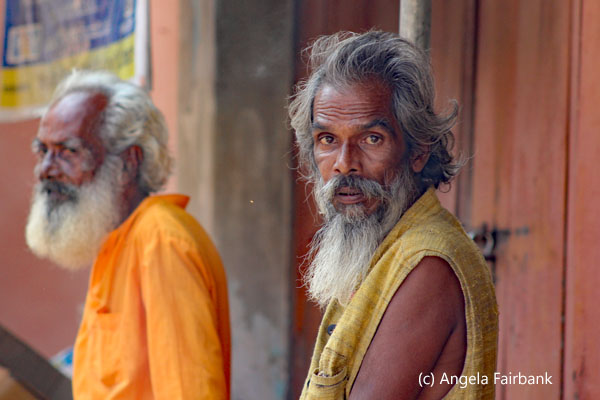 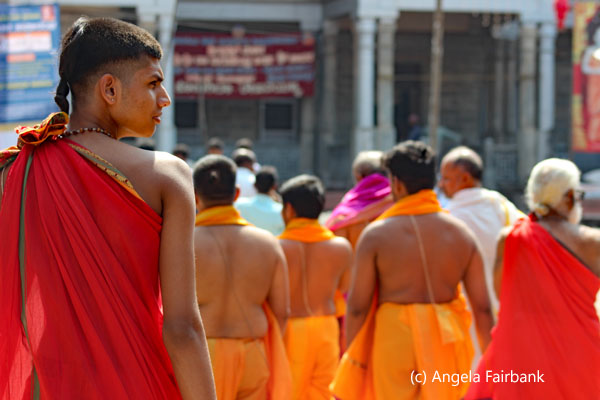 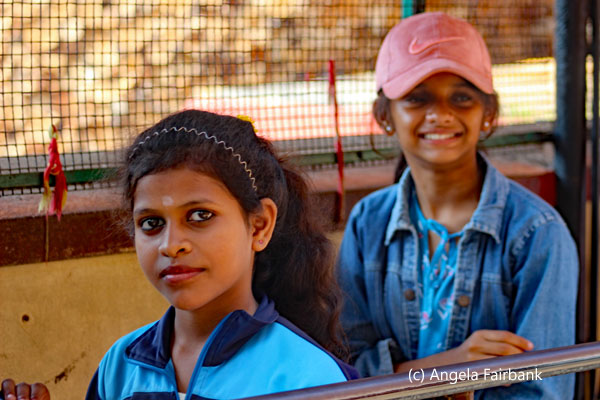 Reluctant to leave, I was last to get back on the bus, and we drove to a vegetarian restaurant for water, tea/coffee, and a snack of a savoury semolina dish plus a sweet semolina dish, as well as the possibility to use their toilets. We had been promised toilets at the temple but were then told they were closed. It made me wonder what the ten-thousand-devotees-a-day did (unless of course there were toilets for locals and different toilets for tourists and it was just the tourist toilets that were closed!?) Our tour description said that after lunch we would have the chance to walk through the town, but as we'd spent an extra hour at the temple waiting to go into the inner sanctum, there was now no time for this, so we left the restaurant and drove back to the ship. On my return to the ship, I watched the sail away too, which was also fascinating as we passed loading bays of the various ores mentioned above.
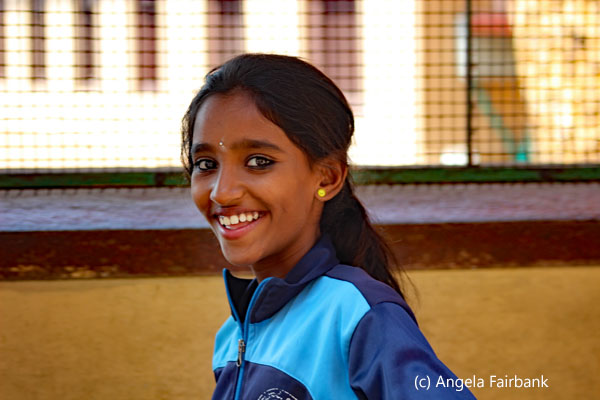 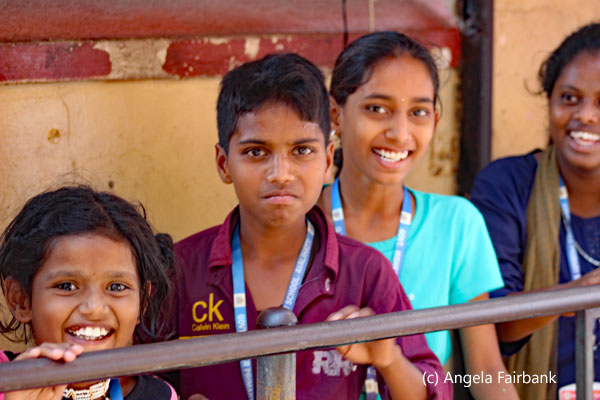 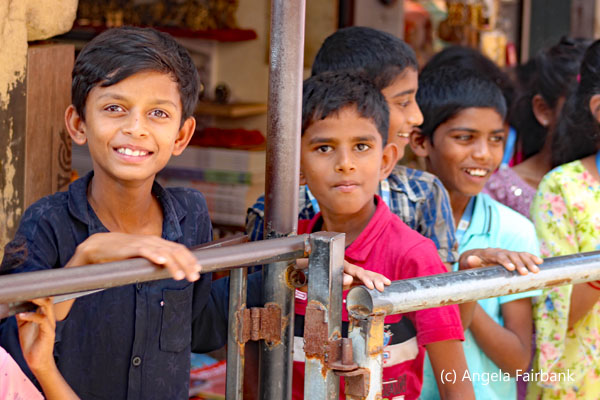 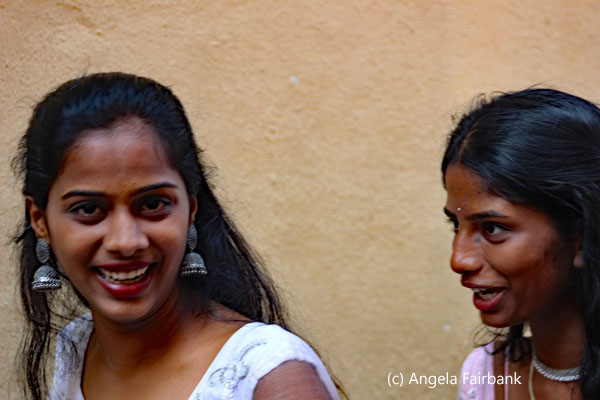 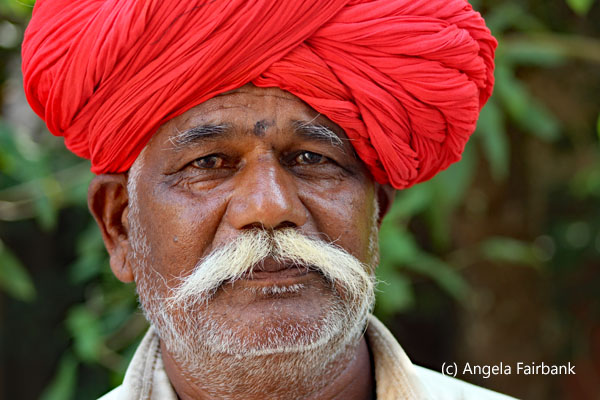 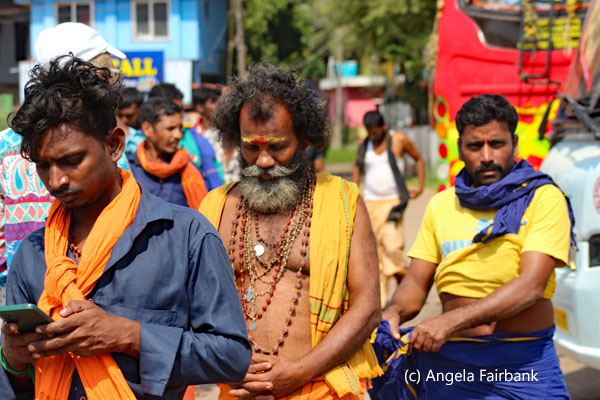 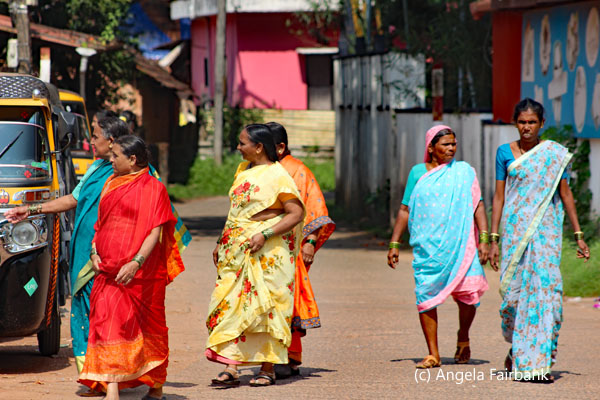 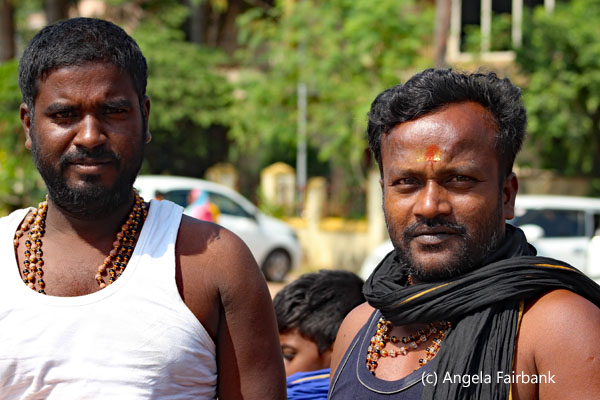 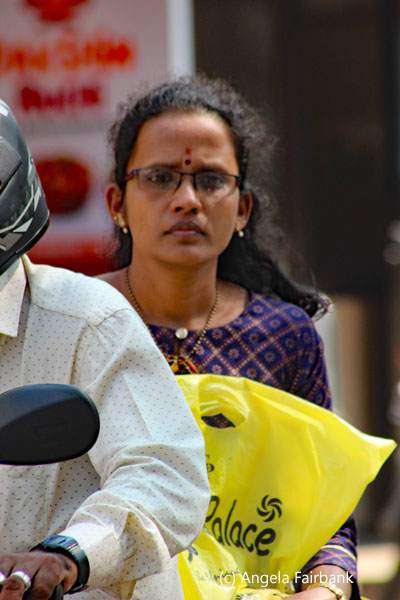 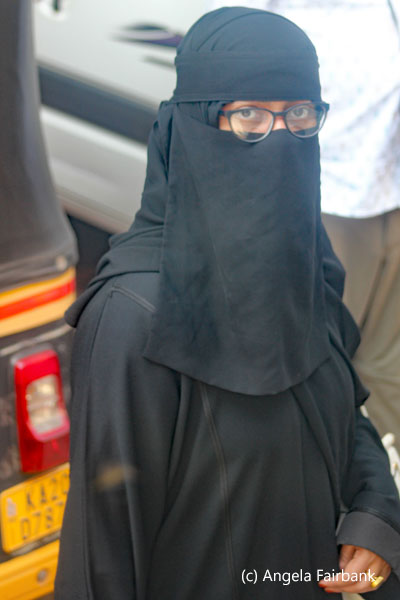 Friday, December 15, 2023: Kochi (Cochin), Kerala, IndiaThe port city of Kochi has been exporting spices for 5,000 years. Highly valued cinnamon, cardamon, ginger, pepper, and turmeric were shipped out on large caravans of camels and horses via the Silk Road. When the Byzantine Empire fell to the Ottomans in the 15th century, the Silk Road was cut off and traders thus had to look for alternative ways to transport their goods. Navigators and explorers set sail from Europe in search of a sea route. This was the beginning of the European dominance in India and the Portuguese, Dutch, and British were able to expand their empires. Kerala is also home to Chinese fishing nets, and Portuguese churches.
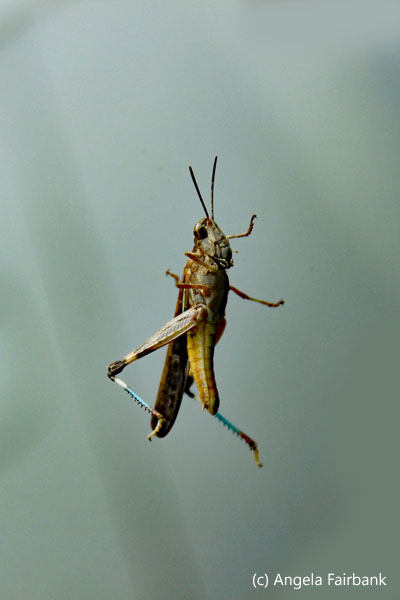 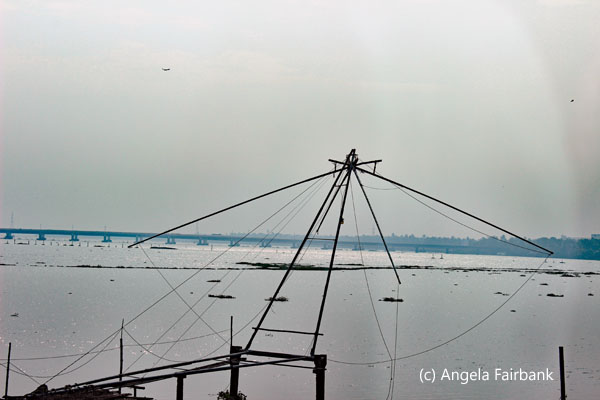 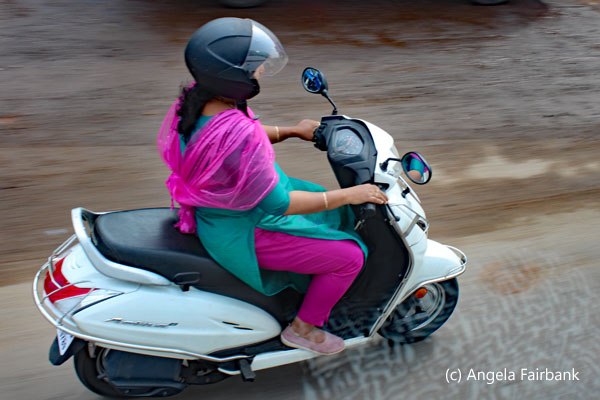     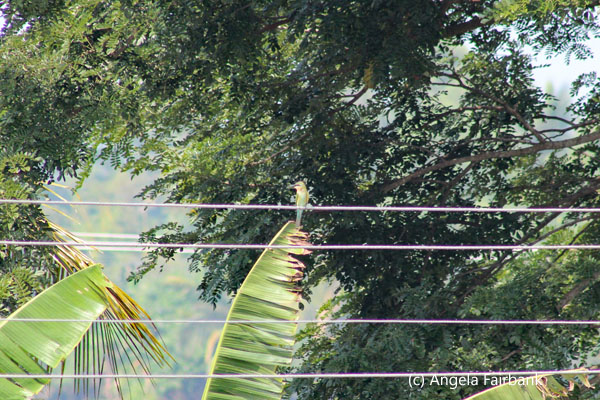 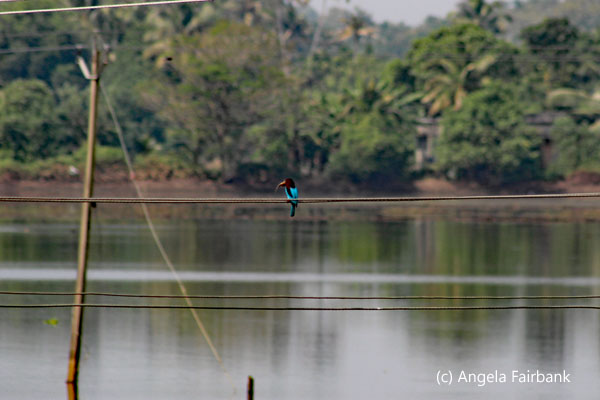 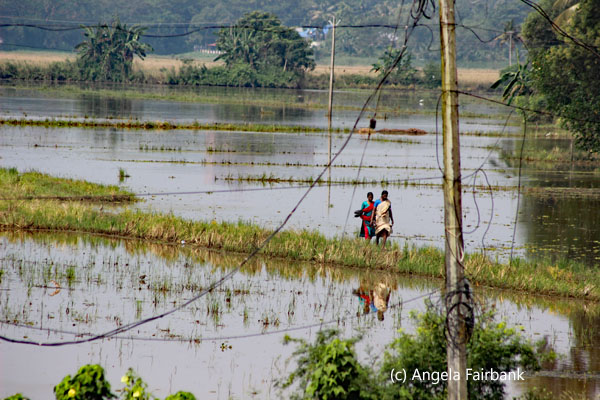 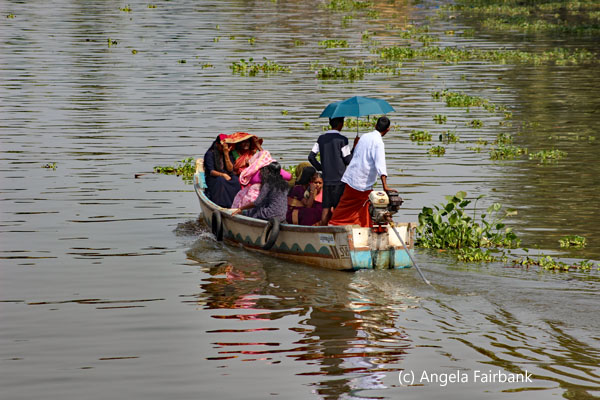 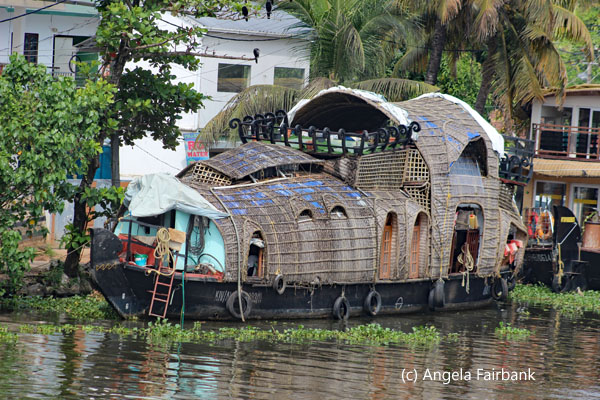 In 2012, National Geographic's Traveller magazine named the state of Kerala as one of the “ten paradises of the world” and “50 must-see destinations of a lifetime.” Travel and Leisure also described Kerala as “One of the 100 great trips for the 21st century.” So, of course, I had to opt for the excursion Backwaters of Kerala. I had done this excursion in 1992 and remembered it as a terrific photo opportunity. Of course, over the past 30 years, the tourism business here has only expanded.
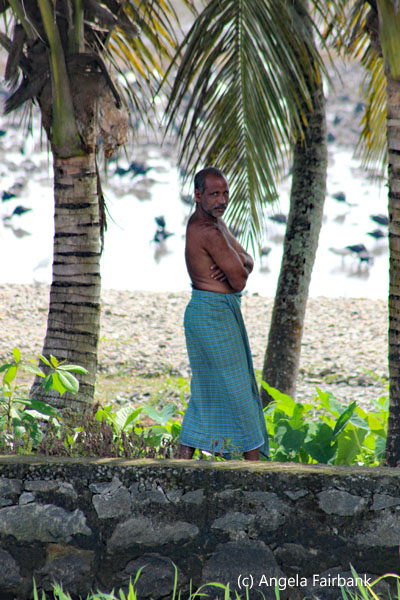
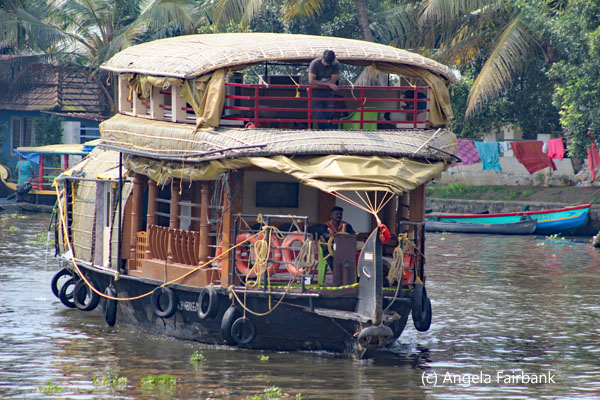
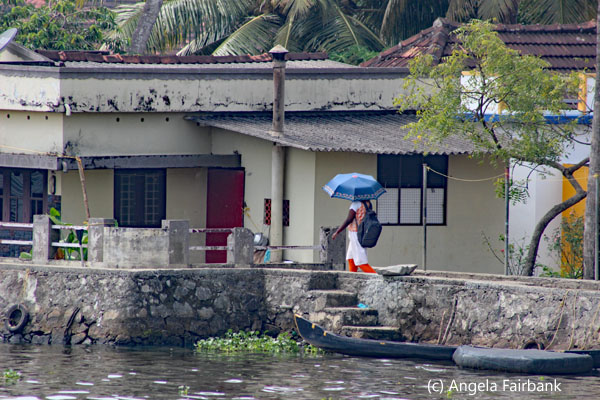
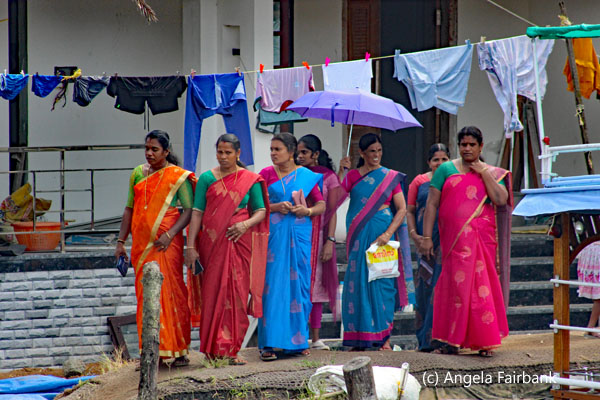 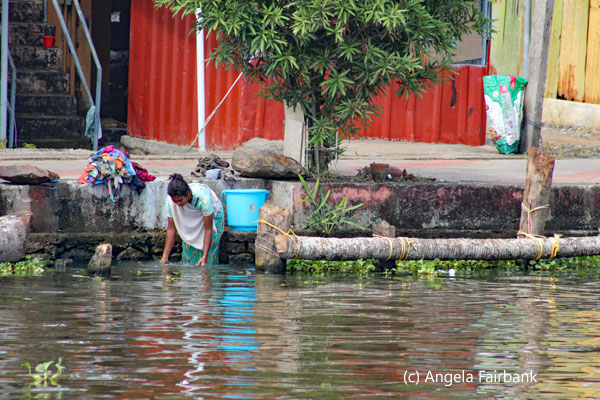 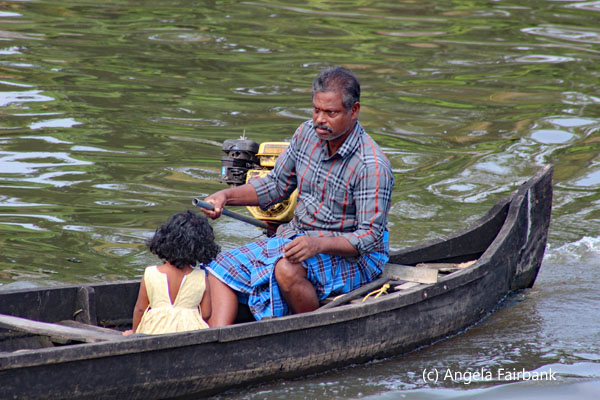 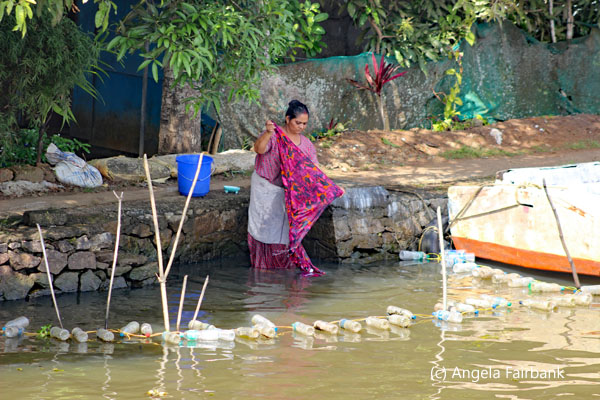 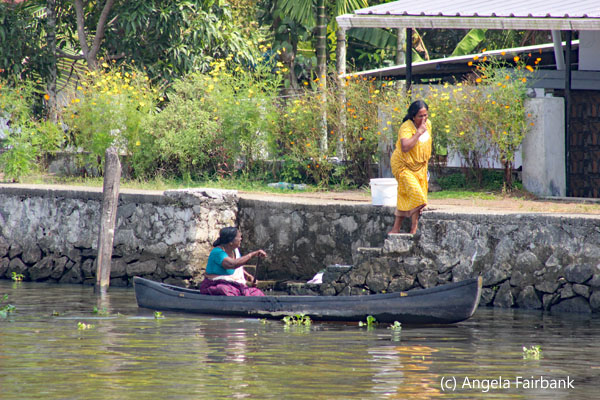  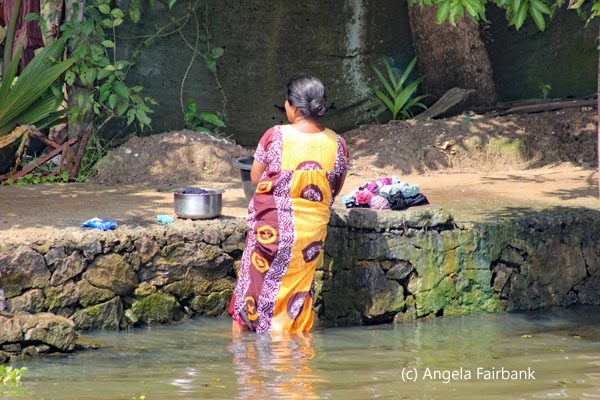 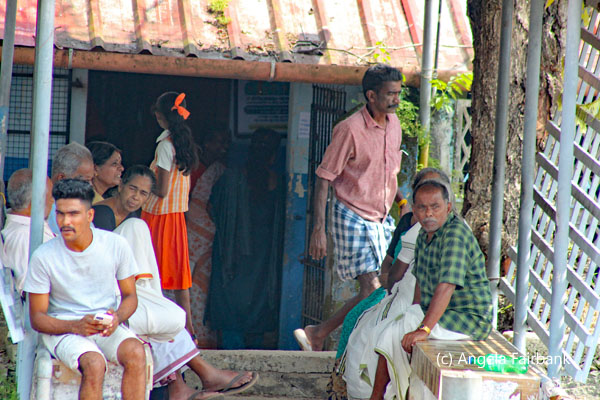 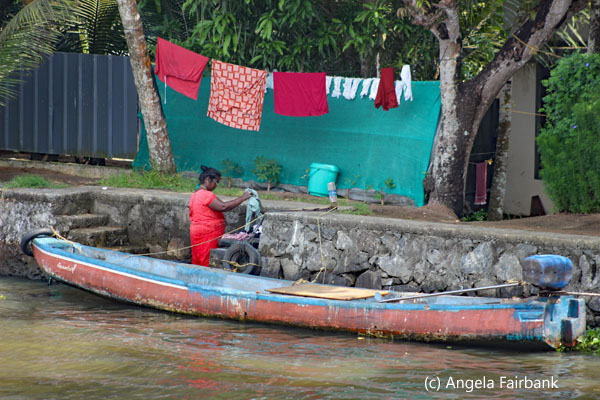 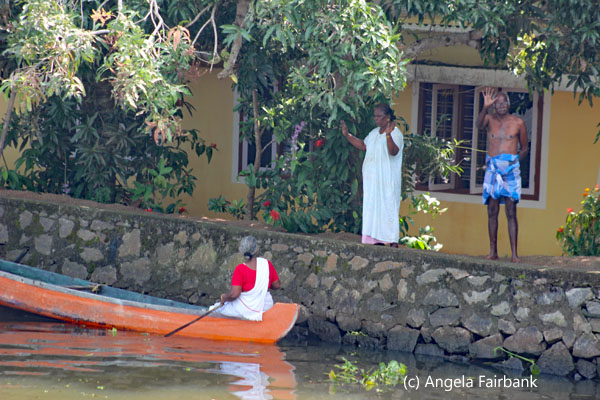 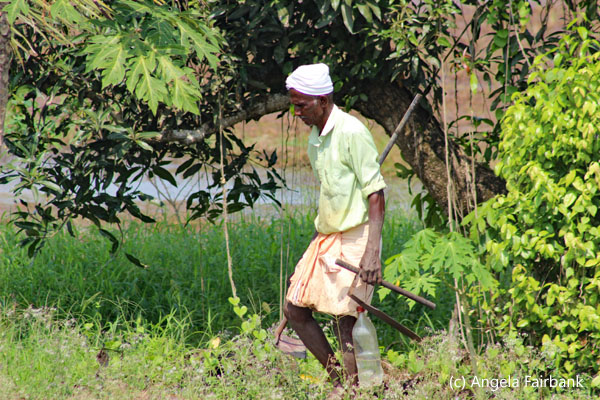 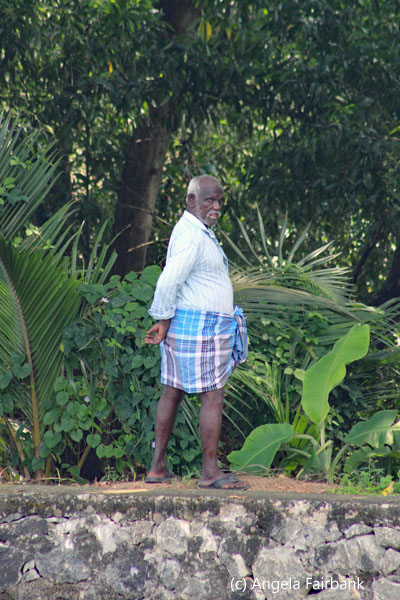 Alleppey in the state of Kerala is known as the “Venice of the East,” and this is due to the above-mentioned scenic backwaters formed by a stretch of lakes, canals, and lagoons located parallel to the coast of the Arabian Sea. Due to the action of the waves and shore currents, islands have been created across the mouths of rivers flowing from the Western Ghats mountain range to the sea. They are almost free of seawater, and, in some areas, artificial dams have been constructed to prevent salt water entering from the sea. Before roadways were properly developed, the backwaters served as the main highway for transporting both passengers and goods. The kettuvallams (houseboats) were traditionally used as grain barges to transport the rice harvested from paddy fields alongside the backwaters. Modelled on the houseboats in Kashmir, they are now predominantly used for tourism purposes (both local and foreign tourists). When they were first introduced, they were rowed and contained few amenities: no electricity, no toilets. Now they are more elaborate with flush toilets, electricity, kitchens, solar power, back-up generators and more. Our houseboat contained four bedrooms, each with an ensuite shower cum flush toilet and sink. Foreign tourists usually only take a day trip, while local Indians might stay the night. We were also told that they are popular for honeymoons where a couple might stay on one for two weeks.
 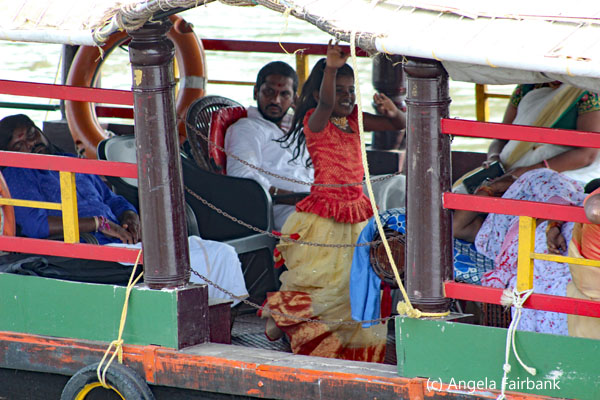          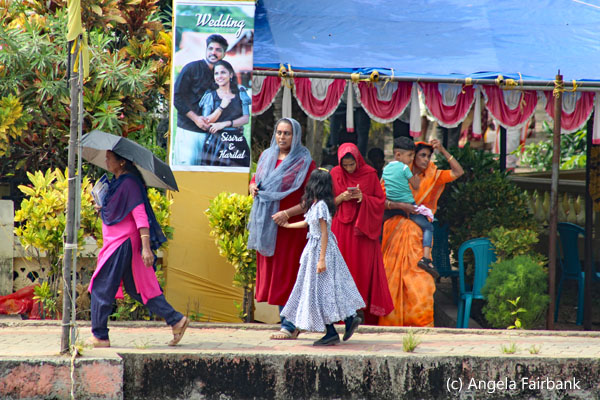 After going through another immigration check and getting a fourth and final stamp on our Indian landing card, as well as a somewhat wetter tika on our foreheads, we were introduced to our not-so-enigmatic guide, Santosh, upon climbing onto our tour bus. From Kochi (1.5 million pop.), one of the largest ports of India with two train stations, 11,000 trains a day, and 75 people per compartment, it takes 47 hours to get to Delhi, 3,000 km to the north. Main imports here are crude oil and gold, while major exports are spices and prawns. Eighty percent of commuters here depend on public transportation. There is not enough rice, vegetables, milk, or meat produced in this state, so they need to bring these staples in from other states.
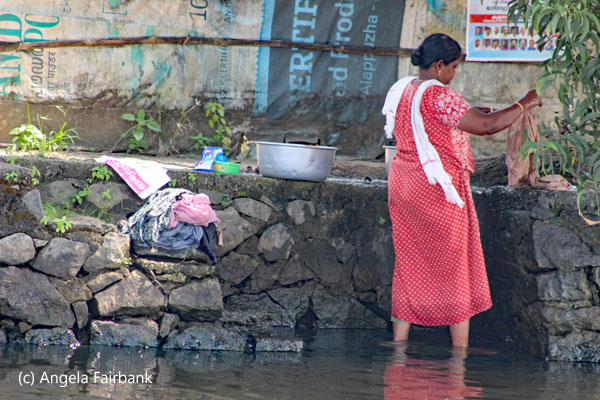
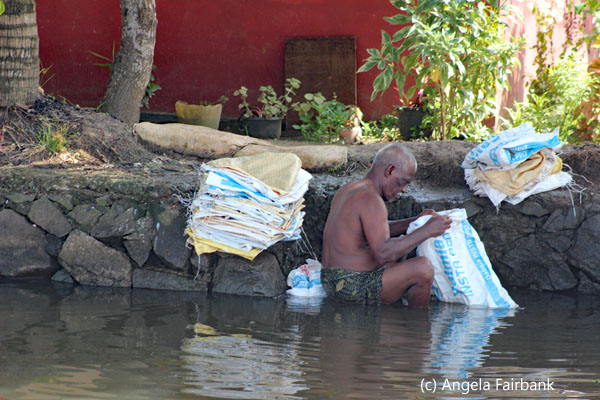
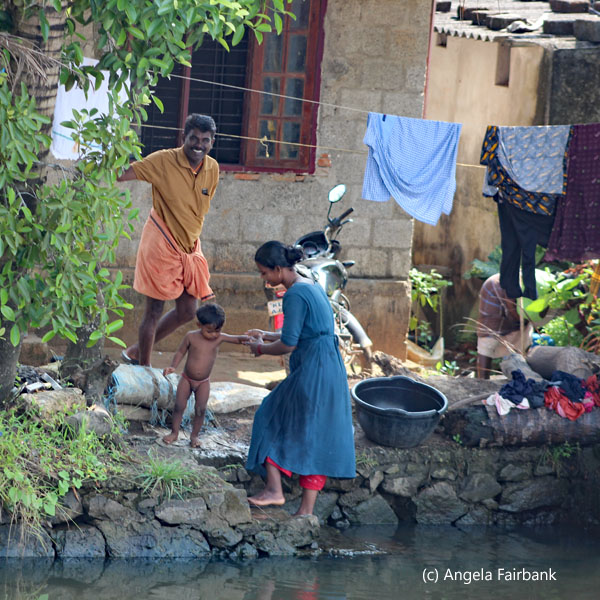
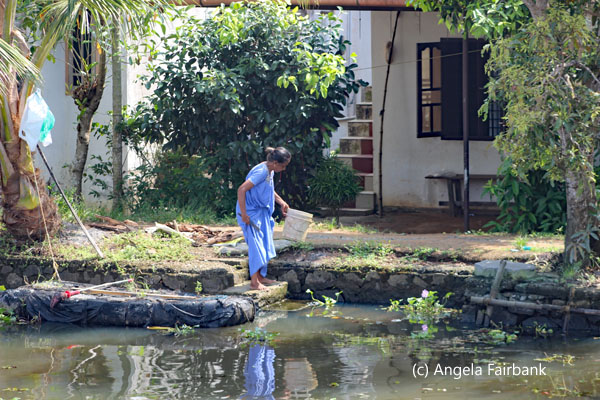
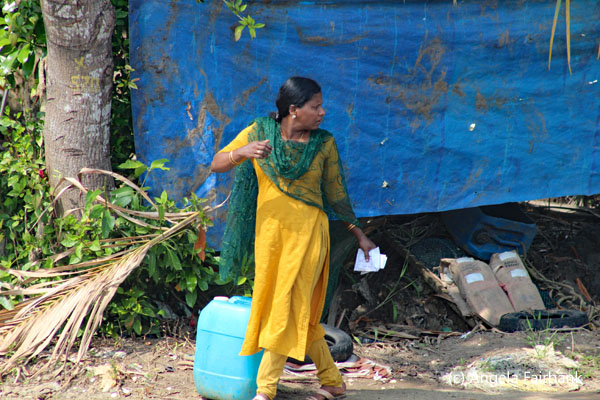
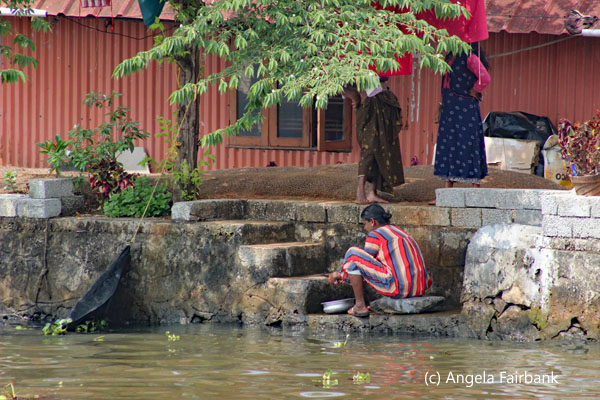
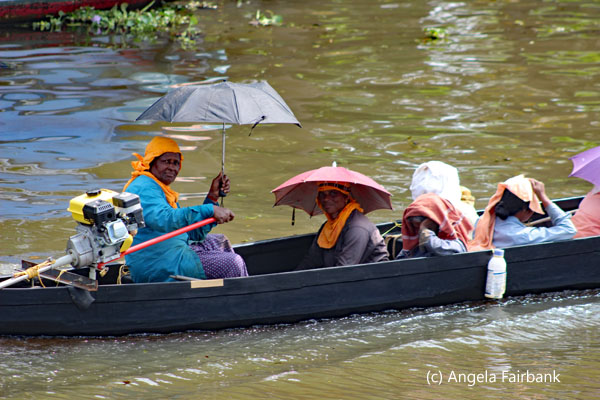
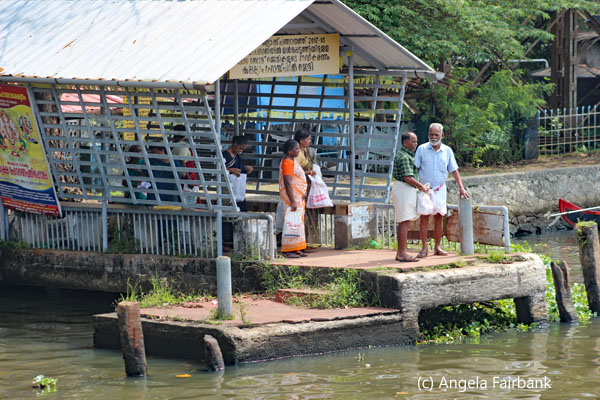
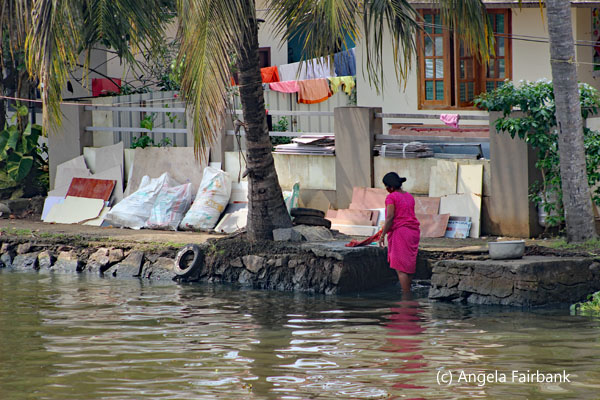
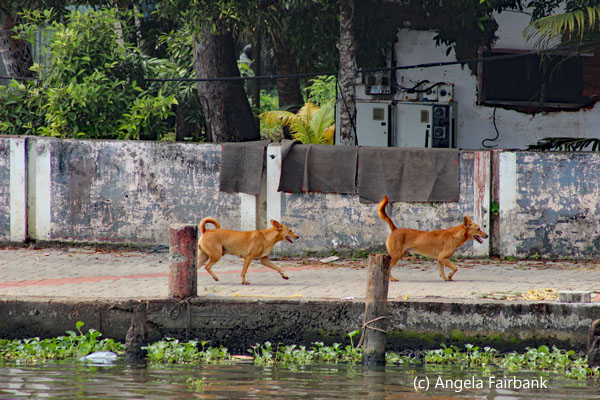
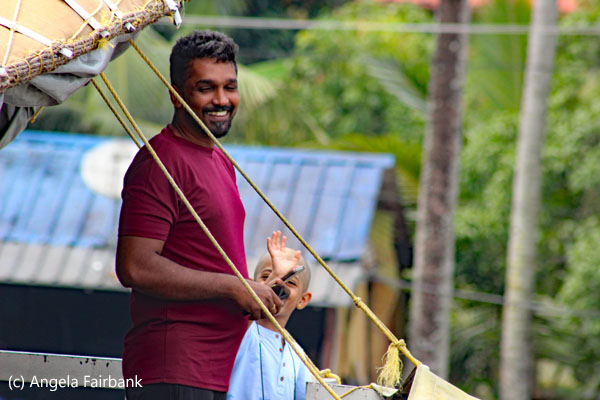
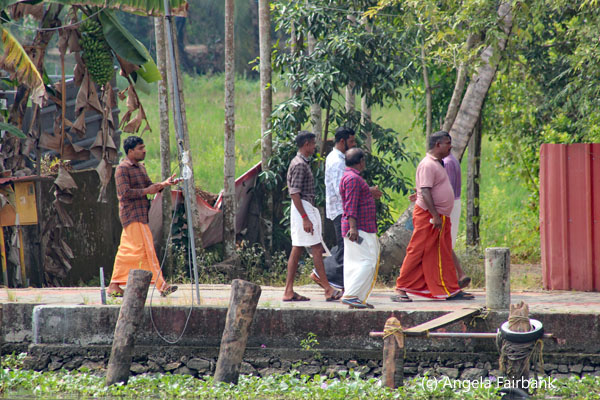
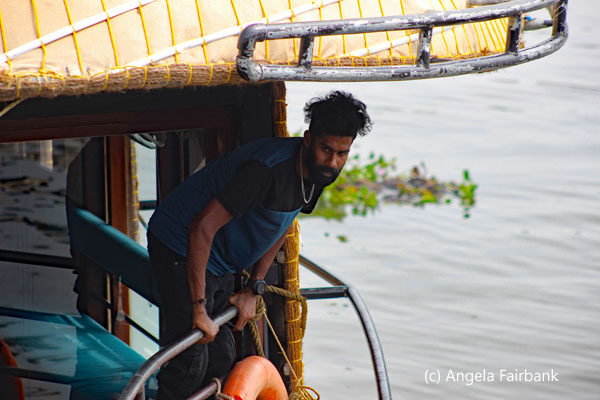
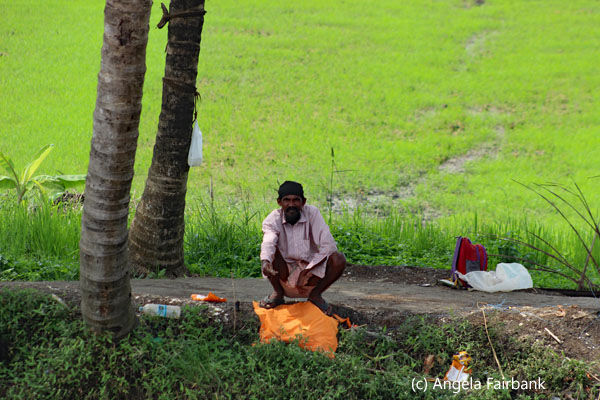
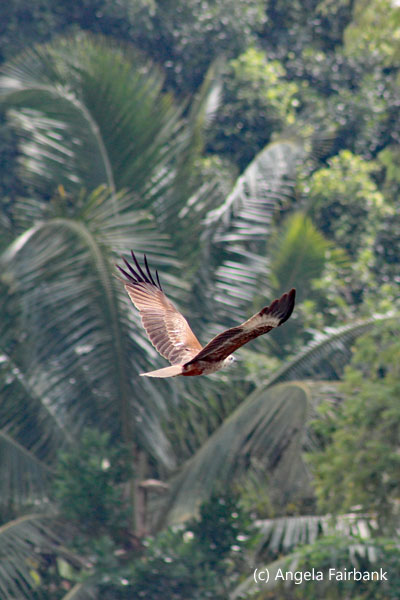
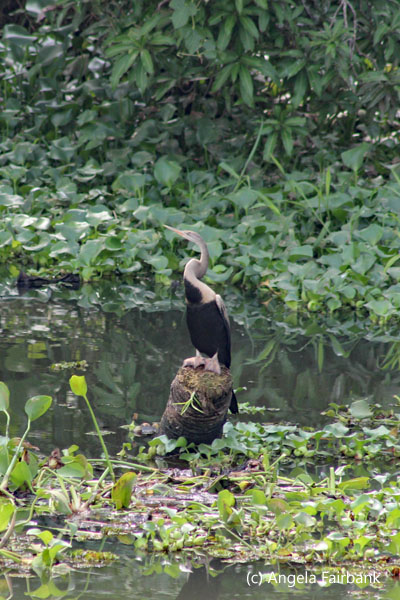
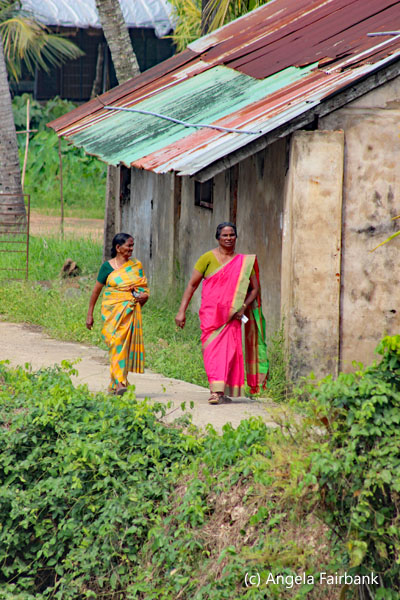
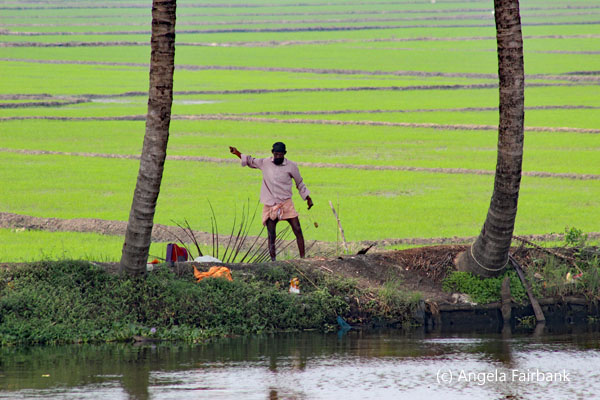
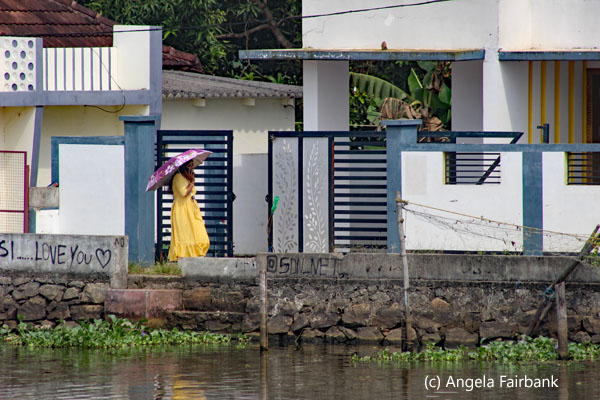
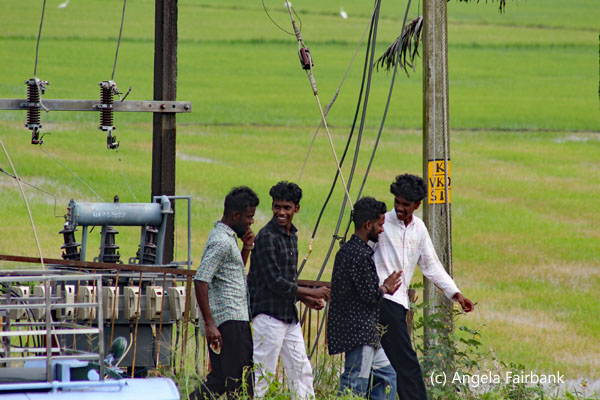
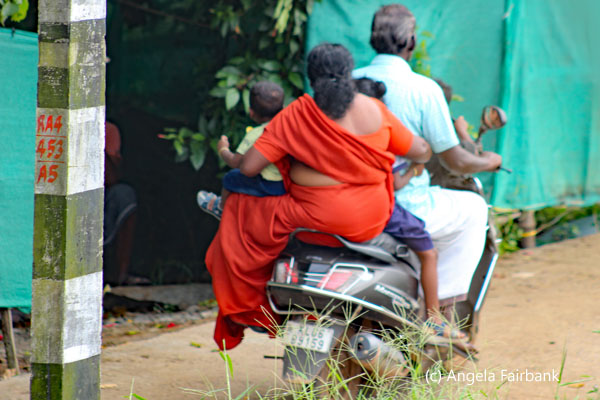
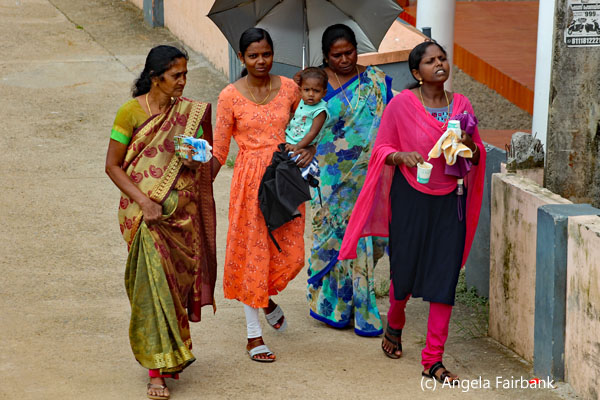
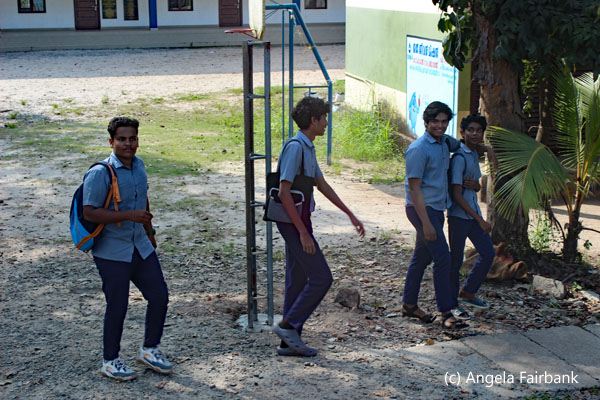
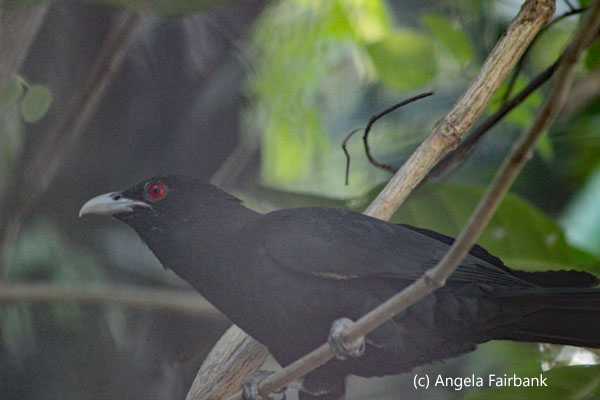
It was yet another long bus ride (65 km) south from Kochi to Alleppey through roadworks and around holy cows and dogs: plenty of people-watching opportunities. Once we arrived, we walked to our houseboat, one of hundreds available for hire. The houseboat itself was very comfortable and we were immediately offered fresh lemon juice and cookies. The view out the sides of the boat was somewhat hampered by safety bars, so I ended up spending most of my time standing on a platform at the bow with my long lens, to photograph not only kites, terns, kingfishers, and cormorants, but also people, houses, and lines of washing. Life on the backwaters was carrying on as usual and we waved to locals and other tourists who photographed us. It was all very friendly and fascinating. After an hour or so, we were served lunch on board, consisting of various dishes of rice and sauces as well as fish, which I ate quickly so I could get back to photographing. I hope you enjoy the images I chose to display out of dozens more. There are not quite as many as yesterday perhaps, but that's mainly because we were at a certain distance from the shore, although the boat did noticeably meander so that we could get shots of both banks. The green of the paddy fields was quite striking and we saw people fishing, washing--themselves, clothes, barrels, dishes, and bags--paddling, waiting for ferries, shopping, chatting, one group attending a wedding and another attending a religious ceremony. 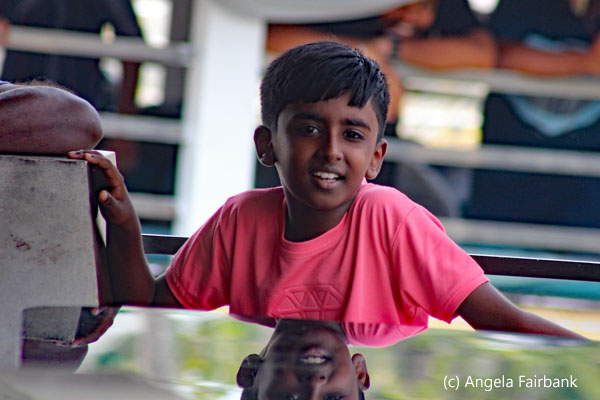 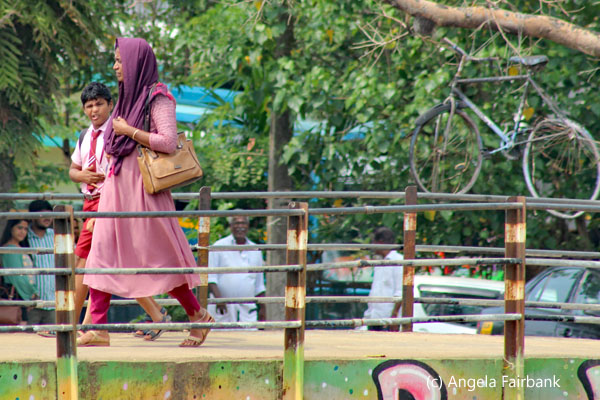 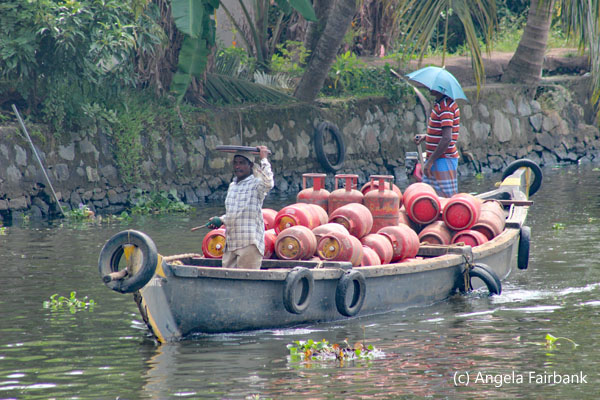 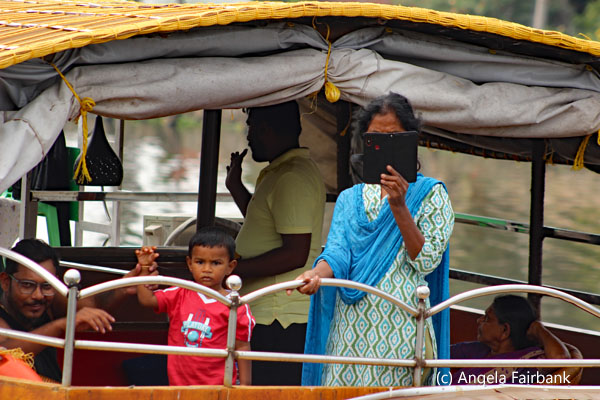 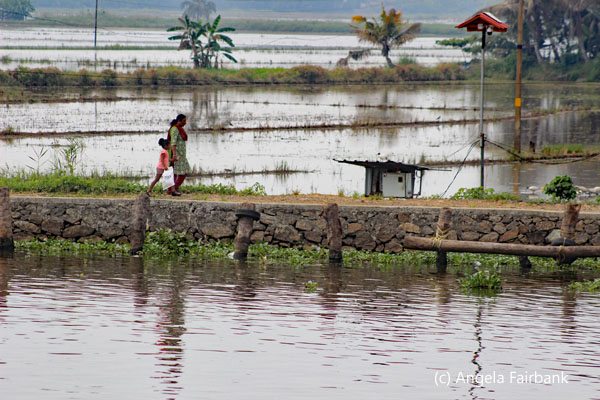 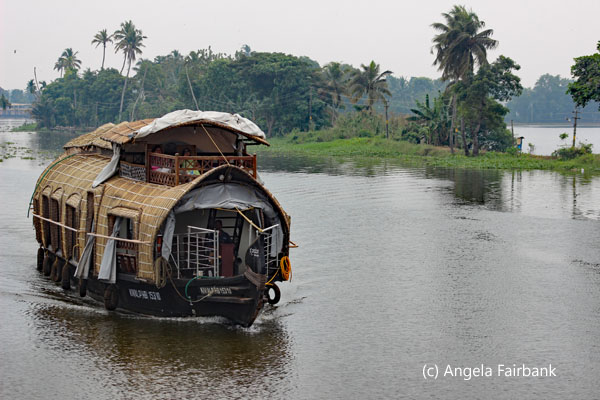 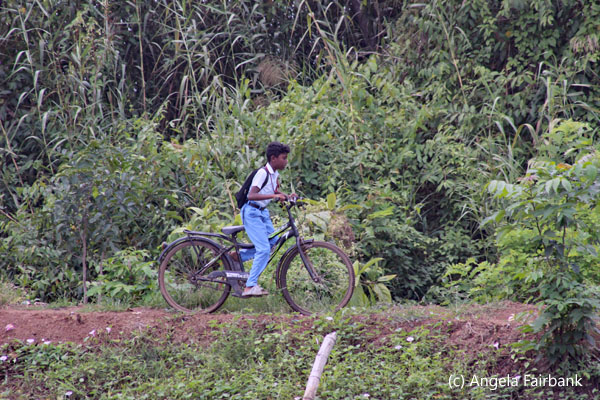 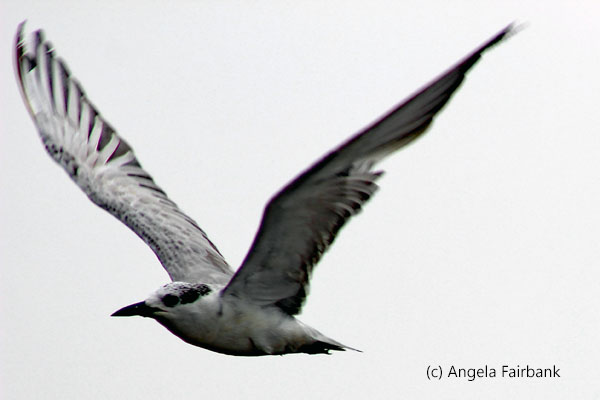 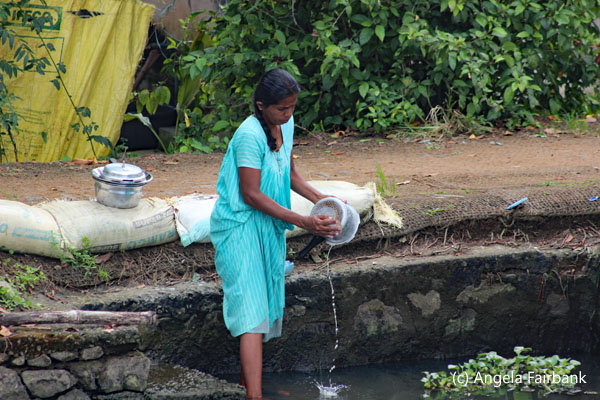 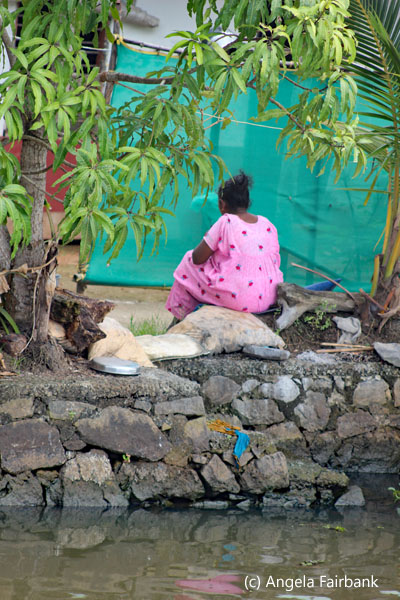 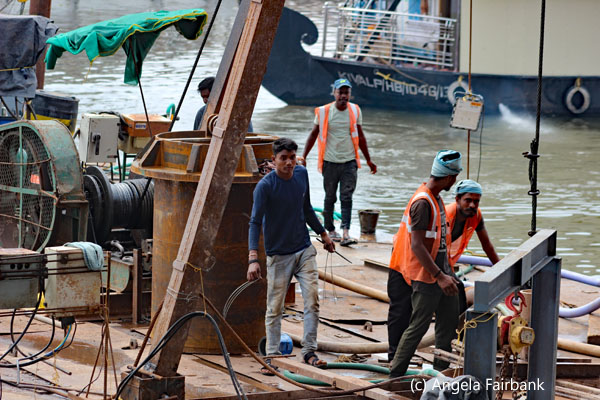 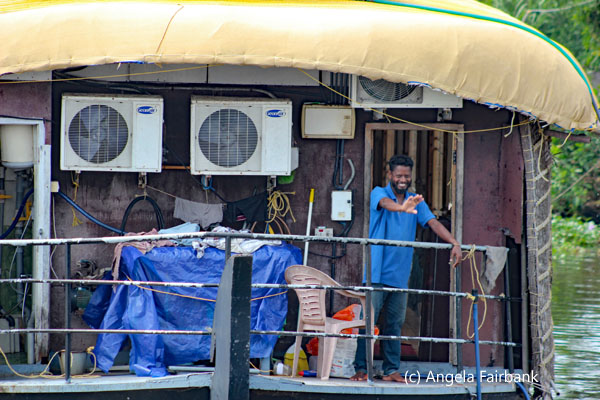 On our arrival back at the docking station, I finally managed to get a shot of a family of five on one motorcycle! This brief visit to India has been lovely and it is curiously difficult to leave. I often thought (and was often reminded) of my three-month trip round India back in 1992. Some things haven't changed while others, I felt, had evolved slightly. People are still just as friendly and smiling, however, and the vendors here are certainly not as pushy as they were in Egypt. Talking of vendors, there were a number of temporary shops set up just outside the immigration building on our return from our tour, and as we were having an India-themed night on deck, I convinced myself I should probably buy something authentically Indian to wear. I had used up my last batch of $5 bills in tips, so, after finding something I liked, had to beg my way back through immigration without my passport so I could get back on board, grab some more cash from my cabin, and come out again through immigration within the half hour we had left before the all-on-board time. This I managed to do, and the vendor was noticeably surprised, yet pleased, that I had returned with money as I had promised him. I bought a dark blue embroidered kurta for a ridiculously small amount of money and wore it that evening at dinner. Also, near this pop-up shop, I heard loud bird sounds I was unfamiliar with, and was told by the locals I asked that these were cuckoos. They looked like crows but had red eyes. I snuck under the barrier and managed to get a few shots of these very loud birds, noticing that they did indeed have red eyes. I looked later on Google and found that this bird is actually called a Koel and is part of the cuckoo family. “The male Asian Koel is almost entirely black, aside from its red eyes ... This species is a brood parasite, depositing its eggs in the unattended nest of a host bird--usually a House Crow!”
             Saturday, December 16, 2023: originally planned for Uligamu, MaldivesUnfortunately, we were told yesterday during the captain's all-on-board speech, that we would not be going to the Maldives as planned, due to the fact that their new government had changed its policy regarding cruise ships visiting their country. Perhaps it's for the best, though I shall miss the opportunities of the two tours I had booked: one was to an uninhabited island for five hours with snorkelling, swimming, and a BBQ lunch, while the other was to experience a Maldives resort for seven hours! Consequently, I have no photos to show you of a pristine marine environment and crystal-clear turquoise water. Instead, we shall now be concluding our first leg of this journey with three days at sea, arriving in the Seychelles on December 19th, which will make it one month exactly since we left Southampton. I shall thus end this leg's blog here and start a new one upon our arrival in the Seychelles. PART TWO: Victoria, Mahé, Seychelles to Durban, South Africa NOTE: The quotations herein are for the most part from the Fred Olsen cruise excursions brochure. Other shorter quotes come from Wikipedia. |
All rights reserved. Website © Angela Fairbank 2005-2025.
|